
Shine Veneer Dryer Delivers Tailored Installation & Maintenance Solutions Worldwide: Custom Designs, On-Site Engineering Guidance, and Full Operator Training Ensure Zero Ramp-Up Issues
In the high-stakes world of wood processing, where veneer moisture inconsistency can ruin entire batches of plywood, flooring, or furniture panels, the difference between a successful production line and a costly bottleneck often comes down to one factor: proper dryer installation and ongoing maintenance. Shine Machinery (Shine), a globally recognized manufacturer of industrial veneer dryers, has built its reputation not merely on selling equipment, but on guaranteeing that every machine operates at peak efficiency within the unique constraints of each customer's local facility.
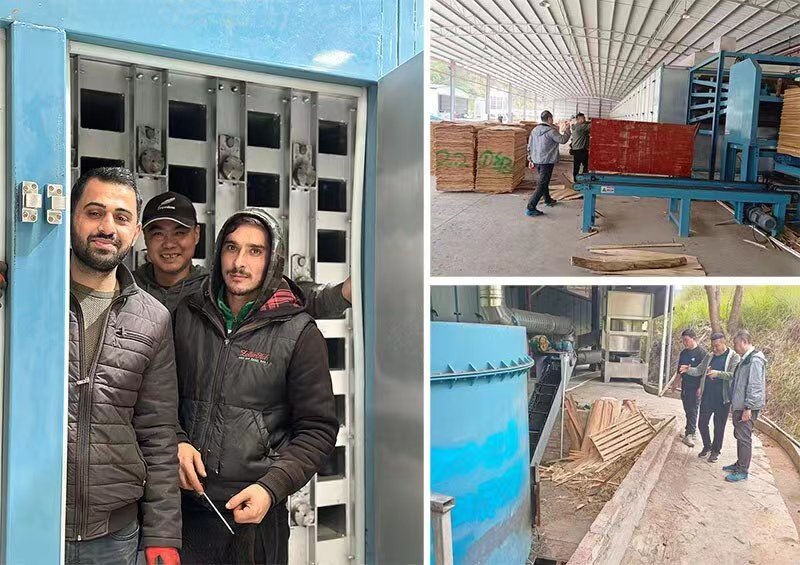
Unlike competitors who ship a dryer and offer remote troubleshooting, Shine deploys a hands-on, end-to-end service model that begins with a custom facility assessment and concludes only when local workers can independently operate, troubleshoot, and perform routine maintenance on the equipment. This article details Shine's comprehensive approach to veneer dryer installation, commissioning, and long-term service support.
Part I: Custom Facility Design – No Two Factories Are Alike
The first step in Shine's process has nothing to do with the dryer itself. Instead, a Shine design engineer travels to the client's site or reviews detailed architectural layouts, climate data, and existing material handling systems. Factors that influence the final design include:
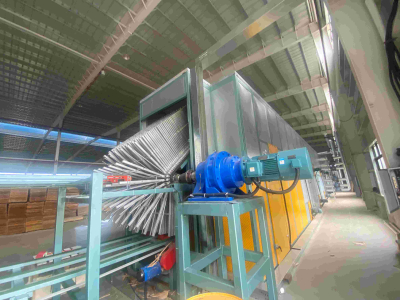
Available floor space – Shine can configure roller-type, mesh-type, or jet-type veneer dryers in straight-line, L-shaped, or even multi-level compact footprints.
Local ambient conditions – High-humidity tropical regions require different insulation and ventilation strategies than arid or cold-climate factories.
Energy source – Shine adapts the heating system to available fuel: biomass (wood residues), natural gas, steam from a central boiler, thermal oil, or electric.
Existing upstream/downstream equipment – The dryer's infeed must align with green veneer clippers or stackers, and the outfeed must synchronize with graders or glue spreaders.
Based on these variables, Shine produces a complete 3D CAD layout showing the dryer's position, clearance for maintenance access, ducting routes, electrical panel location, and exhaust placement. "We treat every factory as a bespoke project," says Gao, lead installation supervisor at Shine. "A dryer that works perfectly in a 10,000-square-meter Russian plywood mill will fail if simply dropped into a compact Vietnamese workshop without modifying airflow and feed angles."
Clients receive a detailed foundation drawing specifying concrete thickness, anchor bolt locations, and floor flatness tolerances. Shine also provides a checklist of pre-installation requirements, such as adequate power supply, compressed air (for pneumatic controls), and fire suppression readiness.
Part II: Engineer-Led On-Site Installation – From Container to Calibration
Once the customer has prepared the foundation and utilities, Shine ships the veneer dryer in modular sections – heating chambers, conveyor rollers, drive motors, fan arrays, control cabinets, and exhaust hoods. Simultaneously, a team of Shine field service engineers (typically 2–4 specialists depending on dryer size) arrives on-site. Their mission: oversee every bolt, weld, and wire.
Phase 1 – Mechanical Assembly & Alignment
Shine engineers do not simply hand over a manual and step back. They work alongside the customer's local crew (or hired riggers) to:
Unload and stage modules using overhead cranes or forklifts.
Assemble the dryer bed and ensure all roller tracks are perfectly level – even a 1mm deviation across 20 meters can cause veneer wrinkling or tearing.
Install the drive system, consisting of AC variable-frequency drives (VFDs) and chain/sprocket assemblies.
Mount the heating sections (up to 4–6 zones for high-capacity dryers) and connect ductwork.
Integrate the PLC-based control panel, which monitors temperature, conveyor speed, and moisture sensors.
Phase 2 – Electrical & Pneumatic Connections
Shine's engineers also wire all sensors and actuators, commissioning the control system step by step. They verify emergency stops, temperature probe accuracy, and automated feeder synchronization. In pneumatic models, they check air cylinders for gate dampers and tensioning systems.
Phase 3 – Dry Run & Safety Verification
Before any veneer enters the machine, the dryer runs empty for 4–8 hours. Engineers measure surface temperatures at multiple points using thermal imaging cameras and adjust airflow dampers to eliminate cold spots. They also test the chain lubrication system and belt tracking mechanisms (for mesh-type dryers).
Part III: Commissioning with Real Production – Tuning to Local Wood Species
A machine that runs empty is not a commissioned machine. Shine's engineers remain on-site as the customer feeds actual green veneer through the dryer, which may be fast-drying poplar, medium-density eucalyptus, or dense, refractory oak.
During this critical phase, engineers:
Adjust conveyor speed (typically 2–15 m/min) to achieve target moisture content (usually 6–12% for face veneer, 8–15% for core veneer).
Fine-tune zone temperatures – for example, lower initial heat to avoid case hardening, followed by higher final temperature to drive out core moisture.
Optimize the exhaust damper setting to balance drying efficiency with energy consumption.
Monitor veneer flatness and check for "cucumber curls" or edge cracks, making immediate corrections to nozzle angles or roller spacing.
Only when three consecutive batches meet the customer's quality specifications does Shine consider the dryer commissioned. The entire process from arrival to sign-off typically takes 10–20 working days, depending on dryer size and local conditions.
Part IV: Teaching Operators & Maintenance Personnel – The "Learn-by-Doing" Guarantee
Shine's contract includes a binding clause: the installation team will not depart until local staff can competently operate, maintain, and perform common repairs on the veneer dryer.
Operator Training (1–3 days)
Starting and stopping the dryer safely.
Reading PLC touchscreen data (actual vs. setpoint temperature, conveyor speed, moisture readouts).
Recognizing signs of over-drying (surface checking) or under-drying (dark streaks, flexible spots).
Adjusting parameters for different veneer thicknesses (1.5mm to 6mm) and species.
Maintenance Team Training (2–4 days)
Daily inspection checklist: roller bearings, chain tension, belt condition, and air filter cleaning.
Weekly tasks: lubricating drive chains, checking VFD cooling fans, and verifying exhaust hood cleanliness.
Monthly/quarterly procedures: replacing felt seals on heating chambers, calibrating moisture probes using reference samples, and inspecting roller alignment.
Common repairs: swapping a failed bearing (demonstration with actual tools), replacing a damaged mesh belt splice, resetting thermal overload relays.
Shine provides laminated quick-reference cards in the local language (English, Spanish, Russian, Indonesian, Vietnamese, etc.) showing emergency stop locations, lubrication points, and error codes. Additionally, all clients receive a password-protected USB drive containing full parts lists, exploded-view diagrams, and video tutorials.
"The real test is the final day," says Gao. "I ask a maintenance trainee to simulate a seized roller bearing – we deliberately lock a roller. If they can safely isolate power, swap the bearing, and restart the dryer within 30 minutes, I know they're ready."
Part V: After-Sales Support – Remote & Spare Parts Logistics
Even after the Shine team departs, support continues. Every dryer includes a 12-month warranty on all components (extendable to 24 months for clients who purchase a preventive maintenance package). Clients can:
Access Shine's remote diagnostic portal, where engineers log into the PLC via VPN to view real-time temperature histories and error logs.
Order spare parts from Shine's regional warehouses (US, Germany, Thailand, Brazil, and China) with 48-hour express shipping.
Request a revisit for major overhauls (e.g., replacing entire heating coil arrays or conveyor chains after 8,000–10,000 operating hours).
Shine also offers annual maintenance contracts where a local service partner (trained by Shine) visits quarterly to perform thermal efficiency audits, vibration analysis on fan motors, and corrosion checks.
Client Testimonial: Building Trust Through Presence
"Before Shine, we bought two dryers from European brands and had constant breakdowns because no one showed us how to adjust for our local eucalyptus," says Tran Van Minh, production director of Binh Duong Plywood, Vietnam. "With Shine, an engineer lived in our factory for 18 days. He didn't just install – he taught my 22-year-old nephew to strip down and rebuild the drive sprocket assembly. Now our downtime is near zero."
Conclusion: Installation Is Not the End – It's the Beginning of Reliability
In an industry where a single jammed veneer can halt a $50,000 shift, Shine's philosophy stands out: sell a dryer, but deliver a production capability. By providing custom facility layouts, engineer-led mechanical installation, hands-on commissioning with real wood, and uncompromising operator/maintenance training, Shine ensures that the dryer becomes an integrated, understood, and serviceable part of the customer's business.
For wood processing companies tired of buying "black box" machines that remain foreign to their own staff, Shine offers a transparent, collaborative alternative – one where the final handshake coincides with a local employee confidently pressing the start button alone.
About Shine Machinery
Headquartered in Shandong with manufacturing facilities spanning 25,000 m², Shine has supplied over 600 veneer dryers to plywood mills, engineered flooring plants, and LVL (laminated veneer lumber) producers across 45 countries. The company holds 14 patents on roller-jet and hybrid drying technologies.