
Shine Veneer Dryers: The Critical Link in Fully Coordinated Plywood Production Lines
SHANDONG, April 16, 2026 – In modern plywood manufacturing, individual machines working in isolation are no longer sufficient to meet the demands of efficiency, quality, and cost control. The true competitive advantage lies in complete production line integration—where every piece of equipment operates in harmony, from log to finished panel. Shandong Shine Machinery Co., Ltd., a pioneer in wood processing technology since 1999, has positioned its Shine brand veneer dryers as the critical link that enables this seamless coordination across the entire plywood production line.
The Veneer Dryer: A Strategic Position in the Plywood Workflow
In any plywood manufacturing operation, the veneer dryer occupies a strategically vital position. It stands between the green end—where logs are peeled into wet veneers—and the dry end—where dried veneers are glued, stacked, and pressed into finished panels. The dryer's performance directly impacts every downstream process: gluing, layup, cold pressing, and hot pressing.
"When the veneer dryer operates in sync with upstream and downstream equipment, the entire production line achieves optimal throughput and quality," explains a senior engineer from Shine Machinery. "But when the dryer becomes a bottleneck—producing inconsistent moisture content or failing to match the speed of the peeling line or press—the whole factory suffers from inefficiency, waste, and quality issues."
Integration with Upstream Equipment: From Log to Dry Veneer
The journey of a plywood panel begins with log handling and peeling. Shine's spindle-less veneer peeling lathes and rotary cutting equipment convert logs into continuous ribbons of veneer at thicknesses ranging from 0.5mm to 5mm. These green veneers emerge from the peeler with moisture content typically between 50% and 80%—far too wet for gluing and pressing.
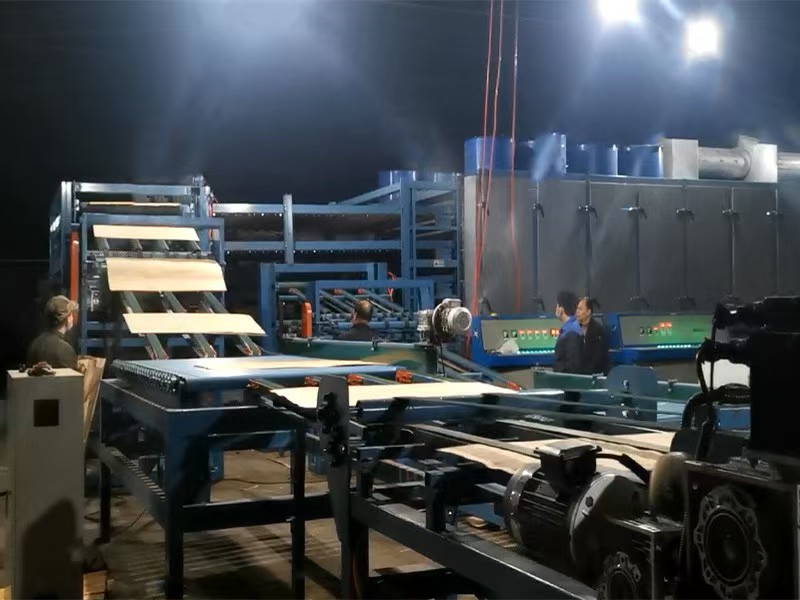
The seamless transfer from peeler to dryer is the first critical integration point. Shine has engineered its dryers with variable frequency drive systems that allow operators to match feed speeds precisely to the output rate of the peeling line. This synchronization prevents the accumulation of wet veneer between machines—a common source of production delays and material damage in poorly integrated plants.
Key integration features between peeling and drying include:
Adjustable infeed conveyors that accept veneer directly from the clipping station
Speed matching controls that synchronize dryer feed rates with peeler output
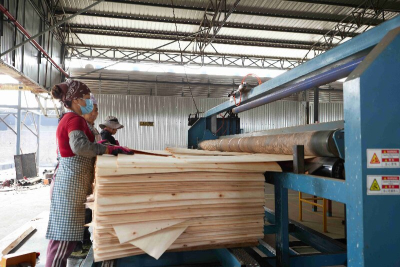
Automatic veneer feeding systems that reduce manual handling and labor costs
Compatible working widths (standard 3 meters) that accommodate veneer from Shine's peeling lines
The Drying Process: Precision Technology for Uniform Results
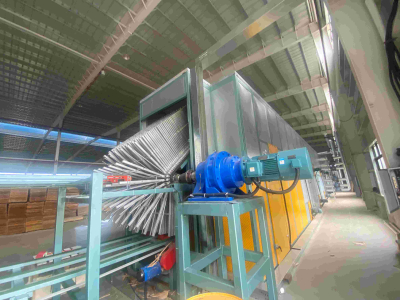
Once inside the Shine veneer dryer, the material undergoes a carefully controlled thermal process. The dryer employs advanced hot air circulation technology, with strategically positioned nozzles that direct heated air evenly across both surfaces of each veneer sheet. This uniform airflow eliminates the uneven moisture removal that causes warping, cracking, and surface checking—defects that would otherwise compromise the final plywood panel.
Shine's dryers incorporate multiple heating zones, allowing progressive moisture reduction without thermal shock to the wood fibers. A cooling section at the discharge end stabilizes the dried veneer, preventing reabsorption of ambient moisture before the gluing stage.
Biomass Combustion: The Energy Integration Advantage
One of the most significant integration features of Shine veneer dryers is their compatibility with biomass combustion systems. These burners utilize waste wood generated elsewhere in the plywood production process—including bark, trim ends, off-spec veneer, and sawdust—as fuel.
This creates a closed-loop energy system within the plywood plant:
Logs are peeled into veneer
Veneer is clipped to size, generating edge trim waste
Waste wood is chipped and fed to the biomass burner
The burner provides heat for the veneer dryer
Dried veneer proceeds to gluing and pressing
"The integration of the biomass burner with the veneer dryer represents a fundamental efficiency gain for plywood manufacturers," notes Shine's product development team. "Plants can reduce their drying fuel costs to approximately $6-12 per cubic meter of veneer processed—substantially lower than gas or thermal oil systems".
The biomass combustion technology, for which Shine holds multiple patents in China, can burn various waste wood materials directly without preliminary processing into pellets or other refined fuels. This simplicity reduces both capital investment and operating complexity for plywood manufacturers.
Integration with Downstream Equipment: Preparing for Gluing and Pressing
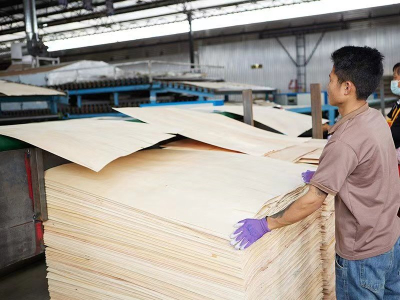
The true test of a veneer dryer's integration capability comes when dried veneer exits the machine and enters the plywood assembly process. For successful gluing, veneer must meet specific moisture content targets—typically 8-12%—and must be flat, smooth, and free of surface defects that would interfere with adhesive bonding.
Shine veneer dryers are engineered to produce uniform moisture content across every sheet, with automated control systems that maintain consistent conditions regardless of variations in incoming veneer moisture. This consistency is essential for downstream processes:
Gluing Integration: Dried veneer with uniform moisture content accepts adhesive more predictably, resulting in stronger bonds and reduced glue consumption. Shine dryers produce veneer that is "free of splits and the surface is in good condition for gluing," according to product specifications.
Cold Press Integration: The plywood cold press—also manufactured by Shine—applies initial pressure to glue-coated veneer assemblies before they enter the hot press. Veneer that has been properly dried and flattened in the Shine dryer stacks more uniformly in the cold press, reducing voids and ensuring consistent panel thickness.
Hot Press Integration: The final hot press cures the adhesive and bonds the veneer layers into a finished plywood panel. Veneer entering the hot press with uniform moisture content and flatness requires less pressing time, increasing the hot press's effective capacity and reducing energy consumption per panel.
Complete Line Solutions: One Supplier, Seamless Integration
Shine Machinery distinguishes itself by offering complete veneer production lines, not just individual machines. The company provides equipment for every stage of the process :
Log handling and preparation
Veneer peeling (spindle-less rotary lathes)
Veneer clipping and stacking
Veneer drying (roller-type and mesh belt configurations)
Veneer gluing and layup
Cold pressing
Hot pressing
Panel finishing and sanding
This comprehensive product range allows plywood manufacturers to source all major production equipment from a single supplier—a significant advantage for system integration. When all machines share compatible dimensions, control protocols, and operating philosophies, the coordination between stages becomes inherently smoother.
Industry Context: The Growing Demand for Integrated Lines
The plywood industry worldwide is experiencing a trend toward greater automation and line integration. As labor costs rise and quality expectations increase, manufacturers are seeking equipment that minimizes manual intervention while maximizing consistency.
A recent major plywood facility installation in France, for example, required "mechanical, electrical, and instrumentation installation" across multiple production lines, with careful planning and sequencing essential for success. Similarly, a Canadian plywood manufacturer recently completed an $18.7 million upgrade incorporating new drying and layup equipment as part of a comprehensive modernization strategy.
Shine has positioned itself to serve this market trend. The company reports that its veneer dryers are now operating in more than 20 countries, including Thailand (with over 150 units installed), Vietnam, Myanmar, Laos, Brazil, Latvia, and Russia. Many of these installations are part of complete lines where Shine equipment handles multiple production stages.
Technical Features Supporting Line Integration
Several specific features of Shine veneer dryers facilitate seamless integration with surrounding equipment:
PLC-Based Control Systems: Shine dryers incorporate programmable logic controllers that can communicate with central plant management systems. This allows production supervisors to monitor dryer performance, adjust parameters, and coordinate with upstream and downstream equipment from a single interface.
Modular Design: Shine dryers are available in configurations ranging from 16 to 60 meters of heating length, with single-layer or double-layer arrangements. This modularity allows the dryer to be sized precisely to match the capacity of the peeling line and presses, eliminating bottlenecks.
Variable Speed Drives: Frequency converters on the main drive motors allow infinite adjustment of conveyor speed, enabling precise synchronization with adjacent equipment.
Automatic Feeding and Discharge Systems: Optional automated infeed and outfeed equipment reduces labor requirements and ensures consistent material flow into and out of the dryer.
Quality Outcomes from Integrated Operation
When a Shine veneer dryer operates as part of a fully coordinated plywood line, manufacturers report specific quality benefits:
Uniform Panel Thickness: Consistent veneer moisture content and flatness from the dryer translates directly to plywood panels with uniform thickness across the entire sheet.
Reduced Warping and Delamination: Veneer that enters the gluing and pressing stages with optimal moisture content and flatness produces panels with superior dimensional stability and bond strength.
Higher Grade Recovery: Reduced drying defects—such as cracks, splits, and wavy edges—increases the percentage of veneer suitable for high-grade plywood applications.
Lower Scrap Rates: Precise moisture control eliminates over-drying and under-drying, reducing the volume of veneer rejected at the grading station.
Environmental and Economic Benefits
The integration of Shine's biomass-fired veneer dryer with the broader plywood production line creates both environmental and economic advantages:
Waste Utilization: Bark, trim, and off-spec veneer that might otherwise require disposal become valuable fuel, reducing landfill costs and environmental impact.
Reduced Fossil Fuel Consumption: Biomass combustion replaces natural gas or oil, lowering carbon emissions and insulating the plant from volatile fossil fuel prices.
Lower Operating Costs: The composite drying cost of approximately $6-12 per cubic meter of veneer is significantly lower than alternatives.
Improved Energy Efficiency: Shine dryers incorporate heat recovery systems that capture and recirculate thermal energy, further reducing fuel requirements.
After-Sales Support for Integrated Lines
Shine provides comprehensive after-sales support to ensure that its dryers continue performing as integrated components of complete production lines:
On-site installation supervision and commissioning by experienced technicians
Operator training at customer facilities to ensure proper use of controls and synchronization procedures
Technical documentation, including maintenance schedules and troubleshooting guides
Spare parts availability with global shipping options
Remote technical support for control system issues
The company reports that its service technicians work closely with customers to make sure the workers can operate at optimal efficiency and proficiency.
Future Developments
Shine has announced plans to release next-generation intelligent veneer drying systems with enhanced integration capabilities. These will include:
IoT connectivity enabling cloud-based monitoring of dryer performance across multiple production lines
Predictive maintenance algorithms that alert operators to potential issues before they cause downtime
Enhanced automation reduces manual intervention in dryer operation
Tighter integration with plant-wide manufacturing execution systems (MES)
These developments will further strengthen the role of Shine veneer dryers as the coordinating link in fully integrated plywood production lines.
Conclusion
In modern plywood manufacturing, the veneer dryer is far more than a standalone machine. It is the critical link that connects the green end to the dry end, transforming wet, variable veneer into consistent, high-quality material ready for gluing and pressing. Shine Machinery has engineered its veneer dryers specifically for this coordinating role, with features that enable seamless integration with peeling lines, biomass combustion systems, cold presses, and hot presses.
For plywood manufacturers seeking to improve efficiency, reduce costs, and produce higher-quality panels, the integration capability of the veneer dryer deserves careful consideration. As one industry expert noted, "Having state-of-the-art technology reflects the commitment to minimizing material waste, reducing cost, and increasing production to stay competitive in today's marketplace".
Shine's two decades of experience in complete veneer production lines—combined with its global installed base across more than 20 countries—positions the company as a knowledgeable partner for manufacturers pursuing fully coordinated, highly efficient plywood operations.
About Shandong Shine Machinery Co., Ltd.
Founded in 1999, Shandong Shine Machinery Co., Ltd. is a leading manufacturer of wood processing equipment, specializing in complete veneer production lines from log peeling through drying. The company was the first in China to propose the "Green Veneer Production" concept and holds multiple patents for veneer dryer and biomass combustion technology. Shine equipment serves customers across Asia, Europe, and North America.