
Reach 180 Cubic Meters With Stable Veneer Drying
For large plywood plants, unstable output, uneven moisture, warped sheets, and rising fuel costs can slow the entire production line and eat into profit. When veneer drying becomes a bottleneck, presses and downstream processes are forced to wait, and operators spend more time adjusting than producing.
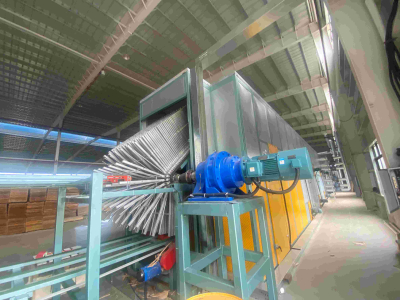
Shine Machinery offers a high-capacity Roller Veneer Dryer configuration for continuous Veneer Drying, helping mills process fresh veneer into smooth, glue-ready Dry Veneer with a rated drying capacity of about 180–190 m³/day. This configuration focuses on high output, stable moisture content, and lower drying cost per cubic meter, matching the needs of modern plywood production lines that run multiple shifts.

High-Capacity Roller Veneer Dryer Configuration
Shandong Shine Machinery Co., Ltd designs Veneer Machinery for mills that need continuous, efficient Drying Veneer with predictable output. For large plywood plants, the high-capacity Roller Veneer Dryer configuration is built around a wide working width, generous heating length, and an energy-saving biomass burner.
The configuration includes a 4.5 m working width, 0.8–8 mm veneer thickness range, and 36 m heating area length. This allows the line to handle different veneer thicknesses for face, core, and backing layers on the same production platform. According to the company’s product data, this line can reach about 180–190 m³/day, with veneer moisture reduced from fresh veneer to about 0–15%, depending on species and initial moisture.
A wider working width means more veneer can be loaded in each pass, which is essential for high-volume Plywood Veneer Dryer applications. Combined with multiple decks, the system helps mills fully use factory floor space while maintaining continuous feed and discharge.
| Parameter | Specification |
|---|---|
| Type | Roller Veneer Dryer |
| Working width | 4.5 m |
| Veneer thickness | 0.8–8 mm |
| Heating area length | 36 m |
| Drying capacity | About 180–190 m³/day |
| Final moisture | Fresh veneer to about 0–15% |
| Heat source | Biomass burner, with other options available |
| Composite drying cost | 6–12 USD/m³ including labor, fuel, and electricity |
From a cost perspective, the composite drying cost of 6–12 USD/m³ (covering labor, fuel, and electricity) gives plywood mills a clear benchmark for budgeting. Instead of guessing at drying expenses, managers can estimate operating costs based on real production data from similar Veneer Drying lines.
Continuous Veneer Drying for Flatter Sheets
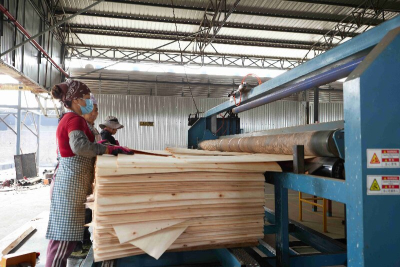
To achieve stable quality at high speed, the line combines an automatic infeeding system, hot-air circulation, temperature and speed regulation, humidity removal, and automatic outfeeding. During Veneer Drying, rollers convey the veneer smoothly through the heating section, supporting stable contact, even heat transfer, and consistent residence time.
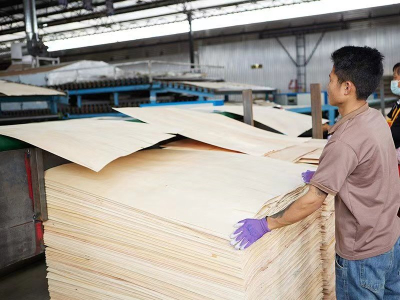
This roller conveying structure helps keep veneer flat throughout the process. Compared with simple batch drying or manual handling, the controlled movement reduces mechanical damage and uneven exposure to hot air. Veneer enters the dryer as fresh, high-moisture sheets and exits as Dry Veneer that is closer to the target moisture for gluing and pressing.
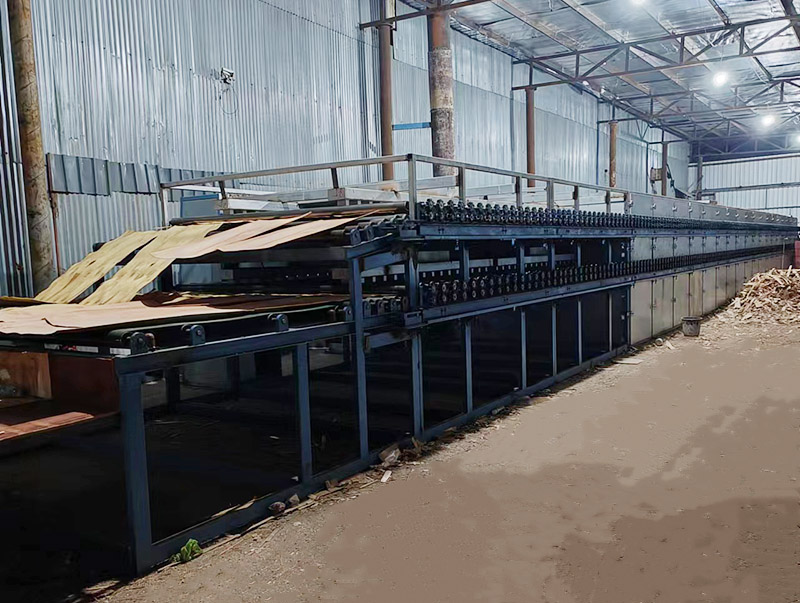
During drying, the circulating hot air passes through and around the veneer, while the rollers support the sheets and maintain a stable path. Combined with the automatic speed regulation system, this helps reduce buckling, end waviness, cracking, and inconsistent moisture before gluing, laminating, or pressing.
For plywood manufacturers, flatter and more uniform veneer brings several direct advantages:
More stable pressing – When veneer moisture is controlled within a narrow range, pressing parameters are easier to set and repeat.
Better gluing quality – Smooth, flat veneer allows glue to be applied evenly, improving bonding strength and reducing delamination.
Less rework and waste – Fewer warped or cracked sheets means less sorting and fewer rejected panels.
By combining automatic feeding, controlled Veneer Drying, and automatic outfeeding, the Roller Veneer Dryer turns veneer drying from a manual, unstable step into a more predictable part of the production line.
Biomass Heating and Lower Drying Cost
Shine Machinery’s biomass burner is designed to match the air volume and temperature requirements of the Roller Veneer Dryer. It can burn waste wood such as bark, off-cuts, and sawdust, helping reduce fuel cost compared with traditional gas or electric drying systems.
Instead of treating wood waste as a disposal problem, the biomass burner uses it as a primary energy source. This not only reduces fuel purchase costs but also helps mills lower overall waste-handling expenses. In many plywood plants, there is a steady stream of trimmings and residual wood that fits well with this heating concept.

The system can also use water circulation to recover residual heat and improve energy use, further supporting low Veneer Drying cost. Product data from Shine Machinery shows a composite drying cost of 6–12 USD/m³, which already includes labor, fuel, and electricity, giving buyers a practical reference value instead of a rough estimate.
For plywood mills comparing a Plywood Veneer Dryer from a China veneer dryer manufacturer or China veneer dryer supplier, the key value is straightforward: high output, controlled moisture, and lower operating cost per cubic meter. In regions where fuel price is unstable, the ability to rely on internal biomass resources instead of external gas can make a clear difference in total production cost.
Beyond cost, biomass heating also supports a more sustainable production model. Using waste wood generated in the mill reduces dependence on fossil fuels and can help some plants align better with local environmental policies and customer expectations.
Installation and Service Support
To help plywood mills put the Roller Veneer Dryer into operation quickly, Shine Machinery supports the complete Veneer Drying line with a full service package. This usually includes pre-sale consultation, layout and design proposals, factory inspection before delivery, overseas installation and commissioning, on-site operator training, and 24-hour online service.
Before production, Shine engineers communicate with customers about plant layout, raw material species, veneer thickness range, target moisture, and expected capacity. Based on these points, they propose a suitable Veneer Drying configuration and line layout to match the customer’s existing equipment.
During delivery and installation, the company arranges factory inspection for the Roller Veneer Dryer, then sends professional engineers to guide on-site installation. They assist with equipment positioning, connection of the biomass burner and hot-air pipeline, electrical wiring, and initial testing.
Commissioning covers temperature calibration, speed setting, and trial Veneer Drying with real material. Engineers adjust process parameters until the veneer moisture and surface quality reach the expected level. Operator training is conducted on site so that local staff can operate, maintain, and troubleshoot the line independently.
After start-up, Shine Machinery offers 24-hour online support. If the plant encounters issues during Veneer Drying, engineers provide guidance through remote communication, and on-site service can be arranged when necessary.
FAQs
Q1: Can this Roller Veneer Dryer reach 180 m³/day?
Yes. Shine Machinery’s listed configuration has a rated drying capacity of about 180–190 m³/day under standard working conditions, according to its product data. Actual output depends on veneer thickness, species, and target moisture, but the design is aimed at this capacity range for large plywood mills.
Q2: What veneer thickness can it process?
The stated range is 0.8–8 mm, suitable for different plywood veneer requirements from thin face veneer to thicker core sheets. Within this range, line speed and temperature can be adjusted to match each product type.
Q3: What final moisture can be achieved?
The product data shows moisture can be reduced from fresh veneer to about 0–15%. In practice, operators usually set a narrower target range to match gluing and pressing needs, and the automatic temperature and speed control helps keep moisture more stable.
Q4: What fuel does the dryer use?
The standard heat source is a biomass burner, which burns waste wood such as bark, trim pieces, and sawdust. Other options are available according to project needs and local fuel conditions, but biomass heating is commonly selected to reduce drying cost.
Q5: Does Shine Machinery provide installation support?
Yes. Professional engineers guide installation, commissioning, and worker training on site. They stay until the Roller Veneer Dryer and Veneer Drying line operate normally and reach stable production, and after that the company offers continuous online service for technical questions.