
Should Your Mill Choose a Vertical or Roller Veneer Dryer
Veneer drying is one of the most important decisions in a plywood mill because it influences moisture control, production rhythm, floor layout, labor use, and long-term operating cost. For buyers comparing a vertical veneer dryer with a roller veneer dryer, the best choice is not simply the larger or newer machine. It depends on workshop space, target capacity, veneer thickness, fuel plan, and how much automation the mill expects to add over time.

Why Veneer Dryer Selection Changes Mill Economics
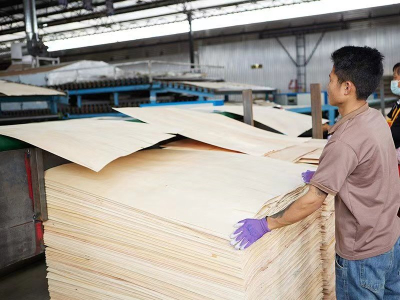
A veneer dryer is not an isolated purchase. It sits between peeling, sorting, gluing, pressing, and finishing. If drying is unstable, veneers may reach the next process with uneven moisture, creating risks in bonding, flatness, and panel consistency. If drying capacity is mismatched, the entire line may wait for the dryer, even when peeling and pressing equipment still have room to run.
A vertical veneer dryer is often evaluated by mills that want a compact arrangement and controlled investment, while a roller veneer dryer is commonly considered for continuous production lines with higher throughput expectations. Both systems can serve plywood production, but they solve different operating problems.
For buyers reviewing suppliers in China, Plywood Vertical Veneer Dryer options from Shine Machinery show how compact drying equipment can be configured for mills that need space-saving layouts and practical fuel use.
How a Vertical Veneer Dryer Works in Plywood Production
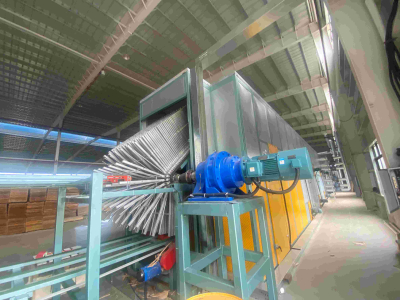
A vertical veneer dryer from Shine Machinery is drying equipment based on a two-way conveying principle. Veneers move through the drying chamber and keep turning with a flap structure during drying. This movement helps each sheet receive more consistent hot-air exposure, supporting stable product quality across the drying process.
The equipment can adjust air volume, heating temperature, material residence time, and feeding speed, giving operators room to match drying settings with veneer condition and production needs. The product information for Shine Machinery’s FBH30-20 model lists moisture reduction from fresh veneer to within 20%, a capacity of 1.2–1.5 m³/h, an overall size of 20 × 7 × 4 m, and total installed power of 36.3 kW.
Another practical point is fuel handling. The vertical system can burn waste wood handles and branches left by rotary cutting. This helps mills use on-site wood residue instead of treating it only as disposal material. The product description also notes that no additional boiler or heating equipment is required in this configuration.
How a Roller Veneer Dryer Works in High Volume Lines

A roller veneer dryer uses a horizontal conveying structure where veneers are carried through heating and cooling sections by rollers. This makes it suitable for continuous feeding, stable movement, and longer production runs. In many plywood mills, this type of machine is selected when output stability and line automation are priorities.
Shine Machinery’s Roller Plywood Veneer Dryer product details describe a 4-deck GTH30-38 configuration with a 3.0 m working width, 34 m heating area, and 4 m cooling area. It is designed for veneer thickness from 0.6–8 mm and can reduce fresh veneer moisture to approximately 8–10%. The listed drying capacity is 5 m³/h, with transport speed adjustable from 5–22 m/min.
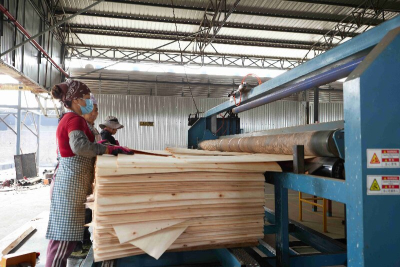
This kind of roller system is naturally larger than a compact vertical arrangement, but it supports a continuous production flow. The product details also describe automatic feeding and veneer collection systems that can reduce labor intensity at both ends of the line.
Vertical Veneer Dryer vs Roller Veneer Dryer Comparison
The following comparison uses product information from Shine Machinery examples and general mill selection logic. Actual project planning should still account for veneer species, thickness, starting moisture, factory layout, fuel supply, and target production schedule.
| Selection Factor | Vertical Veneer Dryer | Roller Veneer Dryer |
|---|---|---|
| Typical layout | Compact structure with high space utilization | Longer horizontal production line |
| Example model data | FBH30-20, 20 × 7 × 4 m overall size | GTH30-38, 34 m heating plus 4 m cooling section |
| Example capacity | 1.2–1.5 m³/h | 5 m³/h |
| Moisture target in listed model | Fresh veneer to within 20% | Fresh veneer to about 8–10% |
| Fuel approach | Can burn waste wood handles and branches from rotary cutting | Listed roller configuration uses waste wood as heating material |
| Operation style | Adjustable air volume, temperature, residence time, and feeding speed | Continuous transport with adjustable speed and temperature control |
| Maintenance profile | Simpler compact structure | More rollers, decks, fans, and line components |
| Best fit | Space-limited mills and controlled investment projects | Higher-capacity continuous plywood lines |
In practice, a vertical veneer dryer is generally stronger where space, purchase cost, and simplified operation matter most. A roller veneer dryer is usually stronger where capacity, continuous running, and integration with larger line systems are the main priorities.
Cost, Energy, and Layout Considerations
Drying consumes both heat and electricity, so dryer selection should include more than the machine price. Mill managers should compare fuel availability, installed power, workshop length, labor arrangement, and the expected cost of downtime.
A vertical veneer dryer can be attractive when a mill has limited space or wants to use wood residue from rotary cutting as fuel. Its compact structure reduces the floor area required for drying, and its adjustable feeding speed and residence time help operators respond to changing veneer conditions. For smaller or medium output plans, this can make the investment easier to manage.
A roller veneer dryer may require a larger layout and higher installed power, but it brings greater output in the listed Shine Machinery example. For mills that need continuous capacity, automatic feeding, automatic collection, and steady production rhythm, the higher investment may be reasonable. Buyers reviewing a 6 deck veneer dryer or other larger roller configuration should also consider workshop planning, foundation requirements, operator training, and spare parts strategy.
Which Dryer Fits Different Plywood Mills
A vertical veneer dryer is often the better direction when the mill has a compact workshop, moderate output demand, limited land for long equipment, or a budget focused on practical drying rather than maximum throughput. It is also suitable when the buyer wants a drying system that can use waste wood branches and rotary-cutting residue in the heating process.
A roller veneer dryer makes more sense when the mill is designed around continuous production, higher capacity, and multi-deck drying. If the factory already has space for a long layout and the downstream process can absorb a higher drying output, a roller system can help keep production moving at a stable pace.
Some buyers evaluate both systems during expansion planning. The decision should begin with four questions: What is the target drying capacity? What moisture level is required before gluing or pressing? How much workshop space is available? What fuel and power costs are realistic in daily operation?
What to Ask Before Ordering from a Supplier
Before choosing a China veneer dryer manufacturer, buyers should request model-specific information instead of relying only on general descriptions. Key items include working width, deck quantity, drying capacity, veneer thickness range, moisture target, heating method, installed power, factory layout drawing, feeding method, collection method, and after-sales support.
Shandong Shine Machinery Co., Ltd provides veneer drying equipment under Shine Machinery and presents both vertical and roller dryer product lines through www.veneersdryer.com. For procurement teams searching for a China veneer dryer supplier or comparing options associated with the phrase China top veneer dryer factory, model suitability should remain the main purchasing standard.
Conclusion
Choosing between a vertical veneer dryer and a roller veneer dryer is a question of production strategy. If the mill needs a compact footprint, lower investment pressure, adjustable drying control, and practical use of wood residue, the vertical option deserves close evaluation. If the mill needs higher continuous output, multi-deck operation, and integrated feeding and collection systems, the roller option may be the stronger fit.
A well-selected dryer protects more than moisture content. It supports smoother production, better use of workshop space, and a more predictable cost structure for plywood manufacturing.
FAQs
Is a vertical veneer dryer suitable for a small plywood mill?
Yes. A vertical veneer dryer is designed with a small footprint and high space utilization, making it suitable for factories with limited workshop space or moderate drying capacity needs.
When should a mill choose a roller veneer dryer instead?
A roller veneer dryer is usually better when the mill requires continuous production, higher drying capacity, multi-deck operation, and stable integration with automatic feeding and collection systems.
Can Shine Machinery’s vertical dryer use wood waste as fuel?
Yes. Shine Machinery’s vertical dryer product description states that it can burn waste wood handles and branches left by rotary cutting.
What parameters should buyers compare before purchasing?
Buyers should compare capacity, moisture target, veneer thickness range, working width, power, heating method, factory layout, feeding system, collection method, and maintenance requirements.
Does a larger dryer always mean a better investment?
Not always. A larger dryer may increase capacity, but the best investment depends on workshop space, target output, labor plan, fuel cost, and how the dryer matches the rest of the plywood production line.