
Why Vertical Veneer Dryer Fits Small Plywood Mills Today
Small plywood mills are under pressure to dry veneers more reliably without committing to oversized equipment, large workshops, or labor-heavy production. For factories moving away from natural sun drying, the Vertical Veneer Dryer has become a practical option because it addresses the real constraints of compact production: limited floor space, fuel cost, handling efficiency, and moisture consistency.

For buyers comparing suppliers through searches such as China veneer dryer manufacturer, China veneer dryer supplier, or China top veneer dryer factory, the value of a compact vertical system is not only about machine price. It is about whether the dryer can fit the factory, reduce daily operating pressure, and help a mill move from weather-dependent drying to controlled production.
Reason 1 Vertical Veneer Dryer Saves Valuable Workshop Space
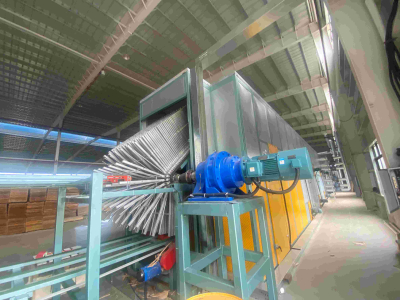
A Vertical Veneer Dryer is attractive to small plywood mills because its vertical structure improves space utilization. Instead of requiring a long production line like many horizontal drying layouts, the vertical design stacks the drying path and keeps the equipment more compact.
We describe our small vertical dryer as covering about 20 meters of area, which makes it suitable for workshops where land and factory expansion are difficult. For a small mill, this matters because drying is often the process that consumes the most visible space. When veneers are spread outdoors for sun drying, the factory needs yard space, stable weather, and extra handling. A compact dryer helps bring that step indoors and makes the workflow easier to manage.
The Small Vertical Veneer Dryer is therefore positioned for producers that want to move from natural drying to machine drying without immediately purchasing a large dryer. This is especially relevant for compact workshops processing core veneer or plywood veneer in limited production areas.
Reason 2 Vertical Veneer Dryer Reduces Daily Labor Pressure
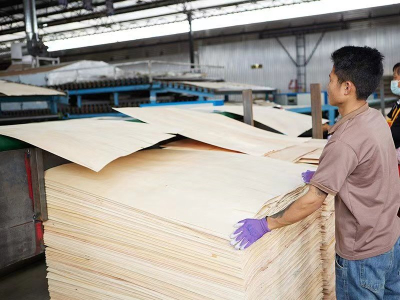
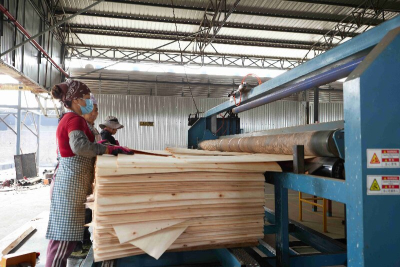
A Vertical Veneer Dryer also fits the staffing reality of small plywood factories. Labor availability can be unpredictable, and manual drying usually requires repeated moving, spreading, turning, collecting, and stacking of veneer sheets.
Our small vertical dryer is described as requiring only three people for production. The working principle is based on two-way conveying: material is placed onto the upper grid plate from the feeding end, distributed evenly on the grid plate, moved through the dryer, transferred to the lower layer by the vertical mechanism, and then delivered to the discharge end after drying.
This simplified movement reduces unnecessary handling steps. For a small mill, the benefit is not only lower labor demand; it is also better production discipline. Operators can focus on feeding, observing the drying condition, and collecting finished veneer rather than constantly responding to weather changes or manually turning veneer in the yard.
Reason 3 Vertical Veneer Dryer Uses Waste Wood as Fuel
A Vertical Veneer Dryer becomes more practical when fuel cost is considered. Veneer production naturally creates wood waste, including branches, veneer offcuts, and waste wood handles cut by the rotary cutter or peeling process. Our vertical system uses a built-in combustion furnace that can burn this type of waste wood, helping reduce raw material fuel costs.

The drying area temperature is described as 100–130°C and adjustable according to production needs. This gives operators a controlled drying environment while making use of biomass fuel already generated during veneer processing. In daily production, this biomass vertical veneer dryer approach can be especially helpful for mills that want to reduce dependence on external fuel purchases.
From an industry perspective, veneer drying is widely recognized as one of the most energy-intensive stages in plywood manufacturing. That is why small mills increasingly pay attention to heat sources, hot air circulation, and controllable drying conditions before choosing a dryer. A built-in furnace that uses production waste can support a more economical drying process when matched with appropriate operation and maintenance.
Reason 4 Vertical Veneer Dryer Supports More Consistent Veneer Quality
A Vertical Veneer Dryer is designed to improve drying consistency through material distribution, air control, and movement inside the dryer. Our vertical dryer adopts two-way conveying, with veneer material evenly distributed on grid plates and moved smoothly through upper and lower layers.
The system allows adjustment of air volume, heating temperature, material residence time, and feeding speed to help achieve the desired drying effect. During drying, the material keeps turning with the flap, supporting more consistent product quality. The dryer is also described as using hot air circulation to evaporate moisture in the veneer and help maintain quality stability during the drying process.
For plywood mills, this matters because uneven moisture can affect later processes such as gluing, pressing, and board stability. Veneers that are too wet, too dry, cracked, or deformed can lower yield and create additional sorting work. On our Vertical Veneer Dryer for sale page, we note that controlled drying temperature and wind speed can help avoid veneer deformation or cracking caused by overheating.
Reason 5 Vertical Veneer Dryer Offers a Lower Barrier to Machine Drying
A small Vertical Veneer Dryer gives growing plywood businesses a more flexible entry point. For many factories, the first challenge is not whether machine drying is useful; it is whether the investment fits current production scale.
We know that purchasing a large veneer dryer can be costly for mills transitioning from natural drying to appliance drying. Our small vertical dryer is presented as a lower-investment option that can still support efficient production and profitability in the short term. The listed drying capacity for the small vertical dryer is 1.2–1.5 m³/h in the product details, while company news also describes a small vertical dryer drying 1.5 m³/h. Another product page lists 36 m³/day drying capacity, with veneer thickness from 0.8–8 mm, fresh veneer moisture reduced to about 0–15%, and a built-in burner as the heat source.
For buyers, these points make the equipment easier to evaluate. The decision can be based on workshop size, veneer thickness, expected moisture level, labor arrangement, heat source, and future production plan. Shandong Shine Machinery Co., Ltd (Shine Machinery) presents its vertical dryer range through www.veneersdryer.com, where buyers can review product pages and contact us for project-specific discussions.
What Small Mills Should Check Before Buying
Before choosing a vertical dryer for veneer, procurement teams should match machine specifications with their actual production conditions. Important points include:
Available workshop length and operating space around the dryer
Veneer thickness and size, especially for core and face veneer
Target final moisture range required for the next production step
Fuel availability, including branches, offcuts, and other wood waste
Labor arrangement for feeding, monitoring, and unloading
Temperature and speed adjustability for different veneer conditions
Supplier communication, including installation, operation guidance, and after-sales support
For small-scale plywood mills, the most suitable machine is usually the one that balances investment, floor space, fuel use, and drying stability. A compact dryer that fits the factory layout and uses accessible fuel may create more value than a larger system that exceeds current production needs.
FAQs
Is this dryer suitable for factories moving from sun drying?
Yes. We describe our small vertical dryer as suitable for producers moving from natural drying to appliance drying, especially when a large dryer would require a higher investment.
How much space does the small vertical dryer need?
We state that our small vertical dryer covers about 20 meters of area, making it suitable for compact production sites.
How many workers are typically needed?
The small vertical dryer is described as requiring only three people for production, which can help reduce daily labor pressure in small workshops.
What fuel can the built-in furnace use?
The built-in combustion furnace can burn tree branches and waste wood handles or residues produced during veneer peeling and cutting, helping reduce raw material fuel costs.
What drying temperature is used?
The drying area temperature is described as 100–130°C, and it can be adjusted according to production requirements.
What capacity information is listed for the small model?
Our product information lists 1.2–1.5 m³/h for the small vertical dryer, while company news describes 1.5 m³/h. Another related product page lists 36 m³/day drying capacity.