
Dry Veneer to 10 Percent Without Chasing Speed
When green veneer enters a drying line at 60–80% moisture content, the goal isn't just to rush sheets through the dryer as fast as possible. For plywood and LVL production, what truly matters for acceptance is whether a veneer dryer machine can achieve the target moisture, keeping sheets flat, stable, and ready for gluing. When the target is around 10%, control accuracy often matters more than headline drying speed.

Define the Moisture Target Before Judging Speed
A veneer dryer removes a large amount of water from rotary-cut or sliced veneer. However, removing water faster does not automatically produce better veneer. In plywood production, over-dried, uneven, cracked, or wavy sheets can create downstream problems even if the dryer appears productive on paper.
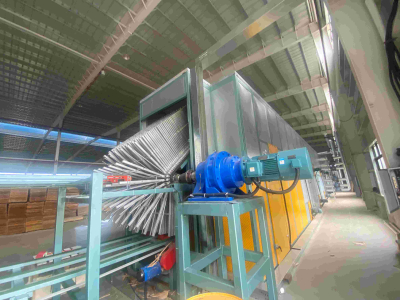
Shine Machinery’s Shine-20 two-deck mesh-belt configuration provides a practical reference point for this discussion. Its parameters show a clear drying task: reduce veneer from 60–80% initial moisture content to 8–12% final moisture content under a 150–180°C drying temperature range.
| Parameter | Shine-20 two-deck mesh-belt configuration |
|---|---|
| Working width | 3000 mm |
| Layers | 2 decks |
| Heating section | 9 sections × 2000 mm = 18000 mm |
| Cooling section | 1 section × 2000 mm = 2000 mm |
| Heating medium | Steam or thermal oil |
| Drying temperature | 150–180°C |
| Drying thickness | 0.2–4 mm |
| Initial moisture content | 60–80% |
| Final moisture content | 8–12% |
| Drying capacity | 1–1.5 m³/h |
| Total power | 47 kW |
It's important to remember these figures are configuration-specific. Shine Machinery also lists a Shine-20 one-deck mesh-belt model with 0.18–0.24 mm drying thickness, 12% final moisture content, and 0.6–1 m³ drying capacity. For buyers, this means acceptance standards should always match the exact veneer thickness, incoming moisture, final moisture target, and selected wood dryer machine configuration.
Why Qualified Output Beats Maximum Throughput
A plywood veneer dryer is not the final product; it is a preparation stage for gluing, pressing, and panel production. This is precisely why the quality of the discharged veneer is as vital as the sheer volume passing through the machine.
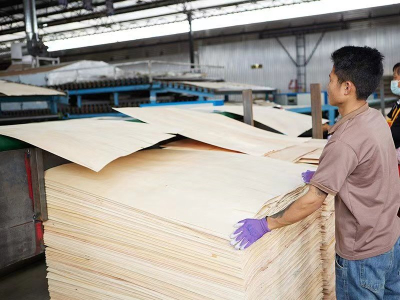
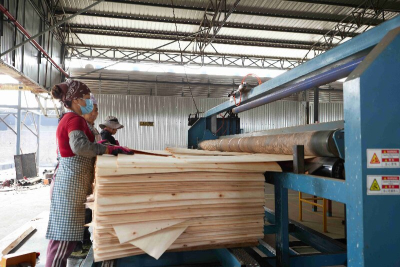
Shine Machinery describes dried veneer from its mesh-belt dryer as having uniform moisture content, a flat surface without buckle or end waviness, no splits, and a surface condition suitable for gluing. Our veneer dryer machine descriptions also emphasize smooth veneer after drying, with no cracks, wrinkles, or end ripples, while deformation is kept to a minimum.

For acceptance testing, the practical measure is therefore qualified output, not empty-line speed. A dryer operating at top speed might seem efficient, yet if the resulting veneer needs re-drying, reconditioning, sorting, or even rejection, its true production value diminishes rapidly.
What a Practical Acceptance Check Should Include
For a wood drying machine, a practical acceptance checklist goes beyond just recording transmission speed. It should connect operating conditions with final veneer condition.
Key items include:
Incoming veneer thickness and initial moisture content.
Dryer temperature and transmission speed settings.
Final moisture readings and sheet-to-sheet consistency.
Veneer flatness after cooling and discharge.
Visible defects such as cracks, wrinkles, splits, buckle, or end ripples.
Stable production capacity under agreed conditions.
Energy use observations during normal operation.
Downtime, jamming, maintenance, and operator workload during the test period.
This approach truly reflects how a veneer dryer machine is utilized in a production environment. The machine is not accepted because it reaches a single high-speed number; it is accepted because it repeatedly produces veneer that can move into the next process with less waste and fewer interruptions.
How Shine Machinery Supports Moisture Control
Shine Machinery’s roller veneer drying equipment uses automatic electric control and a frequency-conversion system. The system can automatically adjust transmission speed and temperature according to different veneer thickness and moisture content to achieve the desired drying effect.
This matters immensely because veneer rarely enters a dryer in perfectly uniform condition from sheet to sheet. Thickness, initial moisture, and wood condition can vary. A fixed setting may not suit every production batch. Adjustable temperature and speed control help a wood dryer machine respond to those differences instead of relying only on operator guesswork.
The roller veneer dryer also uses a heat-exchange structure designed for high heat-exchange efficiency and low heat loss. Our product descriptions emphasize this heat-exchange system as a key factor in boosting energy utilization and cutting down on unnecessary waste.
For a four-deck roller veneer dryer configuration, Shine Machinery states that an axial-flow fan reduces whole-machine power by 38%. This figure, of course, applies to the stated configuration and should be assessed based on your chosen model, heat source, production layout, and specific drying objectives.
Energy Efficiency Depends on Accurate Drying
Drying past the ideal point drains heat, electricity, and valuable production time, often without actually improving panel quality. Indeed, in many production environments, over-drying can render veneer brittle or simply harder to manage. That is why moisture accuracy and energy efficiency should be evaluated together.
Shine Machinery’s dryer configurations can use different heating media depending on the model, including steam, thermal oil, and biomass burner options. Our mesh-belt configurations cited here use steam or thermal oil. Our roller dryer descriptions also mention steam boiler, thermal oil heater, or biomass burner options, with biomass systems using waste wood as fuel in relevant configurations.
For procurement teams evaluating a veneer dryer machine, a plywood veneer dryer, or a complete wood drying machine system, energy performance should ideally be measured per qualified cubic meter of output, rather than solely by installed power or the heat source used. Veneer thickness, moisture drop, required final moisture, and stable output all affect operating cost.
Matching the Dryer to Plywood and LVL Production
Dried veneers from Shine Machinery drying lines are used in applications including plywood and LVL manufacturing. For buyers searching for a China veneer dryer manufacturer or China veneer dryer supplier, the right selection starts with the end product requirement: final moisture range, veneer surface condition, production capacity, and heating method.
At Shandong Shine Machinery Co., Ltd, we offer both roller and mesh-belt drying configurations, and our team can create customized designs tailored to your specific requirements. In essence, the right veneer drying solution should always align with your actual plant conditions, not merely be chosen based on a nameplate speed.
The core question remains straightforward: when veneer moisture reduces from over 70% to around 10%, what is the actual condition of the sheet as it exits the dryer? If the answer involves stable final moisture, excellent flatness, minimal visible defects, and dependable output, then your veneer dryer machine isn't just drying fast; it's actively safeguarding the value of your subsequent production stages.
Detailed product configurations can be reviewed at www.veneersdryer.com and through the veneer dryer range.
FAQs
Is drying speed the most important acceptance standard for a veneer dryer machine?
No. Speed matters, but it should be judged together with final moisture content, moisture uniformity, veneer flatness, visible defects, energy use, and stable qualified output.
What final moisture range is listed for Shine Machinery’s Shine-20 two-deck mesh-belt dryer?
The cited Shine-20 two-deck mesh-belt configuration lists 8–12% final moisture content from 60–80% initial moisture content.
What drying temperature is listed for the Shine-20 mesh-belt configuration?
The Shine-20 one-deck and two-deck mesh-belt configurations list a drying temperature range of 150–180°C.
Why is moisture uniformity important before gluing?
Industry research commonly links suitable, even veneer moisture with better preparation for bonding. Veneer that is too wet, too dry, or uneven may create quality risks in later plywood production.
Can Shine Machinery provide different veneer dryer configurations?
Yes. Shine Machinery lists roller and mesh-belt dryer configurations and states that its R&D team can design different models according to customer requirements.