
End Waviness Before Gluing Often Starts Inside the Veneer Dryer
End waviness that shows up before gluing is a strong signal to look upstream. In many plywood veneer drying lines, waviness and buckle appear when the veneer exits the dryer with uneven moisture content or inconsistent drying conditions—well before any adhesive touches the sheet.
For buyers comparing a veneer dryer machine, it helps to frame the question this way: Does your Veneer Drying System deliver uniform moisture and stable flatness at your target throughput? That is the practical foundation for reliable layup and gluing.

What end waviness before gluing usually means
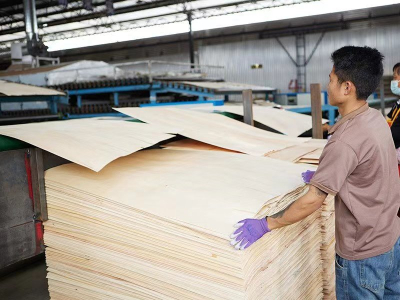
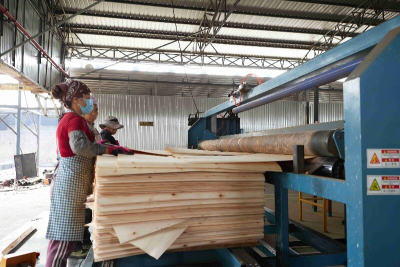
End waviness is the visible wave or deformation near veneer ends; buckle is a broader loss of flatness across the sheet. When either defect is present right after plywood veneer drying, procurement teams typically review three linked outcomes:
Moisture uniformity: veneer after drying should have uniform moisture content.
Veneer flatness: veneer should be flat without buckle or end waviness.
Surface readiness: veneer should be in good condition for gluing.
From an equipment-evaluation standpoint, these outcomes are not “nice to have.” They are the direct inputs to stable downstream handling—stacking, layup, glue spreading, and pressing. If waviness is already present, adjusting adhesive settings alone is unlikely to address the root cause.
How a roller veneer dryer machine is positioned to improve uniformity
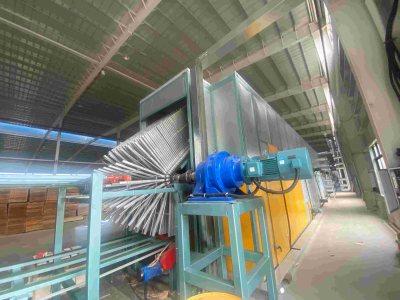
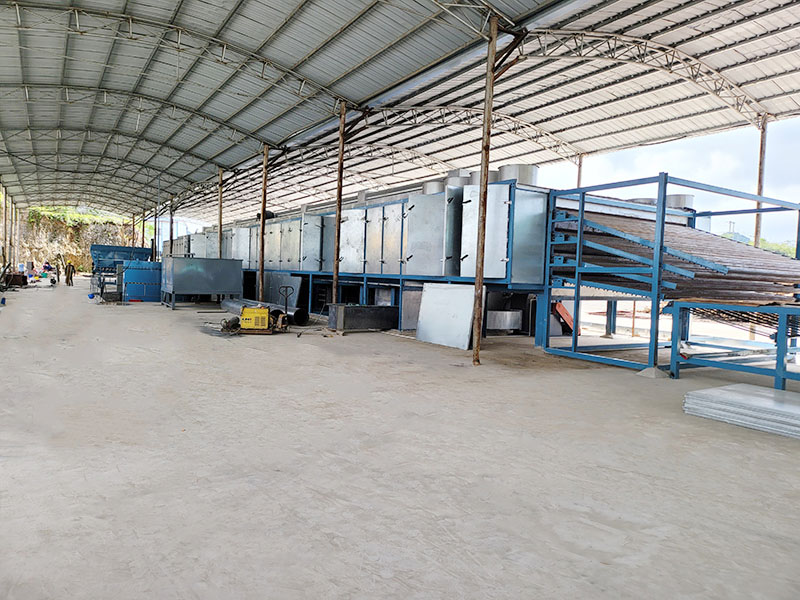
A roller-style veneer dryer machine is commonly assessed for how it transports veneer consistently through a heating section and then a cooling section. In Shine Machinery’s roller core veneer dryer machine description, the target is clear: veneer after drying has uniform moisture content, is flat without buckle or end waviness, and remains in good condition for gluing.
In procurement discussions, that combination matters because uniform moisture content reduces sheet-to-sheet variation, while controlled conveying and airflow help protect veneer flatness. For plants dealing with end waviness before gluing, the purchasing question becomes whether the selected roller configuration and controls fit the veneer thickness range and daily production rhythm.
A relevant reference point is Shine’s Roller Core Veneer Dryer Machine page, which highlights low drying cost operation and the intention to keep veneer flat without buckle or end waviness, with surfaces suitable for gluing.

Because dryer performance is judged at operating speed rather than in isolation, buyers usually compare transport stability, temperature control, and how well the machine holds a repeatable moisture profile across batches. Where pre-gluing waviness is already visible, that comparison becomes especially practical: if the dryer does not deliver a uniform result at real production conditions, downstream process stability is harder to achieve even with careful glue control and pressing parameters.
Example specification for a Veneer Drying System purchase discussion
For buyers who prefer to benchmark using concrete parameters, Shine’s Core Veneer Drying Machine page provides a full specification set for model GTH30-20. This is useful when a mill is matching working width, deck count, heating length, and transport speed to the plywood veneer drying requirement.
You can find the model on the Core Veneer Drying Machine page.
| Parameter | GTH30-20 Specification |
|---|---|
| Working width | 3.0m |
| Deck | 4 |
| Veneer thickness & size | 0.6–8mm |
| Heating area length | 16m |
| Cooling area length | 4m |
| Heating material & Temp | Waste wood, 140–200°C adjustable |
| Temperature control accuracy | ±5°C |
| Veneer transport speed | 5–22m/min |
| Veneer water moisture | Fresh veneer to about 8–10% |
| Drying capacity | 2.5m³/h |
| Total power | 145.5KW |
| Actual electricity consumption | About 100kwh per hour |
This type of table helps procurement teams compare a veneer dryer machine on factors that directly affect uniformity and flatness: temperature range and control accuracy, speed range, and the balance between heating and cooling sections.
Roller dryers vs Vertical Veneer Dryer options for different flatness priorities
Not every plant has the same space constraints or flatness requirement. In Shine’s product information, a Vertical Veneer Dryer is positioned as a lower purchase cost option with a compact footprint.
Shine’s Wood Vertical Veneer Drying page states that the equipment uses three-dimensional loading of veneer and can cover only two-thirds of the area of the roller dryer, with uniform airflow and steady temperature, using a countercurrent drying cycle to keep quality uniform.
In practical sourcing terms:
A roller veneer dryer machine is often evaluated when veneer flatness (no buckle, no end waviness) is a central requirement for downstream layup.
A Vertical Veneer Dryer is often evaluated when installation space and lower comprehensive drying cost are stronger constraints, and the application is mainly core plate, partial surface, and bottom plate.
Vertical Veneer Dryer example parameters
The Wood Vertical Veneer Drying page also provides an example model FBH30-13 parameter set:
| Parameter | FBH30-13 |
|---|---|
| Moisture content (%) | fresh veneer dried to 0–5% |
| Output (m³/h) | 2 |
| Machine size (L×W×H, m) | 13×3×4 |
| Total power (KW) | 15 |
| Fuel consumption (KG/H) | 200 |
For buyers comparing a Veneer Drying System, these parameters help align selection with the line’s target moisture level, available footprint, and operating plan.
A practical receiving checklist when waviness appears before gluing
When end waviness is visible before gluing, a useful first step is to treat the dryer discharge as a quality gate. The goal is not to “guess the cause,” but to confirm whether plywood veneer drying is delivering uniform moisture content and stable flatness.
Check moisture consistency across sheets. Look for obvious variation between bundles. Uniform moisture content is repeatedly emphasized in Shine’s product descriptions as a quality outcome.
Inspect veneer ends immediately after cooling. End waviness often becomes more noticeable as sheets cool and are handled.
Confirm the veneer surface is suitable for gluing. Shine describes dried veneer as free of splits and in good condition for gluing on its roller dryer information.
Match your veneer thickness to the machine’s working range. For example, GTH30-20 lists 0.6–8mm.
Review transport speed and drying temperature as a combined setting. On Shine’s roller dryer descriptions, frequency conversion and automatic control are presented as tools to adjust speed and temperature to reach an ideal drying effect.
This checklist is intentionally equipment- and process-focused. If the veneer exits the veneer dryer machine flat, with uniform moisture content, glue application becomes simpler to stabilize.
Where low-cost drying fits into a flatness-focused purchasing decision
Procurement teams often search for a Low Cost Veneer Dryer, but cost comparisons are meaningful only when the required veneer quality is maintained. Shine’s Low Cost Veneer Dryer Machine page positions a roller veneer dryer with working width 3m, veneer thickness 0.8–8mm, heating area length 32m, drying capacity 50–60m³/day, and a biomass burner as the heat source (other options available).
For buyers who are troubleshooting end waviness before gluing, the key is to evaluate “low cost” together with moisture uniformity and flatness requirements—because re-drying, rejection, or unstable layup can quickly erase energy savings.
A sourcing takeaway for plywood veneer drying lines
End waviness before gluing is most efficiently addressed where it begins: at plywood veneer drying. A Veneer Drying System that delivers uniform moisture content and keeps veneer flat without buckle or end waviness reduces downstream correction work and supports stable gluing.
For buyers shortlisting equipment types, the comparison is typically between a roller veneer dryer machine (often chosen where flatness is the central criterion) and a Vertical Veneer Dryer (often chosen where footprint and low comprehensive drying cost are key constraints). In either case, the purchasing decision is stronger when it is anchored to the published machine parameters and the intended veneer application.
To review available configurations and related equipment categories, visit the Shine Machinery product list at Products.
FAQs
If end waviness appears before gluing, should the glue recipe be changed first?
If waviness is visible before gluing, it is usually more efficient to inspect plywood veneer drying results first—especially moisture uniformity and flatness at dryer discharge.
What results are emphasized for Shine’s roller core veneer dryer machine?
Shine’s roller core veneer dryer machine information emphasizes uniform moisture content, veneer that is flat without buckle or end waviness, and veneer surfaces in good condition for gluing.
What is one example specification for a Shine Core Veneer Drying Machine?
Model GTH30-20 is listed with 3.0m working width, 4 decks, 0.6–8mm veneer thickness range, 140–200°C adjustable temperature, ±5°C control accuracy, and 5–22m/min transport speed.
When is a Vertical Veneer Dryer commonly considered?
Shine’s vertical drying information positions it for core plate, partial surface, and bottom plate, with a compact footprint using three-dimensional loading.
What footprint note is given for Shine vertical drying equipment?
Shine’s vertical veneer drying information states the equipment can cover an area of only two-thirds of the roller dryer.
What is listed on Shine’s Low Cost Veneer Dryer Machine page?
That page lists a roller veneer dryer type with 3m working width, 0.8–8mm veneer thickness, a 32m heating area length, 50–60m³/day drying capacity, and biomass burner heat source (other options available).