
Stop Feeding Problems by Defining Veneer Flatness Reality
In daily plywood veneer drying, perfect veneer flatness is rarely the real goal. What matters is whether core plates and bottom plates can be fed continuously and transported smoothly through the drying tunnel.
For buyers comparing a veneer dryer machine, this “realistic flatness boundary” is a practical way to align veneer preparation cost with stable production. It also clarifies why a Vertical Veneer Dryer is commonly evaluated differently from roller-type dryers: the feeding structure, conveying method, and space utilization shape what “acceptable flatness” means on the shop floor.

Why flatness matters in a vertical tunnel feeding scenario
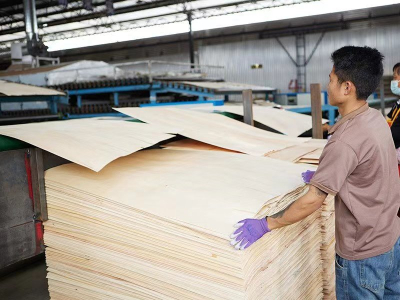
Core and bottom veneers often leave rotary cutting with visible waviness or deformation. In continuous Drying Veneer operations, those shape variations can create very specific problems: unstable positioning at the infeed, inconsistent movement through the conveying path, and stoppages that disrupt the production rhythm.
A realistic flatness boundary is not a numeric tolerance. It is a handling boundary defined by whether the veneer can be:
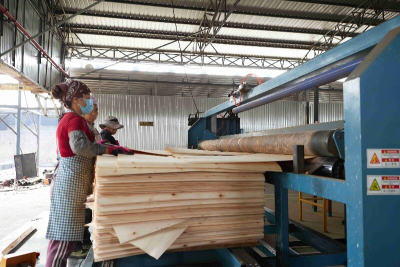
loaded into the selected feeding arrangement,
carried reliably by the conveying method,
kept moving without frequent manual intervention.
This is the core reason many mills separate “appearance flatness” from “feeding flatness.” In practice, a sheet can look imperfect and still run well—while a sheet that catches, folds, or rides unevenly may create downtime regardless of how it looks when laid on the floor.
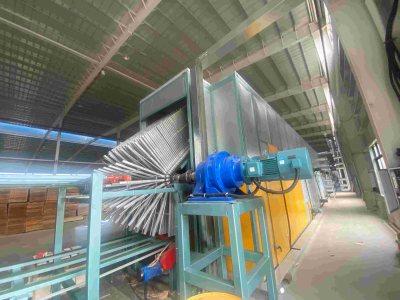
What a vertical veneer drying system is built to handle
Shine Machinery describes its vertical tunnel-type equipment as mainly used for drying core plate, partial surface, and bottom plate, and explicitly notes that this type of dryer can be used for veneers with low flatness requirements.
Within Shine Machinery’s vertical category, product descriptions highlight the same operational intent: support stable production with a compact structure, high space utilization, and a drying process designed for uniform results.
To see how the category is positioned, start from the Vertical Veneer Dryer section and compare models based on your veneer thickness range, output needs, and site layout.
Four functional zones that shape feeding expectations
A vertical veneer drying machine is described as being composed of four parts:
Feeding area
Heating area
Cooling area
Discharging area
This matters for flatness reality because feeding is not isolated. A veneer that barely enters the machine but fails to travel consistently through heating and cooling will still undermine throughput. In other words, the “realistic boundary” must be judged end-to-end across the full path.

Practical checks before core and bottom veneers enter the tunnel
Instead of chasing perfect flatness, many mills focus on a short checklist that matches the vertical tunnel’s loading and conveying reality.
1) Confirm the veneer fits the working range
In Shine Machinery’s vertical core veneer dryer kiln information, a representative configuration lists:
Working width: 3 m
Veneer thickness: 0.8–8 mm
Moisture target: fresh veneer dried to about 0–15%
Heat source: built-in burner
For feeding stability, size and thickness compatibility come first. If sheets fall outside the working range, “flatness improvement” alone will not solve the mismatch.
2) Check whether the sheet can be loaded and kept moving
Shine Machinery describes vertical designs that use three-dimensional loading and notes the equipment covers an area of only two-thirds of the roller dryer. Space efficiency is the headline, but it also implies a different material-handling logic than a long roller line.
For that reason, the realistic flatness boundary is reached when sheets can be placed and conveyed without frequent stops. If a batch requires continuous manual correction, the boundary has not been met.
3) Align moisture targets with production rhythm
Different vertical configurations specify different end points—for example, “fresh veneer to about 0–15%” on one configuration and “fresh veneer to within 20%” on model FBH30-20. A mill should set feeding preparation rules that support the intended moisture target and output.
In procurement terms, this is where a Veneer Drying System is evaluated as a system rather than a stand-alone dryer: output, target moisture, and feeding method must agree with each other.
How Shine Machinery’s vertical design supports low-flatness feeding in practice
Across Shine Machinery’s vertical product pages, several recurring features are emphasized:
Quick-loading structure to improve veneer loading speed and save labor
Hot air circulation mode with large hot air volume
Uniform airflow and uniform temperature through the drying line
Countercurrent drying cycle to help veneers dry quickly with uniform quality
Secondary use of hot air and fast heating for thermal efficiency
Low power consumption and less maintenance positioning
One vertical core veneer dryer kiln description also notes that the equipment can use a chain to bring the core veneer or finished board into the drying room for circulating drying.
For buyers looking for a Low Cost Veneer Dryer, these points typically matter because they address not only drying effect but also the day-to-day stability of continuous production.
Vertical versus roller drying when flatness expectations change
Many plywood plants consider both vertical and roller solutions because their priorities differ.
Shine Machinery’s roller core veneer dryer description emphasizes finished results such as uniform moisture content and veneers that are flat without buckle or end waviness, with surfaces in good condition for gluing.
By contrast, Shine Machinery’s vertical tunnel-type dryer is positioned for core plate, partial surface, and bottom plate drying, and is described as suitable for veneers with low flatness requirements, while still focusing on uniform airflow, temperature uniformity, and a countercurrent drying cycle.
For direct model information, buyers often review both the Vertical Core Veneer Dryer Machine and the Roller Core Veneer Dryer Machine pages and compare them against the factory’s “must-have” outcomes.
A simple purchasing interpretation
Choose a vertical route when the project emphasizes compact installation, economical operation, and feeding practicality for core and bottom veneers.
Give roller drying serious consideration when the purchasing goal places heavier weight on finished veneer flatness as a visible quality target.
Example configuration buyers frequently review
Shine Machinery lists model FBH30-20 under vertical veneer dryer information with the following parameters:
Moisture content: Fresh veneer to within 20%
Capacity: 1.2–1.5 m³/h
Overall size: 20 × 7 × 4
Hot air blower: 9 kW (1.5 kW × 6 sets)
Traction motor: 4 kW
Intake air blower: 7.5 kW
Internal burner blower: 1.1 kW
Total power: 36.3 kW
Labor: 3
For many mills, these numbers are less about “best in class” and more about fit: whether the equipment matches the required workshop space, feeding method, and the mill’s intended plywood veneer drying rhythm.
If you want an overview of how Shine positions uniform airflow, temperature stability, countercurrent drying, three-dimensional loading, and a footprint around two-thirds of a roller dryer, the Wood Vertical Veneer Drying page provides a consolidated description.
The takeaway for mills setting a realistic flatness boundary
Core plate and bottom plate preparation should not be framed as “make everything perfectly flat.” It should be framed as make feeding stable for the chosen conveying and loading structure.
In a vertical tunnel workflow, the realistic flatness boundary is reached when veneers can be loaded quickly, transported smoothly, and discharged without recurring stoppages. That is how a vertical solution can contribute to practical, cost-aware Drying Veneer operations—especially when the plant is selecting a veneer dryer machine for core and bottom veneer production.
For buyers shortlisting suppliers, Shine Machinery’s vertical options and product specifications are published at www.veneersdryer.com.
FAQs
What does “realistic flatness boundary” mean for vertical tunnel feeding?
It refers to the practical condition where veneers can be loaded and transported through the vertical tunnel smoothly and continuously, without frequent manual correction.
Are vertical tunnel-type dryers intended only for perfectly flat veneers?
No. Shine Machinery describes the vertical tunnel-type core veneer dryer as suitable for veneers with low flatness requirements, while still requiring compatibility with feeding and conveying.
Which veneer types are listed for vertical tunnel drying applications?
Shine Machinery states the vertical tunnel-type core veneer dryer is mainly used for drying core plate, partial surface, and bottom plate.
What technical parameters are shown for the FBH30-20 vertical model?
Shine Machinery lists FBH30-20 at 1.2–1.5 m³/h capacity, fresh veneer to within 20% moisture content, 20 × 7 × 4 overall size, and 36.3 kW total power.
What finished-veneer qualities are emphasized on the roller core veneer dryer description?
The roller core veneer dryer description highlights uniform moisture content and veneers that are flat without buckle or end waviness, with surfaces in good condition for gluing.