
A Compact Veneer Dryer Must Be Easy to Maintain
Small plywood workshops often shop for a veneer dryer machine under tight constraints: limited floor space, limited labor, and limited tolerance for downtime. In that reality, the cheapest quotation is rarely the clearest decision signal. What matters more is whether your Veneer Drying System can keep running predictably—day after day—without maintenance becoming an unplanned production stop.
Shine Machinery’s vertical drying equipment is positioned for space-limited sites with three-dimensional veneer loading, internal hot-air circulation, and on-site assembly. The vertical approach is commonly evaluated by buyers who want a compact layout and straightforward operation for plywood veneer drying, especially for core veneer and thicker veneer.

Why low prices can hide the real cost of drying
A Low Cost Veneer Dryer can look attractive because the purchase price is easy to compare. But workshops that run a single line or depend heavily on one dryer typically feel costs elsewhere first: energy use, labor, routine upkeep, and the operational impact of interruptions.
A practical way to compare options is to calculate drying economics on the same basis across machines, then evaluate what could disrupt that cost in real production. For example, Shine Machinery states that the drying cost of its vertical dryer is less than $8/M³, and describes this as 30–60% of the drying cost of other dryers.
That kind of benchmark helps buyers ask better questions—not just “How much is the machine?”, but “What conditions keep this cost stable over time?” In many workshops, maintenance readiness is what protects output and keeps daily drying expenses predictable.
When a Vertical Veneer Dryer fits small workshop space
Space is often the deciding constraint for a compact installation. Shine Machinery describes its vertical design as covering only two-thirds of the area of a roller dryer, using three-dimensional loading of veneer. For buyers planning a compact layout, that footprint difference can reduce building modifications and simplify line routing.
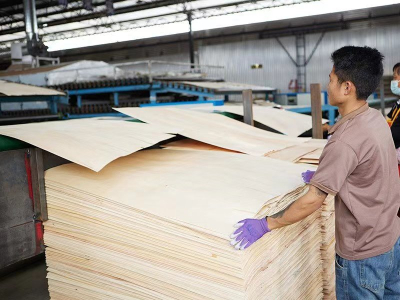
Shine Machinery also states that vertical plywood loading can increase veneer loading capacity by 30–80% compared with other dryers. For workshops focused on Drying Veneer for core layers, that loading structure is a major reason vertical equipment is shortlisted.
To explore the configuration category, many buyers start with the product overview for a vertical veneer dryer and then confirm the model and moisture target that match their line.
How Shine’s vertical Veneer Drying System is arranged
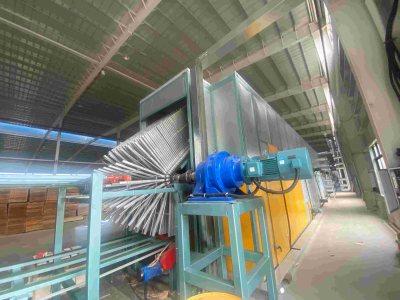
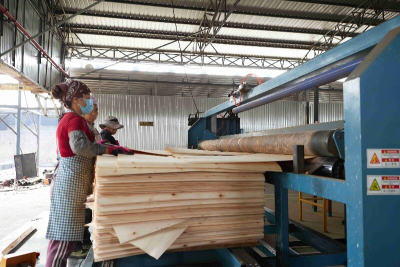
Shine Machinery describes its vertical veneer drying equipment as composed of four sections: Feeding area, Heating area, Cooling area, and Discharging area. The system uses a chain to bring veneer or finished board into the drying room for circulating drying.
The vertical equipment is described as using a hot-air circulation mode with uniform airflow, uniform temperature, and a countercurrent drying cycle to help veneers dry quickly with uniform quality.
This structure is often considered suitable where veneer flatness requirements are lower, and where the production process is cutting first and then drying, especially for thick veneers.

For a small workshop, this arrangement matters because machine structure affects both daily operation and service access. Buyers should verify where operators feed material, how heat circulates through the chamber, whether cooling and discharge can be reached safely, and how easily routine inspection can be performed without stopping other adjacent activities. In compact plants, mechanical accessibility is often as important as listed output because narrow service paths can turn simple checks into delayed maintenance tasks.
Model details matter more than “compact” labels
Compact equipment is not automatically comparable across moisture targets and power configurations. Shine Machinery publishes separate parameters for two vertical models that buyers frequently compare in early procurement.
Vertical model comparison from published parameters
| Parameter | FBH30-13 | FBH30-20 |
|---|---|---|
| Moisture content target | Fresh veneer dried to 0–5% | Fresh veneer to within 20% |
| Output | 2 m³/h | 1.2–1.5 m³/h |
| Machine size (L×W×H) | 13×3×4 m | 20×7×4 m |
| Total power | 15 kW | 36.3 kW |
| Fuel consumption | 200 kg/h | — |
| Labor | — | 3 workers (burner operator can do other tasks) |
For many workshops, the key takeaway is not “which is better,” but which moisture target and line capacity your downstream process truly needs. A dryer aimed at 0–5% final moisture is being asked to do different work than one aimed at within 20%, and that difference affects throughput expectations and operating decisions.
If you want to review the published pages for these model categories, start with Wood Vertical Veneer Drying and Vertical Plywood Veneer Dryer.
Maintenance first is a procurement strategy, not a slogan
Small workshops typically do not have the luxury of long troubleshooting cycles. Maintenance planning should be part of the purchasing decision—especially when a single veneer dryer machine is a core production bottleneck.
Shine Machinery highlights standardized and modular production of vertical dryer parts, and also notes that this equipment needs to be assembled on the customer’s factory site, so it can be installed according to the customer’s specific location requirements. For buyers, that makes two topics especially important:
Access and serviceability after installation (space around drive components, fans, and inspection points)
Clarity on what is serviced routinely vs. occasionally (so workshops can schedule labor rather than react to surprises)
A buyer’s maintenance evaluation checklist
Use questions like these during quotation comparisons—before you commit your layout and utilities:
What components require regular inspection in the chain-driven conveying path?
How are hot-air circulation passages kept accessible for inspection and cleaning?
Which fans and motors are considered routine check points during operation?
What parts are expected to be replaced over time, and how are they accessed?
During on-site assembly, where are the service clearances designed into the final layout?
What staffing level is assumed for operation? For example, Shine Machinery states 2 workers per shift for one vertical core veneer dryer description, while FBH30-20 lists 3 workers.
These questions keep the discussion practical: maintenance is not only about “repair,” but about whether the equipment can be checked, cleaned, and kept stable without disrupting plywood veneer drying output.
This point is also consistent with broader industry research that frames drying as one of the largest energy consumers in plywood production. Published studies note that actual energy consumption can rise substantially when equipment is old, leaky, or not regularly maintained, and that discharged humid air, leakage, and condensate losses can materially affect operating efficiency. Even when exact maintenance cost figures are unavailable, these findings support a practical conclusion for buyers: maintenance discipline is closely tied to total operating economics, not only equipment reliability.
Vertical drying and roller drying are chosen for different reasons
Not every workshop prioritizes the same veneer characteristics. Vertical drying emphasizes compact loading and core veneer suitability. Roller drying is often considered where the process and product requirements differ.
Shine Machinery lists a roller-type Low Cost Veneer Dryer Machine with these published specifications: working width 3 m, heating area length 32 m, veneer thickness 0.8–8 mm, and drying capacity 50–60 m³/day, with a biomass burner heat source and other options available.
For buyers comparing categories, it helps to keep units consistent: daily capacity needs to be compared using the operating hours you expect to run. This is where maintenance planning again becomes decisive—because stable uptime is what turns a nameplate capacity into real dried volume.
If you need the roller dryer reference page, see the product listing for a Low Cost Veneer Dryer Machine.
How to select a compact veneer dryer without regrets
A compact purchase decision becomes easier when you lock five inputs before requesting technical confirmation:
Available footprint and service space: include feeding, discharging, and inspection access.
Required capacity: match to your real line rhythm, hourly or daily, not only the listed output.
Veneer type and process: Shine Machinery positions vertical drying for core veneer, partial surface, and bottom plate use cases, and for cutting-first-then-drying workflows—especially for thick veneers.
Target moisture content: align with downstream pressing and storage needs. For example, 0–5% vs. within 20% targets are not interchangeable.
Labor reality: confirm who will operate and who will keep the system stable shift to shift.
Buyers searching globally for terms like “China veneer dryer manufacturer” or “China veneer dryer supplier” often end up comparing compact layouts first—then discovering that long-term maintenance conditions decide which dryer actually delivers consistent Drying Veneer economics.
FAQs
Is a Vertical Veneer Dryer actually compact enough for a small workshop?
Shine Machinery states its vertical design covers only two-thirds of the area of a roller dryer, using three-dimensional veneer loading, which is commonly evaluated for space-limited installations.
What drying cost does Shine Machinery state for vertical drying?
Shine Machinery states the drying cost of its vertical dryer is less than $8/M³, described as 30–60% of the drying cost of other dryers.
How is the vertical veneer drying line structured?
Shine Machinery describes four sections: Feeding area, Heating area, Cooling area, and Discharging area, with a chain-driven conveying method and internal hot-air circulation.
How many workers are listed for operation?
One Shine Machinery vertical core veneer dryer description states the equipment requires 2 workers per shift. The FBH30-20 parameter table lists 3 workers.
What are the key published parameters for the roller Low Cost Veneer Dryer?
Shine Machinery lists 3 m working width, 32 m heating area length, 0.8–8 mm veneer thickness, and 50–60 m³/day drying capacity, with a biomass burner heat source and other options available.
Where can buyers review Shine Machinery product pages directly?
The official site is www.veneersdryer.com, with dedicated pages for vertical and roller drying categories.