
Draw the 42m Workshop Footprint Before Buying a Veneer Dryer Machine
A 50–60 m³/day plywood veneer drying project usually fails or succeeds long before the equipment arrives—at the moment the workshop footprint is fixed. When buyers select a veneer dryer machine for medium output, the most expensive mistakes are rarely about the model name. They come from drawing the building too short, too narrow, or too low for a complete Veneer Drying System layout.
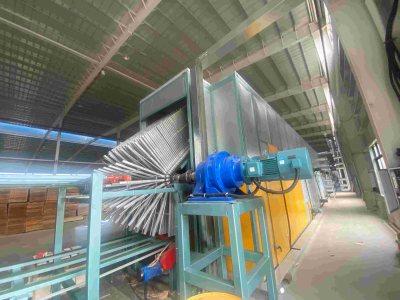
One practical reference is Shine Machinery’s roller configuration for this output range. The published “covered space of the whole machine” for model GTH30-36 is 42m × 9m × 3m, alongside a published drying capacity of 50–60 m³/24h. If your goal is Drying Veneer at that daily volume, this 42-meter line is the dimension you want to put on the workshop drawing first—before concrete and steel are committed.

Use the 42m × 9m × 3m number as the workshop baseline
For buyers comparing options, it helps to separate two ideas:
Process section length (what happens inside the dryer)
Covered space of the whole machine (what the installation will occupy)
For the GTH30-36 Low Cost Veneer Dryer, the published processing sections are:
Heating area length: 32m
Cooling area length: 4m
But the published covered space is larger: 42m × 9m × 3m. For workshop planning, the safest baseline is the covered space of the whole machine, because that is the footprint buyers must reserve when planning a complete veneer dryer machine installation for plywood veneer drying.
If you want to review the published configuration used as the reference in this article, see the product page for Low Cost Veneer Dryer Machine.
GTH30-36 published specifications that affect layout decisions
Below is the parameter set that most directly influences workshop sizing, power preparation, and operating expectations in Drying Veneer.
| Item | Published value (GTH30-36) |
|---|---|
| Type | Roller veneer dryer |
| Working width | 3m |
| Deck | 2 |
| Veneer thickness | 0.8–8mm |
| Heating area length | 32m |
| Cooling area length | 4m |
| Veneer water moisture | Fresh veneer to about 10% |
| Drying temperature | 140–200°C adjustable |
| Temperature control accuracy | ±5°C |
| Veneer transport speed | 5–22m/min, 16A chain |
| Drying capacity | 50–60 m³/24h |
| Total power | 92kW |
| Actual electricity consumption | About 65kWh per hour |
| Heat source | 4 ton biomass burner (power 16.5kW) |
| Covered space of the whole machine | 42m × 9m × 3m |
For procurement teams, this table is useful because it connects workshop constraints (length, width, height) with practical operating inputs (power and heat source) in one Veneer Drying System reference.
A layout-first checklist for 50–60 m³/day plywood veneer drying
A workshop drawing that “matches the number” can still cause installation stress if access and flow were not designed in. Before finalizing a 42-meter line for a veneer dryer machine, buyers typically confirm the following items in the same drawing set:
Floor space you can actually use: confirm the internal length and width that remain after walls, columns, and aisles.
Infeed and outfeed direction: decide where wet veneer enters and where dried veneer exits so the plywood veneer drying line supports the plant’s material flow.
Service and inspection access: plan clearance for routine checks so the Veneer Drying System can be maintained without blocking traffic.
Clear height to the roof structure: the published covered space for GTH30-36 lists 3m height; the usable internal height should be checked against that requirement.
This is also where buyers often decide whether a roller configuration is the best fit—or whether a Vertical Veneer Dryer layout would make workshop planning easier.
Roller configuration vs Vertical Veneer Dryer for footprint planning
Shine Machinery publishes both roller drying equipment and vertical configurations. From a layout perspective, the key difference is simple: a roller line typically requires more length, while a Vertical Veneer Dryer can reduce floor occupancy but needs more height.
For example, Shine’s published vertical models include the following machine sizes:
FBH30-13: 13 × 3 × 4m
FBH30-20: 20 × 7 × 4m
Both list 4m height, which matters immediately if a workshop is being designed around a 3m height envelope.
To review the vertical product overview and the published statements about airflow and loading method, see Vertical Dryer Machine.

When roller drying is commonly evaluated
Roller drying is frequently evaluated for plywood veneer drying where buyers want a continuous line and a defined covered-space reference. Shine also publishes that its two deck 32m roller veneer dryer can keep the veneer smooth after drying, and that the machine is divided into heating and cooling sections.
If you want to compare the roller-series description used by buyers as a benchmark, see Two Deck 32m Roller Veneer Dryer.
When Vertical Veneer Dryer is commonly evaluated
The vertical series is described as using chain-driven circulation to bring veneer into the drying room for circulating drying, and it is associated with three-dimensional veneer loading. Shine also publishes that the vertical plywood method increases loading capacity 30–80% higher than other dryers, and that the comprehensive drying cost is less than $8/M³.
A model-specific reference frequently used in comparisons is the vertical FBH30-13 page: Wood Vertical Veneer Drying Machine.
Biomass heat planning and what buyers usually calculate first
For many plants, energy planning determines the real operating comfort of a Low Cost Veneer Dryer project.
For GTH30-36, Shine publishes that:
The fuel source can be waste wood or bark after peeling.
Drying temperature is 140–200°C adjustable.
Temperature control accuracy is ±5°C, and the machine includes automatic temperature control and speed regulation to help keep moisture content consistent.
Total power is 92kW and actual electricity consumption is about 65kWh per hour.
The heat source is listed as a 4 ton biomass burner (power 16.5kW). Buyers who want to review the burner product category used in Shine’s configurations can check Biomass Burner.
For budgetary comparison, Shine also publishes composite drying-cost references:
Biomass roller veneer drying equipment: USD 6–12/m³
Vertical veneer dryer series: below USD 8/m³
These values are typically treated as selection references when comparing Veneer Drying System configurations for Drying Veneer.
Common workshop mistakes buyers try to eliminate early
Even experienced plants can lose weeks during installation if workshop decisions were locked too early. In a 50–60 m³/day veneer dryer machine project, four mistakes show up repeatedly in planning discussions:
Designing around the heating length instead of covered space: for GTH30-36, the covered space is published as 42m length even though the heating and cooling areas total 36m.
Underestimating height constraints: vertical models listed above publish 4m height; a 3m-high workshop is not compatible with those listed dimensions.
Forgetting the heat-source arrangement in the layout: a biomass burner is part of the system configuration and needs to be included in the site plan.
Selecting only by capacity, not moisture target: Shine’s GTH30-36 is published for fresh veneer to about 10% moisture, while other models may publish different moisture content targets.
For buyers, the fastest way to de-risk plywood veneer drying investment is to draw the full footprint first, then select the equipment configuration that can be installed and operated as planned.
How procurement teams usually proceed next
For a workshop targeting 50–60 m³/day Drying Veneer, the planning sequence is straightforward:
Lock the daily output target.
Confirm the workshop can reserve 42m × 9m × 3m covered space if selecting GTH30-36.
Compare roller vs Vertical Veneer Dryer options if floor space or height becomes the limiting factor.
Buyers who want to compare models and published specifications can browse Shine Machinery’s catalog at www.veneersdryer.com.
For product consultation through the contact shown on the GTH30-36 product page, use: WhatsApp.
FAQs
What is the covered space for a 50–60 m³/day veneer dryer machine reference?
For Shine Machinery’s GTH30-36, the published “Covered Space of the whole machine” is 42m × 9m × 3m.
Which GTH30-36 parameters matter most for workshop planning?
The published covered space (42m × 9m × 3m), heating and cooling lengths (32m and 4m), working width (3m), and the listed heat source (4 ton biomass burner) are commonly used as the starting points for layout.
What veneer thickness range is published for the Low Cost Veneer Dryer?
The GTH30-36 is published for veneer thickness 0.8–8mm.
What final moisture target is published for GTH30-36 plywood veneer drying?
The parameter table lists “Veneer water moisture: Fresh veneer to about 10%.”
How much electricity does the GTH30-36 consume in operation?
Shine publishes total power 92kW and actual electricity consumption of about 65kWh per hour.
Can a Vertical Veneer Dryer reduce floor space?
Shine describes vertical dryers as using three-dimensional veneer loading and states that the vertical plywood method increases loading capacity 30–80% higher than other dryers. Published machine sizes for FBH30-13 and FBH30-20 show shorter lengths than a 42m roller line, but both list 4m height.