
Draw the 42m Line Before Installing a 3m Veneer Dryer Machine
Retrofitting an old plywood workshop for plywood veneer drying is rarely limited by whether the equipment fits through the door. The real risk is discovering—too late—that your veneer dryer machine cannot be operated safely once it’s inside.
A practical way to prevent layout surprises is simple: before any delivery, draw (or tape) a 42m line on the floor to represent the proposed installation corridor. That single visual check forces every part of the Veneer Drying System—feeding, heating, cooling, discharging, and maintenance access—into one conversation.

Confirm what “3m” and “32m” actually mean
In procurement discussions, “3m working width” and “32m heating area length” are often treated as if they define the full footprint. They do not. For layout planning in an old workshop, it helps to separate four ideas:
Working width: the processing width (e.g., 3m).
Heating area length: the drying/heating section length (e.g., 32m).
Machine configuration: the sections included in the selected model.
Installation space: the real floor space needed for operation, movement, and access.
For example, Shine Machinery lists the following key specifications for its Low Cost Veneer Dryer Machine:
| Item | Specification |
|---|---|
| Type | Roller Veneer Dryer |
| Working Width | 3m |
| Veneer Thickness | 0.8–8mm |
| Heating Area Length | 32m |
| Drying Capacity | 50–60 m³/day |
| Heat Source | Biomass Burner (other options available) |
In a retrofit project, that “32m heating area length” is a valuable reference for Drying Veneer, but it should be treated as a heating-section parameter—not as a complete installed length for the entire Veneer Drying System.
Why the 42m floor marking works in older workshops
A 42m line is not a universal standard; it’s a planning tool. In older buildings, columns, legacy conveyors, and fixed walls can make “theoretical space” very different from “usable space.” Marking the length on the floor early helps teams test three operational realities:
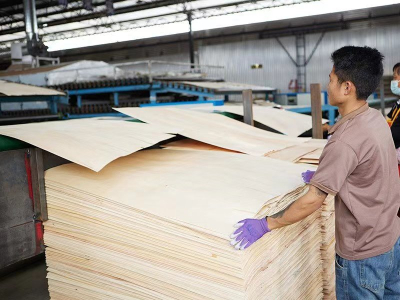
Material flow: whether green veneer can reach the infeed without bottlenecks and whether dried veneer can exit without crossing wet traffic.
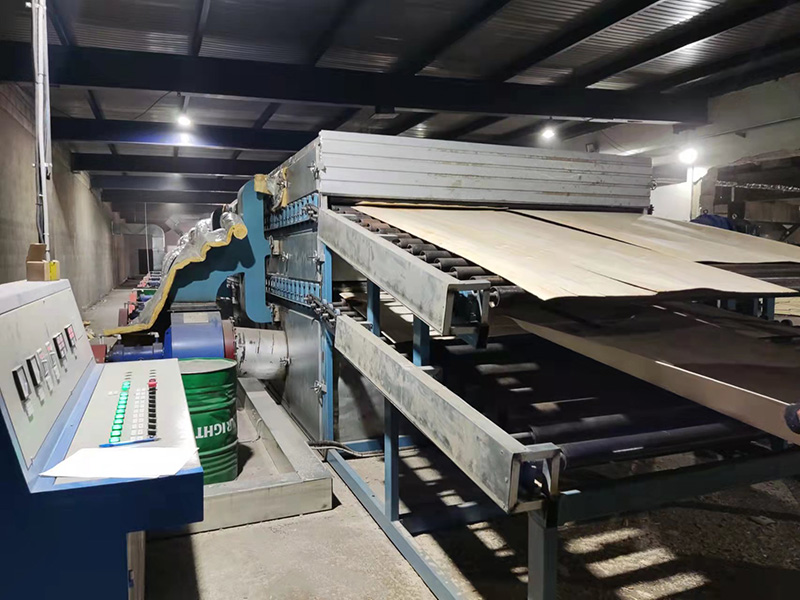
Section transitions: whether the line can accommodate the sequence from feeding to heating, then cooling and discharging.
Access: whether there is room for routine inspection and maintenance along the line.
For buyers focused on plywood veneer drying, this approach makes layout constraints visible while adjustments are still inexpensive.
Map the Veneer Drying System as four working zones
Shine Machinery describes its vertical tunnel-type dryer as being divided into Feeding, Heating, Cooling, and Discharging areas. That same four-zone logic is useful when planning any continuous plywood veneer drying line.

Feeding area
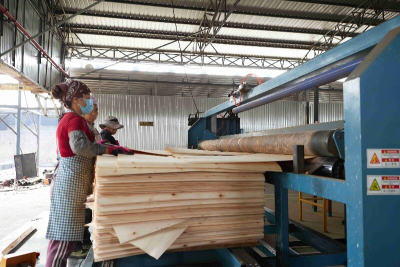
The feeding side determines how wet veneer arrives at the dryer entrance. In old factories, this is often where conflicts appear first—especially when floor space is shared with pre-existing handling lanes.
Heating area
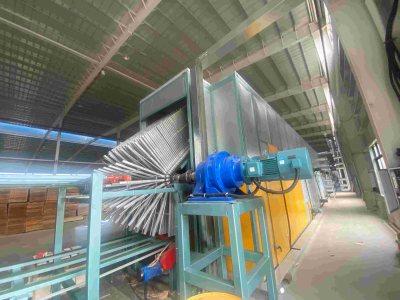
If you are considering a 3m roller veneer dryer layout, the 32m heating area length should be treated as the core “hot zone” of the veneer dryer machine. It is the anchor section around which the rest of the layout must be built.
Cooling area
Cooling is part of stable Drying Veneer workflow. In layout discussions, cooling matters because it affects discharge temperature and handling rhythm.
Discharging area
The discharge side should be planned around stacking, sorting, or feeding the next process step. It is also where many factories try to “save space,” and where operational congestion often shows up later.
When floor area is tight, compare a roller dryer with a Vertical Veneer Dryer
Where the 42m floor mark shows the line is difficult to fit, many buyers evaluate whether a Vertical Veneer Dryer can meet the production intent with a smaller footprint.
Shine Machinery positions vertical core veneer drying equipment as a compact option that uses three-dimensional loading and “covers an area of only two-thirds of the roller dryer.” The same product information also highlights two procurement drivers:
A composite drying cost stated as less than $8/m³.
Veneer loading capacity described as 30–80% higher than other dryer types.
A vertical system is presented primarily for drying core plate, partial surface, and bottom plate, and it is described as suitable for veneers with lower flatness requirements.
Use model parameters to sanity-check workshop fit
For layout planning, buyers typically compare a roller line’s working width and heating length against vertical equipment dimensions. Shine Machinery provides multiple vertical configurations; the following parameters are listed across its vertical pages.
Vertical Veneer Dryer examples (selected models)
| Model | Moisture Content Target | Capacity (m³/h) | Overall Size (L×W×H, m) | Total Power (kW) |
|---|---|---|---|---|
| FBH30-10 | Fresh veneer to 0–5% | 1.5 | 10×3×4 | 12 |
| FBH30-13 | Fresh veneer dried to 0–5% | 2 | 13×3×4 | 15 |
| FBH30-20 | Fresh veneer to within 20% | 1.2–1.5 | 20×7×4 | 36.3 |
In addition, Shine Machinery describes the vertical tunnel-type core veneer dryer as using a hot air stove 900,000 kcal heat source and requiring 2 workers per shift.
For retrofit teams, these details help translate “fits on paper” into “fits in the building,” especially when a 42m corridor is being tested against actual obstructions.
Installation planning details that affect the 42m decision
Buyers often treat layout as a single length number, but the install outcome usually depends on a short checklist of site realities:
Workshop length, width, and height available for the veneer dryer machine.
Transportation route and entrance size for moving sections into place.
Fixed columns or internal obstructions that narrow the usable corridor.
Clear separation between wet infeed traffic and dry discharge traffic.
Space for routine access alongside the Veneer Drying System.
Where a vertical solution is preferred, Shine Machinery also states that this equipment needs to be assembled on the customer’s factory site, allowing the installation to be arranged around specific location requirements.
Procurement takeaways for plywood veneer drying retrofits
A 3m working width project can succeed in an old workshop, but only when the full Veneer Drying System is planned as a working line—not as a single heating-length figure. Drawing the 42m floor mark early is a low-cost way to expose conflicts in material flow, section transitions, and access.
For buyers comparing configurations, Shine Machinery provides both roller and vertical options. Common next steps include reviewing product pages, matching model parameters to workshop constraints, and requesting a project-oriented layout discussion.
To browse Shine Machinery’s product range, visit Shine Machinery Products or see the overview page for the Vertical Veneer Dryer.
FAQs
Is a 42m floor marking a “required” length for a roller veneer dryer machine?
No. It is a practical planning reference used in retrofit discussions to test whether the full Veneer Drying System can be arranged and operated inside an existing workshop.
What does “32m heating area length” represent in plywood veneer drying?
It refers to the heating section length of the dryer configuration shown for Shine Machinery’s 3m working width Low Cost Veneer Dryer Machine, not a complete installed line length.
What veneer thickness range is shown for the 3m Low Cost Veneer Dryer?
Shine Machinery lists a veneer thickness range of 0.8–8mm for the Low Cost Veneer Dryer Machine.
Why would a Vertical Veneer Dryer be evaluated for an old factory retrofit?
Shine Machinery describes vertical drying equipment as using three-dimensional loading, occupying about two-thirds of the floor area of a roller dryer, and targeting low drying cost and higher loading capacity.
What are the functional zones used to plan a Veneer Drying System?
Shine Machinery describes the vertical tunnel-type dryer as consisting of Feeding, Heating, Cooling, and Discharging areas—useful as a planning framework for Drying Veneer lines.
Are there multiple vertical model sizes available?
Yes. Shine Machinery lists multiple models (e.g., FBH30-10, FBH30-13, FBH30-20) with different overall sizes, capacities, and power.