
Modular Veneer Dryer Savings Start With Checking Module Interfaces
Cutting the cost of a veneer dryer machine is rarely just about choosing the lowest quote. In plywood veneer drying, the real budget impact comes from how much veneer you can load, how stable the airflow and temperature remain through the dryer, how much floor space the system occupies, and whether the equipment can be assembled smoothly on site.
Shine Machinery positions its Vertical Veneer Dryer as a low-cost option built around standardization and modular production of dryer parts. The same product information also makes an equally practical point: modular sections still rely on clean, accurate connections between the feeding, heating, cooling, and discharging areas. If those interfaces are not checked before installation, the advantages of a modular build are harder to realize in day-to-day operation.

Why purchase price is only one part of veneer dryer machine cost
A buyer evaluating a veneer dryer machine typically has two cost layers to manage:
Machine cost (how the equipment is manufactured and supplied)
Drying cost (how the Veneer Drying System performs during production)
In Shine Machinery’s published description of its vertical dryer, the cost discussion is tied to two mechanisms: (1) lower machine cost through standardized and modular production of parts, and (2) lower drying cost through high thermal efficiency and a hot air circulation mode designed for uniform airflow and temperature.
For procurement teams, that framing is useful because it connects equipment selection to operating reality. A Low Cost Veneer Dryer should still match your production flow, available space, and the way your plant will assemble and run the line.
How standardization and modular production can lower machine cost
Shine Machinery attributes the Low Cost Veneer Dryer positioning to its approach to manufacturing vertical dryer parts: standardization and modular production.
In practical terms, standardization means using consistent component designs, while modular production means building the equipment around repeatable sections. In Shine’s product documentation, the stated outcome is a reduction in production loss of raw and auxiliary materials and an improvement in working efficiency—both of which help reduce machine cost.
This matters for buyers because modular manufacturing can make a Vertical Veneer Dryer easier to configure around output needs. At the same time, modular equipment introduces a clear responsibility on the buyer side: verify that the module boundaries and interfaces will assemble correctly at the site.
To see how Shine describes the four-part structure of the vertical dryer, refer to the product page for the Vertical Veneer Drying Machine.
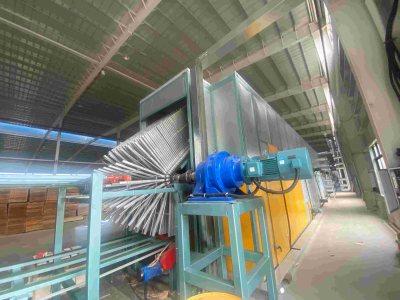
The four operating areas that must work as one Veneer Drying System
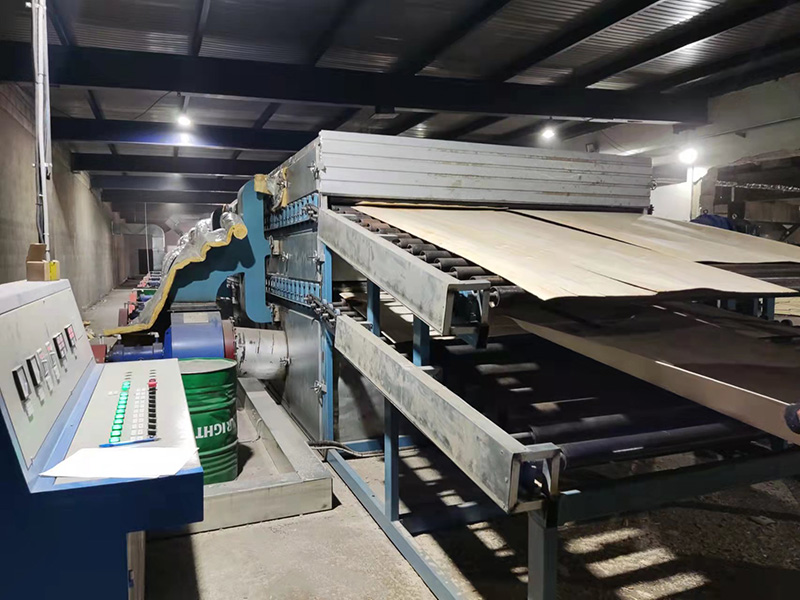
Shine Machinery describes its vertical veneer drying equipment as being composed of four parts:
Feeding area
Heating area
Cooling area
Discharging area
That sequence defines the operational backbone of a Veneer Drying System. In procurement terms, it also defines the exact module boundaries you should focus on before shipping and before on-site assembly.

Feeding area
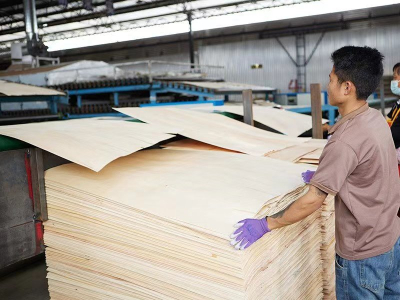
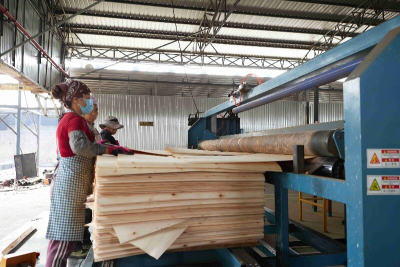
The feeding area is where the production line’s rhythm begins. Shine’s vertical dryer is described as having a unique quick-loading structure, intended to increase veneer loading speed and help save labor and cost.
For installation readiness, the priority is straightforward: make sure the feeding section lines up cleanly with the conveying path into the heating area so that veneer can enter consistently.
Heating area
The heating area is where drying is actually driven. Shine describes a hot air circulation mode inside the equipment, with large hot air volume, uniform airflow, and uniform temperature. The same description states that a countercurrent drying cycle is adopted to support fast drying and uniform quality.
In a modular layout, the heating area’s interface matters because it connects mechanical conveying with airflow continuity. Even if each module is built to a standard, the assembled system still needs coordinated transitions.
Cooling area
The cooling area follows heating in the four-part structure. When buyers think about plywood veneer drying, this section is often treated as “just the end of the dryer,” but for an assembled system it is still a live module boundary.
A clean connection here supports stable transfer into the discharging area.
Discharging area
The discharging area completes the four-part process. For a continuous veneer dryer machine, discharging is not only about “output”—it is about maintaining steady flow through the entire Veneer Drying System so upstream feeding and heating remain consistent.
A practical interface checklist for modular assembly
A modular Vertical Veneer Dryer is typically assembled at the customer’s factory site. Shine explicitly notes this on its vertical dryer specifications: the equipment needs to be assembled on the customer's factory site, which allows installation according to the customer’s specific location requirements.
That makes interface checking part of cost control: fewer on-site corrections, faster commissioning, and fewer avoidable issues once the plywood veneer drying line is running.
Below is a buyer-friendly checklist based on the four operating areas and the functional systems Shine highlights (chain conveying and hot air circulation).
Feeding → Heating: confirm alignment between veneer entry and the conveying path.
Heating → Cooling: confirm that module connections preserve stable passage and do not disrupt internal airflow continuity.
Cooling → Discharging: confirm smooth transfer so the discharge does not become a bottleneck.
Conveying method: Shine describes the vertical core veneer dryer as using a chain to bring veneer or finished board into the drying room for circulating drying.
Hot air circulation: confirm that assembled sections maintain the uniform airflow and uniform temperature described for the hot air circulation mode.
Vertical Veneer Dryer compared with roller dryer on footprint and loading
When buyers compare a Vertical Veneer Dryer to a roller dryer, Shine’s published points focus on space and loading:
The equipment uses three-dimensional loading of veneer.
The equipment covers an area of only two-thirds of the roller dryer.
The vertical plywood method increases loading capacity by 30–80% compared with other dryers.
Those statements help explain why vertical designs are often evaluated where factory space is limited or where buyers want more loading in a compact layout.
Shine also states that the drying cost is less than $8/M³, and that this figure is described as 30–60% of the drying cost of other dryers.
For buyers building or upgrading a Veneer Drying System, the point is not that one dryer type is universally “better,” but that the vertical approach is positioned around compact installation, three-dimensional loading, and low drying cost.
To review Shine’s description of the core veneer application and three-dimensional loading, see the Vertical Core Veneer Dryer Machine.
Configuration facts buyers should confirm before ordering
Shine states that the length of the veneer dryer needs to be determined according to your output, and that the dryer can be designed as per the customer’s project requirement.
The same vertical dryer product description also provides application guidance. The equipment is described as suitable for:
Drying core plate, partial surface, and bottom plate
Veneers with low flatness requirements
A process of cutting first and then drying
Especially the drying of thick veneers
Operational and support details are also stated in the same materials, including:
The equipment requires 2 workers per shift (as described for the vertical veneer drying machine)
The heat source is a hot air stove 900,000 kcal (as described in the same product information)
For buyers building a plywood veneer drying line, this is the type of information that should be locked in early—because it affects layout planning, staffing, and heating integration.
Two published Vertical Veneer Dryer models as reference points
Shine publishes parameters for two vertical dryer models.
FBH30-13 (Wood Vertical Veneer Drying Machine)
Moisture content: fresh veneer dried to 0–5%
Output: 2 m³/h
Machine size: 13 × 3 × 4 m
Total power: 15 kW
Fuel consumption: 200 kg/h
FBH30-20 (Vertical Plywood Veneer)
Moisture content: Fresh veneer to within 20%
Capacity: 1.2–1.5 m³/h
Overall size: 20 × 7 × 4
Total power: 36.3 kW
Labor: 3 workers
These published values are most useful as configuration anchors during early-stage planning. A buyer can map output needs, space constraints, and on-site assembly conditions against a known model range.
Why on-site assembly deserves procurement attention
A modular build can reduce manufacturing cost, but it does not remove the realities of site work. Shine’s documentation is direct that the vertical dryer is assembled at the customer’s factory site so it can be installed according to specific location requirements.
For procurement, that shifts part of “cost control” into pre-install planning. If your project goal is a Low Cost Veneer Dryer that stays low-cost after commissioning, the best practice is to treat module interfaces as purchase-critical items—right alongside capacity, dimensions, and moisture targets.
When evaluating any continuous veneer dryer machine, buyers should also ensure they are choosing the right platform for the production method. Shine’s vertical dryer is positioned for core veneer drying and applications where cut-before-drying and thicker veneers are relevant.
To review Shine’s vertical dryer positioning and the hot air circulation description, see the vertical veneer dryer page.
A clear next step for buyers
A Veneer Drying System is easier to buy than to correct after installation. If you are comparing options for plywood veneer drying, start by confirming the four-part structure (feeding, heating, cooling, discharging), then work outward to footprint, loading method, moisture requirement, and site assembly conditions.
Shine Machinery’s official website is www.veneersdryer.com, where the vertical dryer structure, advantages, and model parameters are published.
FAQs
What makes a Vertical Veneer Dryer “low cost” in Shine’s product description?
Shine links low machine cost to standardization and modular production of vertical dryer parts, which is described as reducing production loss of raw and auxiliary materials and improving working efficiency.
How is the vertical veneer drying machine structured in the published description?
It is described as being composed of four parts: feeding area, heating area, cooling area, and discharging area.
What drying cost does Shine publish for its vertical dryer?
The published description states the drying cost is less than $8/M³, described as 30–60% of the drying cost of other dryers.
How does Shine describe the space advantage versus a roller dryer?
The vertical core veneer dryer is described as covering only two-thirds of the area of the roller dryer, supported by three-dimensional loading.
What loading capacity difference is published for the vertical plywood method?
Shine states the vertical plywood method increases loading capacity by 30–80% compared with other dryers.
Does Shine state that on-site assembly is required?
Yes. The vertical dryer is described as needing to be assembled on the customer’s factory site, allowing installation according to the customer’s specific location requirements.