
Run the 182.5 kWh Test Before Buying a Veneer Dryer
A veneer dryer machine can look affordable on paper and still become a high-cost decision once the power meter starts running. In plywood veneer drying, the quotation is only the entry price. The long-term cost depends on what your Veneer Drying System draws per hour, how many hours you run, and how many cubic meters you actually dry during those hours.

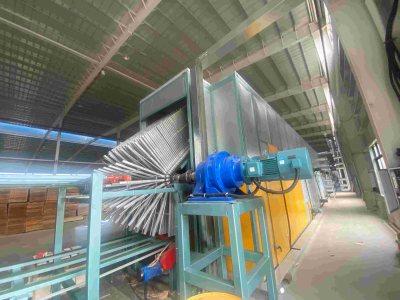
One practical benchmark is the roller dryer model GTH30-46. It lists total power 260.5 kW and actual electricity consumption about 182.5 kWh per hour, with a drying capacity of 6–6.5 m³/h and waste wood heating at 140–200°C (adjustable). Those three lines—kWh per hour, operating hours, and m³ per hour—are enough to pressure-test whether a quote fits your local electricity tariff.
Installed power is not your real electricity bill
Procurement teams commonly see a single “power” number and try to convert it into operating cost. For a veneer dryer machine, that shortcut can mislead comparisons.
What the specifications usually mean
Installed (total) power (kW) is the combined rated power of electrical components.
Actual electricity consumption (kWh per hour) reflects the energy used in operation.
For the GTH30-46, the technical parameters list total power 260.5 kW and actual electricity consumption about 182.5 kWh per hour. That gap is exactly why buyers should ask for the “actual consumption” figure when evaluating plywood veneer drying cost.
If you want to review the model’s full parameter list, see the product page for GTH30-46 High-Efficiency Veneer Dryer.
How to calculate electricity cost using 182.5 kWh per hour
A clean calculation uses only three items:
Actual electricity consumption (kWh per hour)
Local electricity tariff (currency per kWh)
Actual drying output (m³ per hour)
Step 1 Calculate electricity cost per operating hour
Hourly electricity cost = (kWh per hour) × (tariff per kWh)
For a line that consumes 182.5 kWh per hour, the hourly cost is simply:
182.5 × Tariff
This keeps the math honest across regions. If the tariff rises, your hourly cost rises linearly—no rework needed.
Step 2 Convert your schedule into monthly electricity exposure
Even before converting to currency, it helps to see the kWh exposure created by your operating plan.
Using 182.5 kWh per hour:
| Operating schedule | Electricity use |
|---|---|
| 8 hours/day | 1,460 kWh/day |
| 24 hours/day | 4,380 kWh/day |
| 30 days × 8 hours/day | 43,800 kWh/month |
| 30 days × 24 hours/day | 131,400 kWh/month |
To get the money value, multiply each row by your local tariff.
Step 3 Translate electricity into cost per cubic meter
For plywood veneer drying, cost per m³ is the most comparable number because it connects energy use directly to output.
Electricity kWh per m³ = (kWh per hour) ÷ (m³ per hour)
With 182.5 kWh per hour and 6–6.5 m³/h capacity:
At 6 m³/h: 182.5 ÷ 6 = 30.42 kWh/m³
At 6.5 m³/h: 182.5 ÷ 6.5 = 28.08 kWh/m³
Then:
Electricity cost per m³ = (kWh per m³) × (tariff per kWh)
This approach makes it easier to compare a Veneer Drying System across different configurations, because it ties electricity to what you ship.
Why heating fuel selection changes the drying cost picture
Electricity is only one part of the operating cost. The heating method—especially when waste wood or bark is available—can shift the economics of Drying Veneer.
Several product pages describe dryers that use biomass burners and waste wood as heating material. For the GTH30-46 parameters, the heating material is stated as waste wood, with drying temperature 140–200°C adjustable and temperature control accuracy ±5°C.
Biomass-focused configurations are also described as using bark and other tree waste as fuels. The biomass dryer machine description states that the composite cost is USD 6–12 per cubic meter, including labor cost, fuel cost, and electricity cost. For buyers comparing a Low Cost Veneer Dryer option, that composite number can be a useful planning range—provided your local fuel situation and operating conditions match your assumptions.

To explore biomass-oriented configurations, see biomass veneer dryer.
Vertical Veneer Dryer versus roller dryer for cost planning
Not every mill needs the same footprint, capacity, or output profile. When buyers compare a Vertical Veneer Dryer and a roller veneer dryer, the decision is usually less about “cheapest machine” and more about acceptable cost per m³ at the required throughput.
Key parameters side by side
The Wood Vertical Veneer Drying machine parameters list model FBH30-13 with:
Output 2 m³/h
Total power 15 kW
Machine size 13×3×4 m
Fuel consumption 200 kg/h
Moisture content: fresh veneer dried to 0–5%
The GTH30-46 roller dryer lists:
Drying capacity 6–6.5 m³/h
Total power 260.5 kW
Actual electricity consumption about 182.5 kWh per hour
Overall dimension 56m×11m×5m
Veneer thickness 0.8–8 mm
Fresh veneer to about 8–10% moisture
The vertical dryer feature description also states the drying cost is less than $8/M³.
If you want to review the vertical series description and parameter table, see Wood Vertical Veneer Drying.
A practical way to compare the two
If your plan needs 6–6.5 m³/h, compare roller options using kWh per hour ÷ m³ per hour and run your local tariff through the equation.
If your plan is closer to 2 m³/h and space or loading style favors vertical handling, a Vertical Veneer Dryer may fit better—then you validate total cost per m³ against your fuel and electricity prices.
Either way, the purchase conversation gets clearer when both sides talk in kWh per hour, m³ per hour, and cost per m³.
Pre-quotation checklist for a realistic drying cost calculation
Before you accept any quote for a veneer dryer machine, collect inputs that turn a specification sheet into a cost forecast.
Local industrial electricity tariff (per kWh)
Planned schedule (hours per day, days per month)
Target output (m³/h you must achieve, not only “rated capacity”)
Veneer thickness range (for example, the roller dryer parameter table lists 0.8–8 mm)
Moisture target (for example, the GTH30-46 lists fresh veneer to about 8–10%)
Heating material availability (waste wood, bark, or other tree waste where applicable)
Space constraints (compare overall dimensions such as 56m×11m×5m vs 13×3×4m)
Whether you need adjustable temperature and speed control (the GTH30-46 parameters state adjustable 140–200°C and an automatic temperature control and speed regulation system)
For broader context on production planning, the advanced veneer dryer page positions the system as ideal for large-scale veneer production, with adjustable temperature and conveyor speed and automatic control for temperature, humidity, and feeding speed.
What a “low cost” decision looks like in practice
A Low Cost Veneer Dryer is rarely defined by the initial machine price alone. It is defined by whether the Veneer Drying System can hit your required m³/h at an electricity exposure you can carry.
Using the GTH30-46 as a reference, 182.5 kWh per hour and 6–6.5 m³/h translate to roughly 28.08–30.42 kWh per m³. Once you multiply that by your local tariff, you have an electricity cost per m³ that can be compared against fuel and labor assumptions.
When a supplier provides both total power and actual electricity consumption, the quote becomes easier to test—before you commit.
FAQs
What does “actual electricity consumption about 182.5 kWh per hour” mean?
It is the stated operational electricity use per hour for the GTH30-46, distinct from the total installed power of 260.5 kW.
How do I calculate veneer dryer electricity cost per m³?
Divide kWh per hour by m³ per hour to get kWh per m³, then multiply by your local electricity tariff.
What is the drying capacity of the GTH30-46 roller veneer dryer?
The parameter table lists 6–6.5 m³/h drying capacity.
What heating material and temperature range are listed for the GTH30-46?
The parameters list waste wood as heating material and 140–200°C adjustable drying temperature, with ±5°C temperature control accuracy.
What is the stated moisture target after drying for the GTH30-46?
The parameters state fresh veneer to about 8–10% moisture.
What are the key parameters of the FBH30-13 Vertical Veneer Dryer?
The Wood Vertical Veneer Drying page lists 2 m³/h output, 15 kW total power, and 13×3×4 m machine size.
What composite drying cost range is stated for a biomass drying machine?
The biomass drying machine pages state a USD 6–12 per cubic meter composite cost range including labor, fuel, and electricity.
- Previous : In plywood veneer drying, a high-capacity veneer dryer machine is only one piece of the result buyers care about: stable, continuous Drying Veneer at the target moisture level without bottlenecks. In practice, the infeed (how green sheets enter), the drye
- Next : Stop Gluing Surprises by Validating Veneer After Drying