
Put Frequency Control Into Mixed Thickness Veneer Drying Schedules
When one line runs 0.8–8mm veneer in the same shift, “set the temperature and go” is rarely enough for stable results. A practical schedule for plywood veneer drying needs to document what changed (thickness and incoming moisture), what you adjusted (temperature and line speed), and—on models equipped for it—what frequency setting was used on the traction motor.

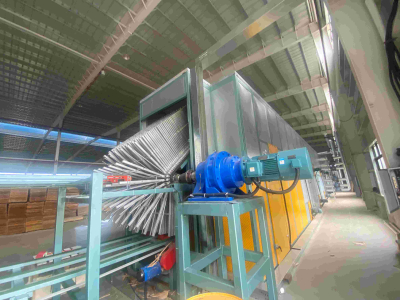
This article explains how buyers and plant teams typically structure a takt table for Drying Veneer across mixed thickness, using published specifications from Shandong Shine Machinery Co., Ltd; Shine Machinery, including jet roller dryers with frequency control traction motors and roller/vertical options often evaluated as part of a broader Veneer Drying System.
Why a takt table matters for mixed thickness runs
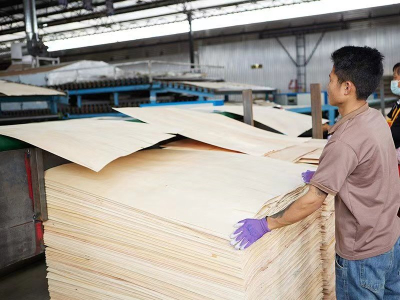
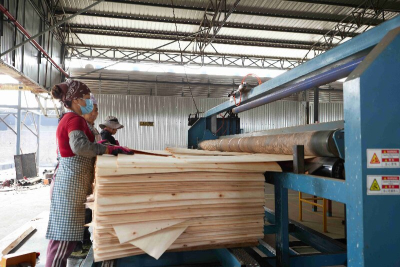
A takt table is simply a production record that connects a veneer batch to the dryer settings used and the output achieved. For veneer dryer machine operations covering 0.8–8mm thickness, the value is consistency: thickness changes can otherwise be handled informally, such as operator memory, handwritten notes, or “the usual setting,” which makes it harder to repeat good results or troubleshoot unstable moisture.
For procurement and commissioning teams, a good takt table also turns a dryer specification into something operational. Shine’s jet roller models list a defined temperature range and transport-speed range, and they specify frequency control for the traction motors—meaning frequency is not an electrical footnote, but a setting that can be tracked alongside speed and temperature in daily production.
Where frequency control fits in a veneer dryer machine schedule
On Shine jet roller models that specify frequency control traction motors, frequency is part of how the line speed is regulated. In practical scheduling, teams usually record both:
Traction motor frequency as the operator’s control setting
Veneer transport speed as the observed or target line speed
That pairing helps when switching from thin face veneer to thicker core veneer: you can later see which frequency and speed combination was used at a given drying temperature and whether it delivered the target moisture outcome.
This is especially relevant on the models below, where Shine publishes both speed range and frequency-controlled traction motors.
Key models buyers compare for 0.8–8mm plywood veneer drying
Shine publishes multiple configurations that support 0.8–8mm veneer thickness, including roller dryer lines, jet roller dryers, and vertical drying equipment used for core veneer processes.
Jet roller dryers with frequency-controlled traction motors
The following jet roller models explicitly specify traction motors with frequency control, plus automatic temperature control and speed regulation systems.
Jet Roller Veneer Dryer GTH30-44
Working width: 3m; Decks: 2
Heating area length: 40m; Cooling area length: 4m
Veneer thickness: 0.8–8mm
Drying temperature: 140–200°C adjustable, temperature control accuracy ±5°C
Veneer transport speed: 5–22m/min (16A chain)
Traction motor: 7.5kW, frequency control (2pc)
Drying capacity: 70 m³/24h
Total power: 114kW; Actual electricity consumption: about 75 kWh per hour
Covered space: 50m × 9m × 3m
Veneer water moisture: fresh veneer to about 10%
GTH45-56 (roller jet veneer dryer)
Working width: 4.5m; Decks: 2
Heating area length: 52m; Cooling area length: 4m
Veneer thickness: 0.8–8mm
Drying temperature: 140–200°C adjustable, temperature control accuracy ±5°C
Veneer transport speed: 5–22m/min (16A chain)
Traction motor: 7.5kW, frequency control (2pc)
Drying capacity: 120 m³/24h
Total power: 139kW; Actual electricity consumption: about 97 kWh per hour
Covered space: 62m × 12m × 3m
A scheduling takeaway is straightforward: for these jet roller units, the takt table should not stop at temperature. It should capture frequency control settings and the corresponding transport speed used for each thickness group.

Roller dryer options often evaluated in a Veneer Drying System
For buyers planning capacity and layout, Shine also publishes roller dryer configurations commonly considered alongside jet roller dryers:
Veneer Dryer Line (roller veneer dryer)
Type: Roller Veneer Dryer
Working width: 3m; Heating area length: 40m
Veneer thickness: 0.8–8mm
Drying capacity: 140–150 m³/day
Heat source: biomass burner (other options available)
Combined drying cost: about $6–12/m³ (labor + fuel + electricity)
4 Deck Veneer Dryer
Working width: 3m; Heating area length: 48m
Veneer thickness: 0.8–8mm
Drying capacity: 110–120 m³/day
Heat source: biomass burner (other options available)
Large roller veneer dryer (roller veneer dryer)
Working width: 4.5m; Heating area length: 36m
Veneer thickness: 0.8–8mm
Drying capacity: 180–190 m³/day
Veneer water moisture: fresh veneer to about 0–15%
Combined drying cost: $6–12/m³ (labor + fuel + electricity)
Heat source: biomass burner (other options available)
These published ranges are useful for equipment comparison, but the takt table still matters because the day-to-day schedule must reflect what thickness is being dried and what settings were used.
A takt table template that makes frequency control visible
For mixed thickness plywood veneer drying, the most useful takt table is batch-based. Each batch line records what went into the dryer, what settings were used, and what results were measured.
Recommended columns for mixed thickness drying veneer
| Category | What to record | Why it matters in mixed thickness runs |
|---|---|---|
| Batch identification | Date/shift + batch ID | Supports repeatability and troubleshooting |
| Veneer thickness | Measured thickness (0.8–8mm) | Thickness is the central change driver |
| Veneer type | Face or core veneer | Helps standardize scheduling language |
| Incoming moisture | Measured incoming moisture | Anchors setup decisions to the batch |
| Target moisture | Target outgoing moisture | Defines the quality checkpoint |
| Dryer model | Example: GTH30-44 / GTH45-56 | Connects settings to a specific line |
| Drying temperature | Operating temperature (within spec) | Records the thermal condition used |
| Traction motor frequency | Operator-set frequency (if equipped) | Makes speed control traceable |
| Transport speed | Line speed (within spec) | Captures residence time approach |
| Planned output | Plan in m³/24h or m³/day | Lets teams compare plan vs actual |
| Actual output | Actual throughput recorded | Verifies production performance |
| Moisture verification | Measured outgoing moisture | Confirms batch acceptance |
| Notes | Adjustments / observations | Documents what changed and why |
This is intentionally a recording format. It avoids guessing universal recipes for every thickness, while still making each changeover measurable.
When a Low Cost Veneer Dryer or Vertical Veneer Dryer is evaluated
Not every plant needs the same configuration. Buyers commonly shortlist a lower-capacity roller dryer for cost-focused lines, and a vertical configuration for core veneer workflows.
Low Cost Veneer Dryer for 0.8–8mm production
The Low Cost Veneer Dryer Machine is published with:
Type: roller veneer dryer
Working width: 3m
Veneer thickness: 0.8–8mm
Heating area length: 32m
Drying capacity: 50–60 m³/day
Heat source: biomass burner (other options available)
Vertical Veneer Dryer for core veneer processes
Shine also publishes a Vertical Veneer Drying Machine described as a vertical tunnel-type core veneer dryer used mainly for drying core plate, partial surface, and bottom plate, and suitable for veneers with low flatness requirements.
Published characteristics include:
Drying cost: less than $8/m³
Three-dimensional loading; equipment area described as only two-thirds of the roller dryer
Output and dimensions examples include models such as FBH30-13 (output 2 m³/h, size 13×3×4m, total power 15kW) and FBH30-20 (capacity 1.2–1.5 m³/h, total power 36.3kW)
For mixed thickness planning, the practical implication is selection-driven: a plant may run a roller or jet roller Veneer Drying System for broad thickness coverage, while using vertical equipment when the production arrangement and veneer requirements match the vertical loading approach.
Practical checklist for writing frequency control into the production schedule
For procurement and operations teams preparing for mixed thickness Drying Veneer, the following checks keep the takt table usable from day one:
Confirm the selected dryer model and its published ranges, especially temperature and transport speed.
For models specifying frequency control traction motors, add traction motor frequency as a mandatory takt-table field.
Record both frequency and transport speed for each batch to make changeovers traceable.
Keep moisture verification as a required entry, including incoming and outgoing values.
When biomass heat is used, document the heat source as part of the line configuration, for example biomass burner as referenced in Shine’s jet roller specifications.
For buyers building a shortlist under terms like “China veneer dryer manufacturer” or “China veneer dryer supplier,” the strongest signal is operational clarity: a schedule that captures thickness, moisture, temperature, speed, and frequency control where equipped creates a repeatable path to consistent output.
FAQs
What veneer thickness range is supported in Shine’s published dryer specifications?
Shine publishes multiple dryer configurations listing 0.8–8mm veneer thickness, including roller dryer lines and jet roller veneer dryers.
Which Shine models explicitly specify frequency control for the traction motor?
The published parameters for GTH30-44 and GTH45-56 list traction motors as 7.5kW, frequency control (2pc).
What transport speed range is listed for Shine jet roller veneer dryers?
Both GTH30-44 and GTH45-56 list 5–22 m/min veneer transport speed (16A chain).
What drying temperature range is published for GTH30-44?
GTH30-44 lists 140–200°C adjustable, with temperature control accuracy ±5°C, and notes an automatic temperature control and speed regulation system.
What combined drying cost is published for Shine roller veneer dryer lines?
Shine publishes a combined drying cost of about $6–12/m³ (labor + fuel + electricity) for its roller veneer dryer line and for large roller veneer dryer specifications.
When is a Vertical Veneer Dryer typically considered?
Shine describes its vertical tunnel-type dryer as mainly used for core plate, partial surface, and bottom plate, suitable for veneers with low flatness requirements, and publishes drying cost as less than $8/m³.