
Sync Four Zones to Stabilize Thick Core Veneer Drying
Thick core veneers can expose every weak link in a Veneer Drying System. The heat source matters, but it’s rarely the only limiter. In real plywood veneer drying, output and quality depend on whether feeding, heating, cooling, and discharging run at the same production rhythm. When one zone runs faster (or slower) than the others, mills often see bottlenecks, unstable moisture results, or avoidable handling labor.
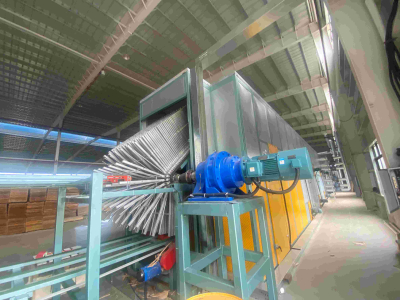
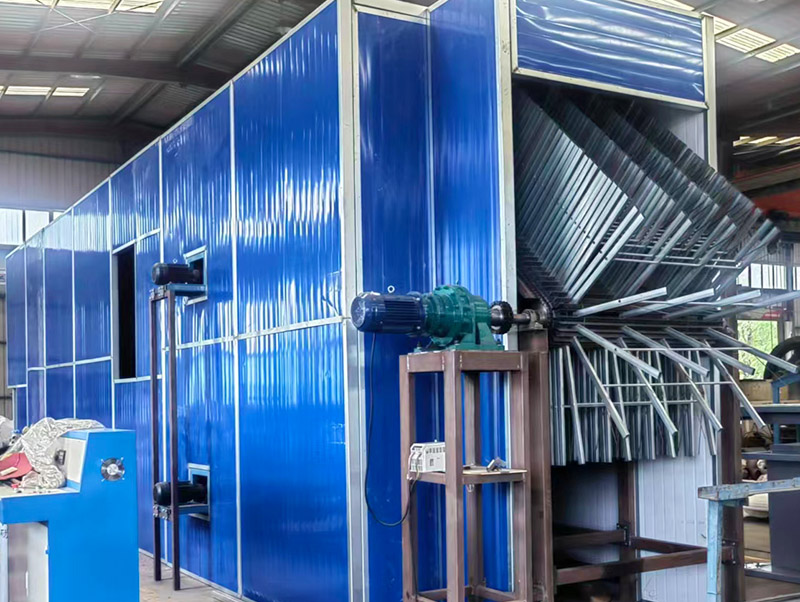
A Vertical Veneer Dryer is commonly evaluated for its compact layout and continuous operation. In Shine Machinery’s vertical tunnel design, the dryer is organized into four functional areas—feeding area, heating area, cooling area, and discharging area—so buyers can assess the full sequence rather than isolated components.

Why thick core veneer drying needs one shared production rhythm
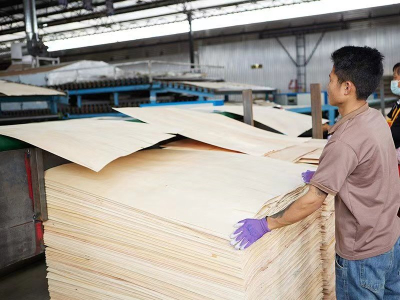
A veneer dryer machine may look like a single piece of equipment, but thick-core production behaves like a small line: veneers enter, moisture is removed, temperature is stabilized, then sheets exit at a rate that must match downstream handling. Shine’s vertical tunnel-type core dryer is described as being used mainly for drying core plate, partial surface, and bottom plate, and it is suited to a process of cutting first and then drying—especially for thick veneers.
The practical purchasing mistake is to compare only one headline number such as “capacity” without locking in the drying condition, target moisture result, and the operating sequence of feeding, heating, cooling, and discharging. In Drying Veneer, those elements are tightly coupled:
If feeding outpaces discharging, the Veneer Drying System can become congested and labor-heavy.
If heating is tuned for a moisture target that cooling and discharge handling cannot support, output stability can be compromised.
If cooling is treated as optional rather than a production zone, the end of the line may dictate the true throughput.
For buyers who evaluate a Vertical Veneer Dryer as a complete system, the “four zones in step” principle becomes a useful way to size equipment and set realistic expectations for plywood veneer drying.
The four zones and what to check in each one
Shine describes its vertical tunnel dryer as being composed of four parts: Feeding area, Heating area, Cooling area, and Discharging area. The following checkpoints keep the zones aligned under one rhythm.

Feeding zone
The feeding area is where production rhythm starts. Shine describes a quick-loading structure and three-dimensional loading of veneer. In the vertical layout, veneer is loaded in a way that increases loading capacity; Shine states the vertical plywood method increases loading capacity by 30–80% compared with other dryers.
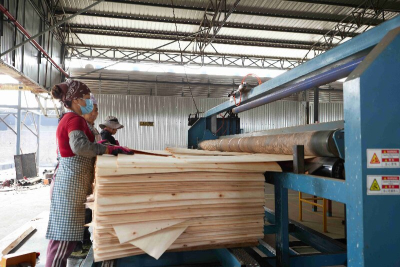
Buyers evaluating a veneer dryer machine for thick core production typically focus on one question here: can feeding be performed smoothly at the same pace as the rated drying output—without adding excessive labor?
For model-specific context and photos, see vertical core veneer dryer.
Heating zone
In thick-core plywood veneer drying, heating must be evaluated as airflow, temperature distribution, and loading method—not just the burner specification. Shine describes a hot air circulation mode with large hot air volume, uniform airflow, uniform temperature, and a countercurrent drying cycle. This is positioned to support fast drying and uniform quality.
A practical way to keep the zones synchronized is to define the moisture result first, for example, “fresh veneer dried to 0–5%” versus “fresh veneer to within 20%”, then evaluate whether the heating zone configuration supports that target at the intended throughput.
Product details for this type of equipment are presented under Vertical Veneer Drying Machine.
Cooling zone
Cooling is not a separate operation—it is a functional zone in the same rhythm. Shine places the cooling area between heating and discharging as part of the continuous tunnel sequence. For procurement teams, the key point is to assess cooling as part of capacity planning: a dryer that can heat quickly still needs a stable end-of-line condition before sheets are discharged.
In a Veneer Drying System designed around four zones, cooling is evaluated together with discharge handling requirements such as stacking, transfer, and downstream flow, so the line does not choke at the final step.
Discharging zone
Discharging is where the entire veneer dryer machine proves whether it is truly continuous. Shine’s guidance is implicit in the four-zone structure: feeding and discharging must match the intended output. If the exit flow is slower than the entry flow, then the real capacity is set by discharge—regardless of how strong the heating section is.
When buyers compare a Vertical Veneer Dryer across models, discharge rhythm should be checked against the stated capacity under the stated moisture result, not against loading speed alone.
Capacity, moisture targets, and cost belong in the same comparison
Shine provides model parameters that show why “capacity” cannot be separated from moisture result and installed configuration.
Vertical dryer examples from Shine
| Parameter | FBH30-13 | FBH30-20 |
|---|---|---|
| Model | FBH30-13 | FBH30-20 |
| Moisture content result | fresh veneer dried to 0–5% | Fresh veneer to within 20% |
| Output (m³/h) | 2 | 1.2–1.5 |
| Overall size (L × W × H, m) | 13 × 3 × 4 | 20 × 7 × 4 |
| Total power (kW) | 15 | 36.3 |
The table highlights a procurement reality: these two models describe different moisture results, so they should not be treated as equivalent drying conditions. For stable Drying Veneer, buyers usually lock in the moisture target and then choose a suitable capacity range and footprint.
Low-cost positioning
Shine states that the drying cost of its vertical dryer is less than $8/m³, described as 30–60% of the drying cost of other dryers. This is paired with the vertical design’s compact footprint: the equipment is stated to cover only two-thirds of the roller dryer floor area.
This combination is why many buyers treat a vertical tunnel option as a Low Cost Veneer Dryer approach when thick core veneers are the priority and installation space is constrained.
For Shine’s product page covering these points, see Wood Vertical Veneer Drying.
Vertical versus roller drying for plywood veneer drying
Both vertical and roller designs target plywood veneer drying, but they are usually purchased for different priorities.
Where a vertical tunnel core dryer is often chosen
Three-dimensional loading and quick-loading structure
Compact installation stated as about two-thirds of the roller dryer area
Countercurrent drying cycle and uniform airflow and temperature description
A cost-focused plan consistent with a Low Cost Veneer Dryer objective
For many thick-core lines, the decision point is whether the production process, including cutting first and then drying, and flatness requirements align with the vertical tunnel concept.
Where a roller core veneer dryer is often chosen
Shine describes its roller core veneer dryer as emphasizing uniform moisture content and flatness, with dried veneers described as flat without buckle or end waviness, free of splits, and in good condition for gluing. It is also described as using an automatic control system and frequency conversion to adjust transmission speed and temperature automatically.
For reference, see Roller Core Veneer Dryer Machine.
The practical procurement takeaway is simple: select the Veneer Drying System by aligning the equipment type with the production goal. If thick core veneer throughput and compact layout dominate, the Vertical Veneer Dryer route is commonly shortlisted. If flatness and automated roller conveying are central, a roller dryer is evaluated more heavily.
A field checklist for keeping the four zones in step
When evaluating a veneer dryer machine for thick core production, the most useful questions are the ones that force a full-line view:
Moisture target first: Is the target “fresh veneer dried to 0–5%” or “fresh veneer to within 20%”? These are not the same drying condition.
Rated output under that target: Does the stated output (m³/h) align with how the feeding and discharging rhythm will actually run?
Footprint and layout fit: Does the stated vertical footprint advantage solve a real layout constraint?
Operating rhythm: Can feeding, heating, cooling, and discharging operate continuously as one sequence—not as four isolated operations?
Cost logic: If a Low Cost Veneer Dryer is the goal, are the cost statements evaluated together with the chosen configuration and moisture result?
For buyers building a shortlist that includes a Vertical Veneer Dryer, these checks tend to reduce commissioning surprises and make vendor comparisons more meaningful.
For additional product browsing, visit www.veneersdryer.com.
FAQs
What are the four functional zones in a vertical tunnel core veneer dryer?
Shine describes four parts: Feeding area, Heating area, Cooling area, and Discharging area. They are intended to work as one continuous production sequence.
Why should feeding and discharging be evaluated together?
Because the dryer is continuous. If discharging cannot match feeding at the target output, the true capacity will be limited by the slowest zone, not the heating section alone.
What does Shine state about footprint for a Vertical Veneer Dryer?
Shine states the vertical equipment covers an area of only two-thirds of the roller dryer.
What drying cost does Shine state for its vertical dryer?
Shine states the drying cost of its vertical dryer is less than $8/m³, described as 30–60% of the drying cost of other dryers.
Why shouldn’t two models be compared only by “m³/h” capacity?
Because the models may specify different moisture results. For example, FBH30-13 states fresh veneer dried to 0–5%, while FBH30-20 states fresh veneer to within 20%.
Where can buyers review Shine’s Low Cost Veneer Dryer Machine information?
A roller-type example is presented on Low Cost Veneer Dryer Machine.