
When 0–5% Moisture Is Required, Start With FBH30-13
Fresh core veneer that must be dried to 0–5% moisture content sets a very specific working condition for any veneer dryer machine. In this scenario, buyers typically want clear, published parameters (moisture target, output, footprint, power, and fuel consumption) and a drying concept designed around efficient loading and consistent airflow.
The FBH30-13 is a vertical configuration specified for fresh veneer dried to 0–5% and is often evaluated as a reference working condition for plywood veneer drying projects where low final moisture is required.

Why the 0–5% moisture target changes the equipment discussion
Moisture target is not a minor setting—it defines the drying task. For core veneer lines that aim for 0–5% final moisture, buyers usually start by confirming the dryer’s published scope and process structure rather than comparing size or installed power alone.
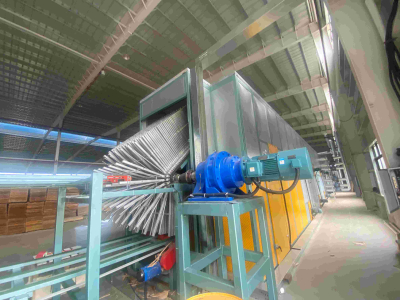
In Shine Machinery’s vertical product descriptions, the vertical tunnel-type core veneer dryer is presented as a main piece of equipment in plywood production, organized into four functional areas: Feeding area, Heating area, Cooling area, and Discharging area. This layout clarifies how material moves through the machine and where heat and airflow are applied.
Within this product family, FBH30-13 is explicitly specified for fresh veneer dried to 0–5%, making it the most direct match when the project requirement is a low final moisture target.
What a Vertical Veneer Dryer emphasizes in daily production
A vertical configuration is commonly purchased for practical plant reasons: continuous operation in a compact footprint, simplified loading, and a drying path designed around controlled hot air movement.
In Shine Machinery’s published description, the series is positioned as a low purchase cost option with a small occupied area, using three-dimensional loading of veneer. The footprint is described as only two-thirds of the roller dryer area, and the vertical plywood method is described as increasing loading capacity by 30–80% compared with other dryers.
When buyers evaluate a Vertical Veneer Dryer, these points typically translate into procurement questions such as:
How much veneer can be loaded per cycle or per shift under the same space constraints?
Does the plant benefit more from compact installation or from a wider, longer line?
Can the loading structure support stable throughput while targeting low moisture?
Airflow and cycle design described for Shine’s vertical series
Drying performance depends on how air and heat behave inside the tunnel. Shine Machinery describes a unique hot air circulation mode in which the hot air volume of the drying line is large, the hot air of each section is hot, and airflow and temperature are uniform. The same description states that a countercurrent drying cycle is adopted to support fast drying and uniform quality.

For buyers focused on Drying Veneer for plywood veneer drying, these statements matter because uniformity (airflow, temperature, and cycle direction) is often the difference between “dried” veneer and consistently processed veneer that fits a downstream plywood process.
FBH30-13 technical parameters for 0–5% moisture projects
The table below lists the published parameters for FBH30-13.
| Parameter | FBH30-13 (Vertical) |
|---|---|
| Model | FBH30-13 |
| Moisture content | Fresh veneer dried to 0–5% |
| Output | 2 m³/h |
| Machine size (L × W × H) | 13 × 3 × 4 m |
| Hot air fan | 9 kW (600 W × 10) |
| Traction motor | 1.5 kW |
| Induced draft fan | 3 kW |
| Built-in furnace | 1.5 kW |
| Total power | 15 kW |
| Fuel consumption | 200 kg/h |
From a purchasing perspective, these parameters are typically used to align the Veneer Drying System with on-site constraints:
Output planning: The listed 2 m³/h gives a direct reference for line balancing and shift planning.
Space planning: 13 × 3 × 4 m helps confirm whether a vertical layout fits the workshop height and installation corridor.
Electrical planning: The 15 kW total power is a practical figure for basic electrical preparation.
Fuel planning: 200 kg/h is a key number for operating-cost estimation and fuel logistics.
How Shine describes drying cost and labor needs
Cost discussions should remain tied to what is explicitly published.
Across Shine Machinery’s vertical series descriptions, the drying cost is stated as less than $8/m³, and described as 30–60% of the drying cost of other dryers. This is presented as a product feature of the vertical dryer approach.
Labor is also described at the product level: the vertical veneer drying machine description states that the equipment requires 2 workers per shift. For buyers comparing equipment categories, this provides a concrete staffing reference for a Low Cost Veneer Dryer evaluation.
The same vertical veneer drying machine description also specifies the heat source as a hot air stove 900,000 kcal.
When FBH30-13 is the better working-condition sample than FBH30-20
The most direct divider between FBH30-13 and FBH30-20 is the stated moisture target.
| Specification | FBH30-13 | FBH30-20 |
|---|---|---|
| Moisture content | Fresh veneer dried to 0–5% | Fresh veneer to within 20% |
| Capacity | 2 m³/h | 1.2–1.5 m³/h |
| Overall size (L × W × H) | 13 × 3 × 4 m | 20 × 7 × 4 m |
| Total power | 15 kW | 36.3 kW |
| Labor | (not listed in the same parameter table) | 3 workers |
If a buyer’s plywood veneer drying requirement is explicitly 0–5%, FBH30-13 aligns directly with that target and can serve as a straightforward baseline for discussions.
If a buyer only needs fresh veneer dried to within 20%, then the FBH30-20 aligns with that requirement and is typically discussed under different drying expectations.
In procurement conversations, the selection should start with the moisture target. That is why, when the goal is 0–5%, FBH30-13 is commonly used as the working-condition sample.
Fit-for-use notes stated for the vertical tunnel-type core veneer dryer
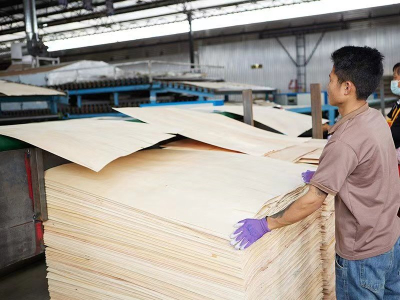
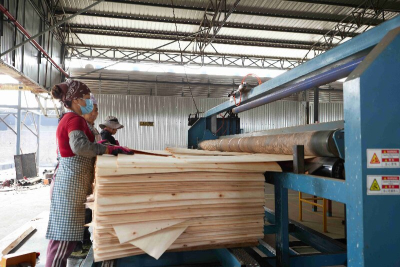
Shine’s description of the vertical tunnel-type core veneer dryer states it is mainly used for drying core plate, partial surface, and bottom plate. It also notes the equipment is suitable for a production process of cutting first and then drying, and is described as especially suitable for drying thick veneers.
The same description indicates the dryer can be used for veneers with low flatness requirements and mentions low professional requirements for workers.
For buyers, these fit-for-use statements are often as important as the output figure, because they help narrow which dryer category matches the intended veneer type and downstream expectations.
A practical buyer checklist for a 0–5% moisture project
When comparing a veneer dryer machine for low final moisture, buyers often confirm the following items against the published parameters:
Moisture target: Confirm the dryer is specified for fresh veneer dried to 0–5%.
Throughput reference: Use the listed 2 m³/h output as a planning baseline.
Plant fit: Confirm the 13 × 3 × 4 m size fits the intended workshop space.
Utility planning: Check the listed 15 kW total power and 200 kg/h fuel consumption.
Process structure: Confirm the four-area structure (feeding/heating/cooling/discharging) matches line integration needs.
Configuration concept: Consider three-dimensional loading, hot air circulation, and countercurrent drying cycle as described.
For readers comparing models and configurations, the Shine vertical series pages provide a consistent place to review the published setup, including the vertical dryer concept and model-level specifications.
FAQs
Can FBH30-13 dry fresh veneer to 0–5% moisture?
Yes. FBH30-13 is specified for fresh veneer dried to 0–5%.
What is the output of FBH30-13?
FBH30-13 is listed with an output of 2 m³/h.
What is the installed power of FBH30-13?
The total power is listed as 15 kW.
How much fuel does FBH30-13 consume?
Fuel consumption is listed as 200 kg/h.
How is the vertical veneer drying machine organized?
It is described as being composed of Feeding area, Heating area, Cooling area, and Discharging area.
What’s the main difference between FBH30-13 and FBH30-20?
The moisture targets differ: FBH30-13 is specified for 0–5%, while FBH30-20 is specified for fresh veneer to within 20%.
Does Shine’s vertical series state a drying cost benchmark?
Yes. The vertical dryer series description states a drying cost of less than $8/m³.
How many workers are stated for the vertical veneer drying machine per shift?
The vertical veneer drying machine description states 2 workers per shift.