
Use FBH30 13 for 0 to 5 Percent Veneer Drying
When a plywood line specifies fresh veneer dried to 0–5% final moisture content, the most expensive mistakes usually happen early—during model selection and budgeting—when buyers compare dryers using “capacity” alone. In practice, the moisture endpoint defines the reference model you should use for planning calculations.
For procurement teams and plant engineers who want a practical sample model, the FBH30-13 is widely used as a baseline because its published parameters clearly match the 0–5% target, including output, power, machine size, and fuel consumption. Those numbers are concrete enough to support preliminary sizing, workshop layout discussions, and early operating-cost estimates.

Why the moisture endpoint should drive your sample model
In plywood veneer drying, two dryers can both be described as a “Vertical Veneer Dryer,” yet be engineered and specified for different moisture outcomes. If your process calls for 0–5%, a model specified for “within 20%” is not an equivalent benchmark for investment calculations or line balancing.
Shine Machinery publishes two vertical dryer models with distinct moisture specifications. The FBH30-13 is specified for fresh veneer dried to 0–5%, while FBH30-20 is specified for fresh veneer to within 20%. That single line in the specification sheet is the reason FBH30-13 is commonly treated as the more appropriate reference when your drying requirement is strict.
FBH30-13 specifications used for planning and budgeting
The FBH30-13 product parameters, as published by Shine Machinery, provide a straightforward checklist for early-stage planning.
| Parameter | Published value |
|---|---|
| Model | FBH30-13 |
| Moisture content | Fresh veneer dried to 0–5% |
| Output | 2 m³/h |
| Machine size | 13 × 3 × 4 m |
| Hot air fan | 9 kW listed as 600 W × 10 |
| Traction motor | 1.5 kW |
| Induced draft fan | 3 kW |
| Built-in furnace | 1.5 kW |
| Total power | 15 kW |
| Fuel consumption | 200 kg/h |
For buyers comparing a veneer dryer machine across multiple vendors, having these parameters tied to a clear 0–5% endpoint helps keep comparisons grounded in the real requirement.
How a vertical veneer drying machine is organized in production
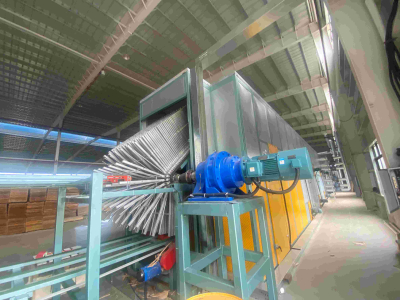
A vertical drying line is typically explained in four connected operating areas. In Shine Machinery documentation, the equipment is composed of:
Feeding area
Heating area
Cooling area
Discharging area
This structure matters for procurement because it clarifies what “continuous” means in daily operation: veneer moves through a fixed sequence rather than being handled as separate batches.

A simplified view of feeding, heating, cooling, and discharging zones.
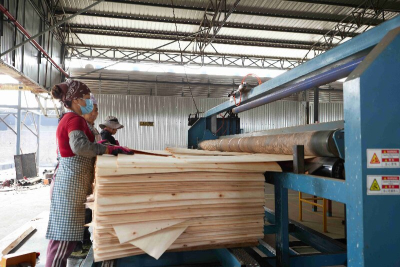
In operation terms, Shine Machinery describes a vertical core veneer dryer machine as using a chain to bring the veneer or finished board into the drying room for circulating drying. This helps decision-makers picture material handling needs at the infeed and outfeed and discuss how the dryer integrates into a Veneer Drying System.
To explore this equipment category in context, see the product grouping for vertical veneer dryer.
What the vertical design is positioned to dry
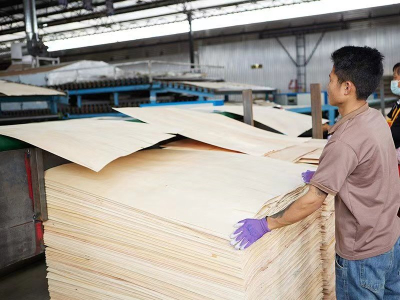
In Shine Machinery descriptions, a vertical veneer drying machine is positioned as main equipment in plywood production and is described as being used mainly for:
Core plate
Partial surface and bottom plate
The same documentation also notes that this type of dryer can be used for veneers with low flatness requirements, and that it is suitable for a process route of cutting first and then drying, especially for thick veneers.
For procurement teams, these statements are useful as scoping guidance: they help connect the dryer type to the product mix and quality requirements you plan to run through it.
For more detail on how Shine Machinery presents this positioning, refer to veneer drying machine.
Vertical versus roller dryers using published comparison points
In many mills, the decision between vertical and roller equipment is driven by workshop space, installation conditions, and operating cost targets.
Shine Machinery states several comparative points for its vertical dryer range:
Drying cost is described as less than $8/m³, and as 30–60% of the drying cost of other dryers.
Loading capacity is described as 30–80% higher than other dryers due to the vertical plywood method and three-dimensional loading.
Footprint is described as only two-thirds of the roller dryer.
The equipment needs to be assembled on the customer’s factory site, allowing installation according to location requirements.
These statements are particularly relevant to buyers pursuing a Low Cost Veneer Dryer concept—because they link cost and layout to the core design choice, vertical loading, rather than treating “low cost” as a vague marketing claim.
For the corresponding product explanation, see vertical dryer.
Sample calculation using FBH30-13 as the planning baseline
A key advantage of treating FBH30-13 as a sample model is that its published parameters support quick arithmetic planning for Drying Veneer operations.
Assume an 8-hour operating window and use the published values:
Output: 2 m³/h
Total power: 15 kW
Fuel consumption: 200 kg/h
Nominal 8-hour planning results
Veneer output: 2 × 8 = 16 m³
Electrical energy at rated power: 15 × 8 = 120 kWh
Fuel use: 200 × 8 = 1,600 kg
This kind of math is not a performance guarantee; it is a structured way to translate a published datasheet into a first-pass production discussion. If you need to scale the estimate, the same approach applies:
Estimated output = published hourly capacity × planned operating hours
That makes FBH30-13 a practical reference point when the goal is to build an early model for plywood veneer drying volume, installed power planning, and fuel budgeting.
What to confirm before you lock in a vertical dryer model
Before selecting any veneer dryer machine—especially when targeting 0–5%—buyers typically confirm a short list of technical and layout constraints. Using published parameters for FBH30-13 and the general vertical dryer features described by Shine Machinery, a procurement checklist often includes:
Whether your process truly requires fresh veneer dried to 0–5%.
Whether 2 m³/h aligns with your upstream peeling and downstream gluing or press rhythm.
Whether 13 × 3 × 4 m fits the intended workshop space with safe access and handling routes.
Whether the site can support 15 kW total power within the electrical plan.
Whether 200 kg/h fuel consumption is compatible with your heat-source planning.
Whether your product mix matches the stated applications: core plate, partial surface and bottom plate, thick veneers, and lower flatness requirements.
Whether on-site assembly is workable for your installation schedule.
Closing perspective for buyers targeting 0–5% moisture
When a project specification calls for fresh veneer dried to 0–5%, the cleanest way to avoid mismatched comparisons is to pick a sample model that is explicitly published for that endpoint. FBH30-13 fits that role because it combines a stated 0–5% moisture range with clear planning parameters—2 m³/h output, 15 kW total power, 200 kg/h fuel consumption, and a 13 × 3 × 4 m machine size—plus the broader vertical-dryer claims on footprint, loading capacity, and drying cost.
Buyers who want to review the model page directly can reference Vertical Veneer Drying.
FAQs
What final moisture content is FBH30-13 specified to achieve
FBH30-13 is specified for fresh veneer dried to 0–5% moisture content.
What is the published output of the FBH30-13 vertical veneer dryer
The published output is 2 m³/h.
How much installed power does FBH30-13 list
The published total power is 15 kW.
What fuel consumption should be used for early budgeting
The published fuel consumption is 200 kg/h.
How large is the FBH30-13 machine for workshop planning
The listed machine size is 13 × 3 × 4 m length × width × height.
How does FBH30-20 differ in moisture specification
FBH30-20 is specified for fresh veneer to within 20% moisture content, while FBH30-13 is specified for 0–5%.
What are the four operating areas described for a vertical veneer drying machine
They are described as Feeding area, Heating area, Cooling area, and Discharging area.