
Stop Overstaffing Your Veneer Dryer Machine on Multi Shift Lines
Labor planning in plywood veneer drying is often treated as a “headcount question”: how many people are needed to feed and receive sheets. In practice, the better question is cost-per-output: how many workers per shift are required to keep a Veneer Drying System running smoothly, and how many cubic meters of dried veneer that shift actually produces.

This is where automatic infeeding and outfeeding matter—but only when evaluated together with shift scheduling and the selected dryer configuration. Published specifications from Shine Machinery (Shandong Shine Machinery Co., Ltd) illustrate how an automated veneer dryer machine can reduce repetitive manual handling, stabilize feeding rhythm, and make staffing more predictable across one, two, or three shifts.
Why automation decisions fail when shifts are ignored
A factory can install automatic handling and still feel overstaffed if the shift plan is mismatched to output, moisture targets, or line balance. The reason is simple: the staffing “savings” from automation show up only when the dryer’s throughput, feeding stability, and downstream receiving workflow are aligned for the full shift.
In a typical Drying Veneer workflow, manual handling concentrates labor at two points: (1) placing green veneer accurately at the dryer entrance and (2) collecting, sorting, or transferring dried veneer at discharge. Automation primarily reduces the repetitive motion and alignment variability at these points, which can help keep a steady pace and reduce stoppages that silently consume labor time.
For buyers comparing a Vertical Veneer Dryer with a roller-type line—or considering a Low Cost Veneer Dryer—the most practical evaluation method is to calculate labor per shift and then normalize it by shift output.
Automatic infeeding and outfeeding as a labor stabilizer
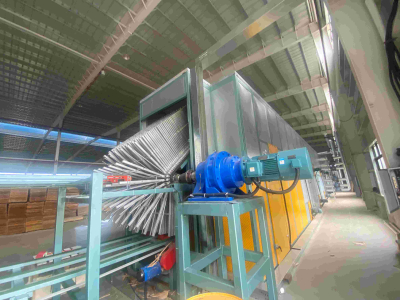
One published option is the Automatic Loading System. Its product description focuses on feeding consistency and reduced manual placement dependence—two factors that strongly influence real-world staffing, especially across multiple shifts.
Key published points include:
Action time: about 2.5–3 seconds per time, from fetching green veneer to unloading onto the feeding platform.
Feeding mechanism: air blower, not vacuum suction.
Compatibility: can be installed with 2-deck, 3-deck, and 4-deck roller dryers.
Process benefit: helps reduce deviation in veneer placement, supports smooth running, and avoids potential veneer jamming.
That 2.5–3-second figure is best interpreted as a handling rhythm at the infeed point, not the full drying time. For shift planning, this matters because stable infeeding reduces “micro-delays” that often require extra people just to keep the entrance running.

Looking at automation this way keeps the discussion grounded in operations rather than marketing language. A feeder that runs consistently does not automatically remove all labor needs, but it can make labor demand more stable from shift to shift and reduce the risk of underutilizing installed capacity.
Roller lines for plywood veneer drying and continuous output
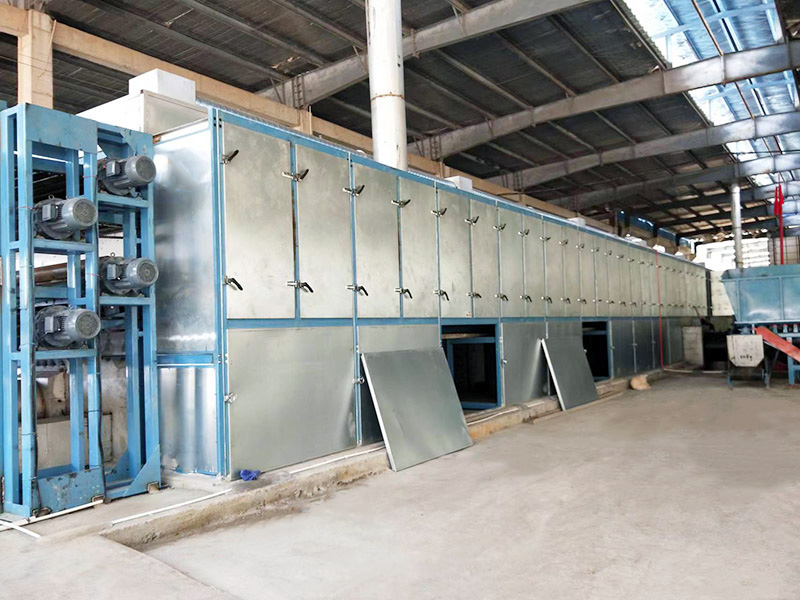
For higher-throughput continuous plywood veneer drying, Shine Machinery describes roller-based systems that combine drying sections with controllable transmission.
The Roller Veneer Dryer (four-layer, 36-meter configuration) lists:
Productivity: 4.6–5 m³ per hour
Comprehensive cost: 6–12 USD/m³
Veneer thickness range: 0.8–8 mm
The same product description also outlines the typical sections of the dryer—inlet, drying area, cooling area, and outlet—and notes that size can be customized according to production capacity, process, and space, including feed and receiving direction arrangements.
From a labor perspective, buyers generally evaluate a roller-type veneer dryer machine for how well it supports a continuous, repeatable rhythm over the full shift. When automatic infeeding and outfeeding are included in the line design, labor is often redirected from constant lifting and aligning toward monitoring, staging, and quality checks.
Vertical Veneer Dryer lines for lower staffing targets
Where staffing is the binding constraint—or where a compact layout is preferred—vertical configurations are often shortlisted.
On Shine Machinery’s product pages, vertical solutions are presented with published labor requirements for specific configurations:
The Vertical Plywood Veneer model FBH30-20 lists capacity 1.2–1.5 m³/h, total power 36.3 kW, size 20 × 7 × 4 m, and labor: 3 workers, with a note that the burner operator can also work concurrently with other tasks such as operating a forklift.
Another vertical tunnel-type core veneer drying machine description states the equipment requires 2 workers per shift, and describes the layout as feeding, heating, cooling, and discharging areas.
When comparing a Vertical Veneer Dryer to roller options, procurement teams typically map these worker counts to their shift plan and then check whether the hourly capacity aligns with the plant’s upstream peeling and downstream layup needs.
Low Cost Veneer Dryer options and what to verify
A Low Cost Veneer Dryer is commonly evaluated for entry investment and basic throughput, but buyers still need to validate whether labor and energy assumptions fit the plant’s reality.
The Low Cost Veneer Dryer Machine is described as a roller veneer dryer with:
Working width: 3 m
Veneer thickness: 0.8–8 mm
Heating area length: 32 m
Drying capacity: 50–60 m³/day
Heat source: biomass burner, with other options available
For labor planning, the essential verification step is to confirm how feeding and receiving will be handled in the full line layout, and how many operators are required per shift when the dryer is running steadily at the intended daily capacity.
The shift-based calculation that keeps automation honest
To compare automation fairly across different Veneer Drying System layouts, many buyers use a simple normalization: labor cost per cubic meter of dried output.
Core formulas
Labor cost per m³ = total labor cost per shift ÷ dried veneer output per shift
Daily labor cost = workers per shift × number of shifts × labor cost per worker per shift
These formulas do not require assumptions about a specific wage level; they work with the factory’s own numbers. What matters is that output is measured on the same basis for each option—actual dried veneer leaving the dryer under the target moisture requirement.
Worked example using published output
For the Plywood Core Dryer Machine model GTH30-36, published specifications include:
Deck: 4
Working width: 3.0 m
Drying capacity: 110 m³/day
Veneer thickness: 0.6–8 mm
Fresh veneer to about: 8–10% moisture
Veneer transport speed: 5–22 m/min
Total power: 221.5 kW
Using the formulas above, a buyer can take the plant’s chosen staffing level for the complete operating arrangement—infeed, outfeed, burner or heat-source operation, and supervision—then divide the labor expense by the dried output allocated to that shift. This approach avoids a common mistake: treating “automatic infeeding and outfeeding” as a fixed percentage labor reduction, rather than something that must be matched to output.
Labor cost per m³
= Total labor cost per shift
÷ Dried veneer output per shift
What to compare when selecting a veneer dryer machine
When procurement teams shortlist a veneer dryer machine for plywood veneer drying, the following checks help keep labor and capacity aligned without relying on assumptions:
Target output: compare hourly (m³/h) or daily (m³/day) capacity to production demand.
Veneer thickness range: confirm compatibility, for example 0.6–8 mm or 0.8–8 mm depending on the model.
Moisture targets: align incoming veneer moisture and final moisture requirements with the selected dryer configuration.
Handling configuration: verify whether automatic loading, automatic infeeding, and automatic outfeeding are included and compatible with the selected decks.
Worker allocation by shift: confirm who is assigned to feeding, receiving, and heat-source operation during each shift.
Workshop space and layout: compare horizontal roller layouts with compact vertical options where appropriate.
For buyers searching globally using terms like China veneer dryer manufacturer or China veneer dryer supplier, the practical differentiator is often not a brochure claim, but how clearly the supplier can map configuration, staffing, and output into a shift plan that the factory can run day after day.
FAQs
Does automatic infeeding always reduce the number of workers per shift?
Automatic loading can reduce deviation in veneer placement and help veneers run smoothly in the dryer, avoiding potential jamming. The final workers-per-shift plan depends on the full line configuration and how feeding and receiving are arranged.
What is the published loading action time for Shine Machinery’s automatic loading system?
The published action time—from fetching green veneer to unloading onto the feeding platform—is about 2.5–3 seconds per time.
What is the published capacity and cost range for the four-layer, 36-meter roller dryer?
The listed productivity is 4.6–5 m³ per hour, and the published comprehensive cost is 6–12 USD/m³.
How many workers are listed for the vertical FBH30-20 configuration?
The Vertical Plywood Veneer FBH30-20 configuration lists 3 workers.
Is there a vertical configuration that lists fewer workers per shift?
A vertical tunnel-type core veneer drying machine description states the equipment requires 2 workers per shift.
What is the simplest way to compare labor across veneer drying options?
Use labor cost per m³ = total labor cost per shift ÷ dried veneer output per shift, and apply the same shift length and output basis for each option.