
Plan 180 m³ Day Veneer Drying Under 160 kWh Hour
Reaching 180 m³ per day in plywood veneer drying is rarely about “one bigger machine.” It is an engineering and operations question: how many cubic meters per hour must the line deliver, how stable is the electrical supply, and which Veneer Drying System configuration matches the required final moisture target.
If your site cap is 160 kWh per hour (i.e., an average demand of 160 kW during that hour), the fastest way to avoid costly mismatches is to translate the daily target into hourly throughput first, then compare it against published veneer dryer machine specifications—model by model—before talking about expansion.

Convert 180 m³ per day into an hourly drying target
A daily number only becomes actionable when it is tied to actual operating hours. For a production team planning Drying Veneer output, these two cases are common:
24-hour operation: 180 ÷ 24 = 7.5 m³/h
20-hour operation: 180 ÷ 20 = 9.0 m³/h
The same logic applies to electricity:
160 kWh in one hour equals an average of 160 kW during that hour.
Over a day, that implies 3,840 kWh/day at 24 hours (160 × 24), or 3,200 kWh/day at 20 hours (160 × 20).
For procurement planning, it helps to keep three terms separate:
kW (power): instantaneous demand.
kWh (energy): total energy over time.
Installed power: the sum of rated motor/fan loads on the nameplate.
A project can stay within an hourly energy target on average and still face electrical constraints during motor starts or when multiple fans and conveyors are running together. That is why the expansion conversation should start with hourly throughput and a full load list, not only a headline “m³/day” value.
Use published specs to shortlist veneer dryer machine options
Below is a practical shortlist of models and parameters published by Shandong Shine Machinery Co., Ltd; Shine Machinery that buyers often place side-by-side when planning a staged capacity jump.
Key published specifications to compare
| Equipment / Model | Drying capacity | Moisture statement | Total power / power consumption | Notes from published parameters |
|---|---|---|---|---|
| FBH30-13 | 2 m³/h | Fresh veneer dried to 0–5% | Total power 15 kW | Fuel consumption 200 kg/h; size 13×3×4 m |
| FBH30-20 | 1.2–1.5 m³/h | Fresh veneer to within 20% | Total power 36.3 kW | Overall size 20×7×4 |
| 48 m Veneer Drying Machine | Around 70 m³/day | Veneer thickness range 0.6–8 mm | — | Roller material Q235B, φ102 special shaft tube; heat source biomass burner; composite cost about $6–12/m³ |
| Low Cost Veneer Dryer Machine | 50–60 m³/day | Veneer thickness 0.8–8 mm | — | Type roller veneer dryer; working width 3 m; heating area length 32 m; heat source biomass burner (other options available) |
| GTH612-42 (6 deck) | 15–18 m³/h | Fresh veneers to within 12% | Total power 680.5 kW; power consumption about 410 kWh | Drying 160–180°C adjustable; hot air section 36 m + cold air section 6 m |
Two buyer takeaways usually emerge immediately:
“Capacity” is not interchangeable unless the final moisture statement is comparable.
A high-capacity roller system can carry a very different electrical profile than a compact Vertical Veneer Dryer approach.
Vertical Veneer Dryer and roller dryer layouts are planned differently
In real mills, configuration is as important as model selection. The tradeoff is typically about footprint, line flow, labor, and how the plant wants to stage expansion.

Vertical Veneer Dryer for compact core-veneer throughput
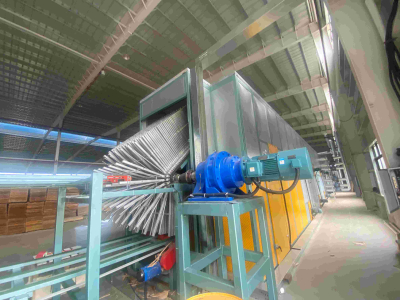
Shine Machinery describes its vertical design as a tunnel-type core veneer dryer composed of four parts: Feeding area, Heating area, Cooling area, and Discharging area. The system is positioned for core plate (and partial surface and bottom plate) applications and can be used for veneers with low flatness requirements.
For example, the FBH30-13 is published with 2 m³/h output and 15 kW total power, with fresh veneer dried to 0–5%, and fuel consumption 200 kg/h.
In a procurement discussion, this is where many teams start modeling a multi-machine layout: not because a single unit hits 180 m³/day, but because multiple units can be combined while keeping installed power relatively low.
Roller dryer options for different daily-throughput blocks
Roller systems are often evaluated as “daily capacity blocks.” Shine Machinery publishes two reference points buyers commonly compare:
The Low Cost Veneer Dryer Machine with 50–60 m³/day.
The 48 m Veneer Drying Machine with around 70 m³/day, a biomass burner heat source, and a published composite cost of about $6–12 per cubic meter.
From a planning perspective, roller dryers can be straightforward to stage (e.g., adding a second line), but they still require careful confirmation of the plant’s electrical envelope, conveyor integration, and the heating package that matches the fuel strategy.
A 160 kWh per hour cap calls for arithmetic first, then engineering
A simple nameplate exercise helps illustrate why capacity planning must start with hourly throughput.
Example: four FBH30-13 vertical units for hourly capacity
Using published FBH30-13 parameters:
Nominal capacity per unit: 2 m³/h
Total power per unit: 15 kW

With 4 units:Nominal capacity = 4 × 2 = 8 m³/hInstalled power = 4 × 15 = 60 kW
This kind of calculation is not a production guarantee, but it quickly answers the first question: is the hourly capacity even in range for 180 m³/day under the chosen operating hours.
Biomass fuel also scales with the configuration
FBH30-13 lists fuel consumption of 200 kg/h. With four machines running:
Fuel consumption = 4 × 200 = 800 kg/h
24-hour requirement = 800 × 24 = 19,200 kg/day
This is why buyers evaluating a Veneer Drying System under an electricity limit still treat heating fuel as a first-class design input, not an afterthought.
Don’t forget loading and infeed automation loads
If a line uses an Automatic Loading System, Shine Machinery publishes a total power of 15.1 kW (including lift servo motor, transport motors, hydraulic pressure station, and traction motor). Any feeder, conveyor, and auxiliary drive should be included in the installed power list when checking a 160 kWh per hour operating target.
Cost per cubic meter should separate electricity from total drying cost
Buyers often compare a veneer dryer machine by installed power, but operating cost is better tracked per cubic meter.
Electricity-only calculation (template)
Electricity cost per m³ =
  (kWh consumed × $/kWh) ÷ m³ dried
Total drying cost per m³ (complete view)
Shine Machinery publishes two cost references that buyers typically treat as benchmarks during plywood veneer drying planning:
Vertical dryer drying cost is published as less than $8/M³.
The 48 m roller veneer drying machine lists a composite cost of about $6–12/cubic meter.
These published figures are often used as an initial comparison point, then validated against a plant’s own power tariff, fuel price, operating hours, staffing plan, and the moisture target required downstream.
Procurement checklist for an 180 m³ per day expansion plan
Before placing an order, a buyer-side checklist keeps the conversation grounded in measurable inputs:
Operating hours per day (20 vs 24) and planned downtime.
Required m³/h to achieve 180 m³/day.
A complete electrical load list: dryer fans, traction motors, cooling fans, loading/feeding systems, and conveyors.
The incoming moisture and required final moisture statement for the product mix.
Heating strategy (e.g., biomass burner where specified) and how fuel supply scales with the selected configuration.
Plant layout constraints and installation space versus the selected Vertical Veneer Dryer or roller dryer footprint.
How performance will be measured: daily dried volume, moisture consistency, and energy use per m³.
For buyers who want to start from published product pages, the vertical system overview is available under Vertical Veneer Drying, and the roller option is listed as Low Cost Veneer Dryer.
FAQs
Does 160 kWh per hour mean the plant has 160 kW available all the time?
It indicates an average of 160 kW during that hour. Installed power and operating peaks should still be checked against the site’s electrical design.
What hourly output is needed to hit 180 m³/day?
At 24 hours, the target is 7.5 m³/h. At 20 hours, it rises to 9.0 m³/h.
What are the published power ratings for Shine Machinery vertical models?
FBH30-13 lists 15 kW total power. FBH30-20 lists 36.3 kW total power.
What is the published capacity of the 48 m roller veneer drying machine?
It is listed with a drying capacity of around 70 m³ per day, with a biomass burner heat source.
What is the published capacity of the Low Cost Veneer Dryer Machine?
It is listed with a drying capacity of 50–60 m³/day, and the heat source is specified as biomass burner (other options available).
What is the published power for the Automatic Loading System?
The total power is listed as 15.1 kW.
Which model has published “power consumption about 410 kWh”?
The GTH612-42 (6 deck) core veneer dryer lists total power 680.5 kW and power consumption about 410 kWh, along with a drying capacity of 15–18 m³/h.