
Stop Gluing Surprises by Validating Veneer After Drying
In plywood production, dry-looking veneer is not automatically glue-ready. The biggest risk is not the dryer itself—it’s what happens when a plant skips outfeed acceptance and sends questionable sheets into assembly. When the veneer surface is not in good condition for gluing, bonding problems may show up later, during hot pressing or downstream inspection, when rework becomes slower and more expensive.

Why plywood veneer drying must be verified at the outfeed
A well-run plywood veneer drying step is designed to bring green veneer into a moisture range suitable for the next operation. But a production line is a chain: if the veneer leaves the dryer with uneven moisture content, buckles, end waviness, or visible splits, the gluing stage inherits the instability.
That’s why an outfeed check is not “extra work.” It is a quality gate that connects your veneer dryer machine settings to real downstream results. Without this gate, the factory may only discover problems after layup or pressing—effectively delaying the exposure of risk.
In practical terms, buyers often evaluate a Veneer Drying System by output and energy cost. Those matter, but the more production-critical question is simpler: Does the dryer consistently deliver veneer that can be released for gluing, sheet after sheet?
Moisture control is a process target, not a minimum number
Moisture content remains one of the most visible control indicators in Drying Veneer, but the goal is consistency, not chasing the lowest possible reading.
Shandong Shine Machinery Co., Ltd; Shine Machinery lists moisture targets as part of different equipment specifications:
| Equipment model (examples) | Specified moisture outcome (as stated in product specifications) |
|---|---|
| GTH30-20 | Fresh veneer to about 8–10% |
| GTH45-40 | Fresh veneer to about 8–10% |
| GTH30-36 | Fresh veneer to about 10% |
| FBH30-13 | Fresh veneer dried to 0–5% |
A practical takeaway for procurement teams is to treat these figures as machine specifications. The correct release range in any plant still depends on the downstream process and the wood material being processed.
How adjustment ranges help stabilize drying
On Shine’s roller designs, two levers are repeatedly emphasized in the specifications: temperature and conveying speed.
For example, the GTH30-20 model lists 140–200°C adjustable temperature, with ±5°C control accuracy, and a veneer transport speed of 5–22 m/min with frequency control. The concept is straightforward: when veneer thickness or incoming condition changes, the operator has room to tune the line.
In day-to-day operation, that tunability works best when paired with a consistent outfeed moisture check. This is how a veneer dryer machine becomes part of controlled production rather than a “black box” between green veneer and layup.
What “surface in good condition for gluing” means in production
The phrase “surface in good condition for gluing” appears directly in Shine’s roller core product description, and it is a helpful way to define what the outfeed team should actually look for.
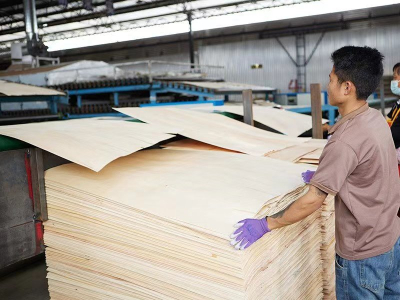
A glue-ready surface typically means the sheet is not only within a moisture window, but also stable in form and free from drying-related defects that interfere with layup contact. Outfeed checks commonly focus on:
Flatness and shape: identify buckling and end waviness that can prevent full contact.
Visible splits: reject sheets with cracks that reduce usable surface and create weak paths.
Wrinkles or ripples: surface distortion can lead to uneven glue spread and pressure distribution.
Sheet-to-sheet variation: inconsistent results inside the same batch can cause unstable pressing behavior.
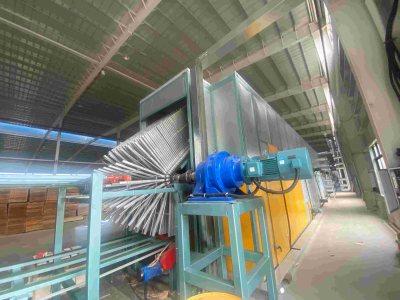
Shine’s roller core veneer dryer machine description highlights outcomes such as uniform moisture content, veneer that is flat without buckle or end waviness, and dried veneer free of splits, while noting that shrinkage and casehardening are kept to a minimum and collapse and honeycomb are avoided.
When these conditions are not verified, the risk doesn’t disappear—it simply moves to the next stage.

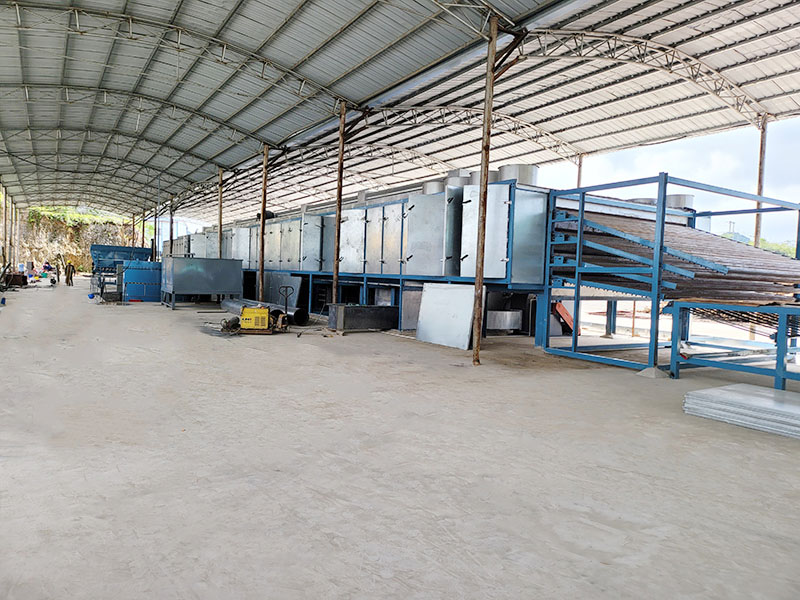
Choosing a Veneer Drying System that fits your plant layout
Procurement decisions typically balance four factors: capacity, footprint, cost, and quality requirements. Shine offers both roller and vertical approaches, and the selection is often about what you must prioritize at the outfeed.
When a Vertical Veneer Dryer is typically evaluated
A Vertical Veneer Dryer is often considered when footprint and cost are primary constraints. Shine’s vertical product pages emphasize:
Three-dimensional loading of veneer
Covered area around two-thirds of a roller dryer
Low drying cost, listed as less than $8/m³ (for the vertical dryer)
Continuous drying with a countercurrent cycle described as promoting uniform airflow and steady temperature
One listed configuration, FBH30-13, specifies 2 m³/h output, machine size 13 × 3 × 4 m, total power 15 kW, and fresh veneer dried to 0–5% moisture content.
Vertical equipment is also described as suitable for thick veneers and a production logic of cutting first and then drying, with relatively low professional requirements for workers and a stated staffing reference of 2 workers per shift.
When roller dryers are commonly preferred
Roller dryers are often evaluated when the production process requires strong attention to flatness and stable conveyance. Shine’s roller designs transport veneer between steel rollers and list frequency conversion as a way to adjust speed.
For a higher-capacity example, the four-deck GTH45-40 lists 8 m³/h drying capacity, working width 4.5 m, veneer thickness 0.8–8 mm, and 140–180°C adjustable drying temperature.
In procurement terms, the comparison is less about which system is “better,” and more about which system matches your required release criteria at the outfeed.
Low Cost Veneer Dryer selection without losing gluing readiness
A Low Cost Veneer Dryer is typically shortlisted by smaller or cost-sensitive factories, but cost only helps if the veneer still releases cleanly into the gluing process.
Shine’s GTH30-36 (roller type) lists a working width of 3 m, 2 decks, and a stated drying capacity of 50–60 m³/24 h. It also lists 140–200°C adjustable temperature with ±5°C control accuracy, and an actual electricity consumption of about 65 kWh per hour.
The product description also highlights the use of axial flow fans and a heat exchanger to support even hot air distribution, with the aim of preventing defects such as wrinkles, ripples, and cracks—exactly the types of issues that can prevent a surface from being in good condition for gluing.
A practical buying point: compare drying cost, outfeed consistency, and surface outcomes together. Cost per hour is easy to list; cost per usable, glue-ready cubic meter is what the plant feels.
A simple outfeed acceptance routine that prevents delayed glue failures
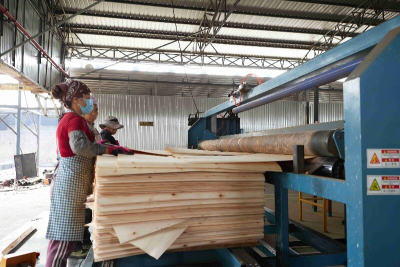
Factories that want fewer surprises during pressing often implement a short, repeatable acceptance routine after plywood veneer drying.
Confirm the running recipe: verify temperature and speed match the established settings for the current veneer.
Measure representative moisture: check multiple sheets, not just one. Record results by batch.
Visually grade the surface: look for splits, wrinkles, buckling, and end waviness.
Segregate nonconforming veneer: prevent questionable sheets from re-entering the main flow.
Release only compliant veneer: treat acceptance as a formal step, not an informal judgment.
This is where equipment capability and discipline meet. A Veneer Drying System can be designed for uniformity, but only inspection prevents a few bad sheets from turning into a press-room mystery.
Procurement notes for buyers comparing veneer dryer machine options
For purchasers comparing a veneer dryer machine, Shine’s published specifications provide several practical reference points buyers frequently request during RFQs:
Roller models offer configurable decks (e.g., 1, 2, or 4 decks are described for Shine roller plywood veneer dryers).
The GTH30-20 specification lists drying capacity of 2.5 m³/h.
Installation and training guidance is described, with typical installation times listed as 30–40 days for a 2-deck roller core veneer drying machine and 40–50 days for a 4-deck veneer dryer.
For product pages and equipment categories mentioned in this article, readers can start from www.veneersdryer.com.
To explore Shine equipment details directly:
Core Veneer Drying Machine
Roller Core Veneer Dryer Machine
Wood Vertical Veneer Drying
Low Cost Veneer Dryer Machine
FAQs
What is the main reason gluing problems appear “later” even when veneer looks dry?
Because appearance alone does not confirm acceptance. If the veneer surface is not in good condition for gluing (flatness, splits, wrinkles, end waviness, and moisture uniformity), the risk can pass into assembly and only show up during hot pressing or later inspection.
What moisture outcomes are listed for Shine roller and vertical equipment?
Examples from published specifications include fresh veneer to about 8–10% for GTH30-20 and GTH45-40, about 10% for GTH30-36, and 0–5% for FBH30-13.
What outfeed defects should operators check after plywood veneer drying?
Common checks include splits, wrinkles, buckling, end waviness, and signs of inconsistent drying between sheets. These are the conditions most likely to disrupt layup contact and gluing.
When is a Vertical Veneer Dryer commonly considered?
When a compact layout and low drying cost are priorities. Shine describes vertical equipment as using three-dimensional loading, covering roughly two-thirds of a roller dryer’s area, and listing a drying cost of less than $8/m³ for the vertical dryer.
What are the key adjustable settings on Shine roller dryers?
Shine’s roller specifications emphasize adjustable drying temperature (e.g., 140–200°C on GTH30-20 and GTH30-36) and adjustable conveying speed (e.g., 5–22 m/min), supported by automatic temperature control and speed regulation.
What should buyers compare besides electricity consumption when selecting a veneer dryer machine?
Compare drying cost, outfeed moisture consistency, surface condition for gluing, footprint, and the capacity figures stated in equipment specifications.