
Confirm Panel Allowance Before Choosing a Veneer Dryer Machine
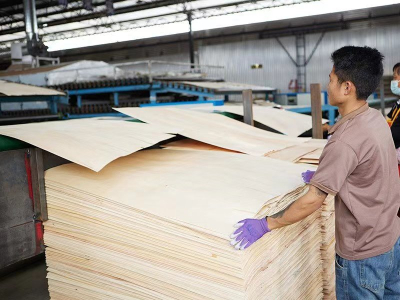
In plywood production, Drying Veneer is not only about reaching a target moisture level—it’s also about protecting usable sheet size. A 2–2.5 cm shrinkage allowance may be workable in some mills, but it should be accepted only after the customer confirms that the remaining veneer dimensions still meet the required finished panel size and tolerance. The practical takeaway is simple: your Veneer Drying System can help reduce defects and stabilize processing, but finished-size acceptance is a planning decision that must be verified before production.

Why shrinkage control matters in plywood veneer drying
Dimensional change is one of the most expensive “silent” losses in plywood veneer drying. If veneer shrinks more than expected, or shrinks unevenly, the impact shows up later as trimming losses, sizing problems, and avoidable rework. This is why buyers often evaluate a veneer dryer machine on two parallel criteria:
Whether it can support stable, repeatable moisture removal.
Whether the operation can confidently plan a finished-size allowance and keep yield predictable.
In practice, equipment choice tends to come down to two mainstream configurations used for Drying Veneer in continuous lines: roller dryers, often prioritized for moisture uniformity and flatness, and vertical dryers, often prioritized for economical core veneer drying and space efficiency.
Roller Veneer Dryer for uniform drying and flat veneer
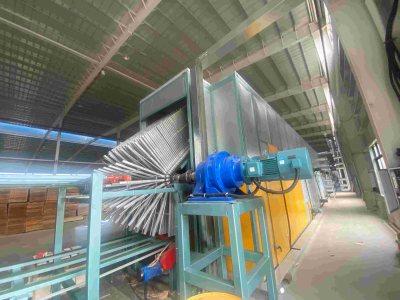
A roller-type veneer dryer machine is frequently selected when a mill needs consistent moisture removal and a flatter sheet for downstream gluing. In published product positioning for roller core veneer drying, the output emphasis is on veneer condition after drying—uniform moisture content, good surface condition for gluing, and minimized drying-related defects.
One representative product is the Roller Core Veneer Dryer Machine, described as producing veneer that is uniform in moisture content and flat without buckle or end waviness, while keeping shrinkage and casehardening to a minimum and avoiding collapse and honeycomb. For mills where the next steps depend on consistent sheet behavior, this type of roller configuration is commonly evaluated as part of a higher-stability Veneer Drying System.
Typical roller dryer specification snapshot for planning
For buyers who want a concrete baseline to compare against factory needs, the Low Cost Veneer Dryer Machine roller dryer is published with key parameters that help frame a procurement discussion.
| Parameter | Specification |
|---|---|
| Model No | GTH30-36 |
| Working width | 3 m |
| Deck | 2 |
| Veneer thickness | 0.8–8 mm |
| Heating area length | 32 m |
| Cooling area length | 4 m |
| Drying capacity (m³/24h) | 50–60 |
| Drying temperature | 140–200°C adjustable (±5°C accuracy) |
| Veneer transport speed | 5–22 m/min |
| Veneer water moisture | Fresh veneer to about 10% |
| Biomass burner (example) | 4 ton, 16.5 kW |
| Total power | 92 kW |
| Actual electricity consumption | About 65 kWh per hour |
| Covered space of whole machine | 42 m × 9 m × 3 m |
For procurement teams, tables like this are most useful when tied to your own production realities—veneer thickness range, target throughput, space constraints, and your acceptable process window for moisture and flatness.
Vertical Veneer Dryer for economical core veneer drying in less space
Where a plant primarily processes core veneer and is constrained by footprint, a vertical configuration is commonly shortlisted as a Low Cost Veneer Dryer option because it is positioned around loading efficiency and compact installation.
The Vertical Veneer Dryer is described as a continuous dryer that uses three-dimensional loading, occupying only two-thirds of the area of a roller dryer. It is also described as having high thermal efficiency and a quick-loading structure that increases veneer loading speed and can save labor. The internal circulation is described as having large hot air volume, with uniform airflow and uniform temperature, using a countercurrent drying cycle to support fast drying and uniform quality.
For core veneer applications, where flatness requirements are typically less demanding than face veneer, the vertical configuration is also described as suitable for veneers with low flatness requirements, and designed for a lower-cost core veneer drying approach.
Vertical dryer structure and operating fit
In product description for vertical veneer drying equipment, the system is described as consisting of four sections:
Feeding area
Heating area
Cooling area
Discharging area
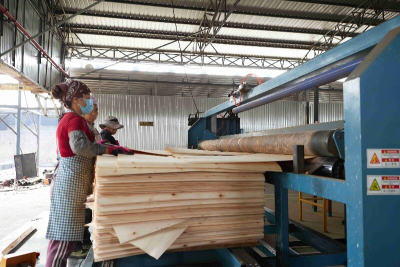
It is also described as suitable for a process of cutting first and then drying, and particularly for thick veneers. Operationally, it is described as having low professional requirements for workers, and requiring 2 workers per shift.
Before comparing vertical and roller layouts, it helps to keep one practical point in mind: a dryer can improve moisture stability and reduce obvious deformation, but it does not automatically settle the finished-size question. Mills still need to verify whether the remaining dimensions after drying, trimming, and downstream handling will meet the customer’s exact panel requirement. This becomes especially important when a plant is planning around a narrow allowance window such as 2–2.5 cm, because even a seemingly small variation in thickness mix, green moisture content, airflow exposure, or veneer species can affect the final usable sheet size in a way that influences yield and shipment acceptance.

Managing 2–2.5 cm shrinkage allowance without risking finished panel size
A 2–2.5 cm shrinkage allowance should be treated as a conditional production agreement, not as an automatic safe number. Even with a well-chosen Veneer Drying System, acceptance depends on whether the post-drying veneer dimensions still protect the customer’s finished panel size requirement.
Before approving a 2–2.5 cm allowance, procurement and production teams typically confirm five items in writing within the production plan:
Initial veneer dimensions before Drying Veneer.
Finished panel size requirement and the customer’s tolerance.
Shrinkage direction such as length, width, or a specified orientation.
Trimming and processing allowance needed after drying.
Acceptance rule for what happens if shrinkage exceeds the planned window.
This verification step matters regardless of whether the mill chooses a roller dryer or a Vertical Veneer Dryer. The dryer can be selected for moisture uniformity, flatness, cost, and space, but the finished-size decision must still be confirmed against real panel requirements.
Biomass heating as part of a cost-focused veneer drying system
Operating cost is often evaluated alongside moisture uniformity in plywood veneer drying. In published specifications for the GTH30-36 roller dryer, the heat source is listed as a biomass burner, with other options available. This is commonly assessed by buyers who want a fuel plan that fits a wood-processing environment.
For procurement comparisons, it helps to separate:
Energy configuration, such as biomass burner selection.
Control range, including adjustable drying temperature and adjustable conveying speed.
These factors affect both cost management and drying repeatability in day-to-day production.
Vertical vs roller dryer selection guide for buyers
Most sourcing decisions can be made faster when the selection factors are kept practical and production-led.
| Selection factor | Vertical drying approach | Roller drying approach |
|---|---|---|
| Typical priority | Low purchase cost, compact footprint, loading efficiency | Moisture uniformity and flatness for stable processing |
| Loading method | Three-dimensional loading | Roller conveying |
| Space | About two-thirds of roller dryer area | Larger footprint |
| Best-fit veneer | Core veneer, thick veneers, lower flatness requirement | Core or general veneer where flatness and surface condition matter |
| Process fit | Cut first, then dry | Continuous drying with adjustable speed and temperature |
If the goal is to reduce avoidable sizing problems, the most reliable workflow remains the same: define the finished panel requirement first, confirm the shrinkage allowance such as 2–2.5 cm with the customer, then match the veneer dryer machine configuration to your veneer type, throughput target, and space.
Where to review official product pages
For buyers comparing configurations, the official product pages are a practical next step:
Shine Machinery website: Veneer Dryer Machine
FAQs
Is 2–2.5 cm shrinkage automatically acceptable in plywood veneer drying?
No. A 2–2.5 cm shrinkage allowance is acceptable only after the customer confirms that the remaining veneer dimensions still meet the required finished panel size and tolerance.
What is the main purchasing reason to choose a Vertical Veneer Dryer?
A Vertical Veneer Dryer is commonly evaluated for three-dimensional loading, compact footprint, and an economical approach for core veneer drying.
What kind of veneer is the vertical drying approach described for?
It is described as mainly used for drying core plate, including partial surface and bottom plate, suitable for thick veneers and for veneers with low flatness requirements.
What are the key published specifications of the GTH30-36 low cost roller dryer?
It is listed as a two-deck roller dryer with 3 m working width, 0.8–8 mm veneer thickness range, 32 m heating area, 50–60 m³/24 h drying capacity, and 140–200°C adjustable drying temperature with ±5°C accuracy.
How is the heat source listed for the GTH30-36 roller veneer dryer machine?
The heat source is listed as a biomass burner, with other options available