
Do Not Let Short Cooling Undermine Veneer Stacking
In veneer production, buyers often compare a line by the length of its hot air section. It's understandable: heating length is directly tied to drying time, capacity, and moisture removal. But a veneer dryer isn't just a heating tunnel. The cooling area, discharge section, moisture target, and speed control all influence how veneer leaves the machine and enters the next handling stage. If the cold air section is treated as an afterthought, mills may face unstable sheets at discharge, less predictable stacking, and avoidable handling interruptions.
Why the Cooling Section Deserves More Attention
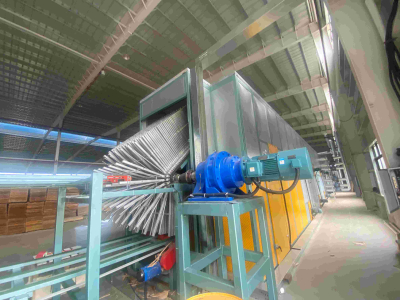
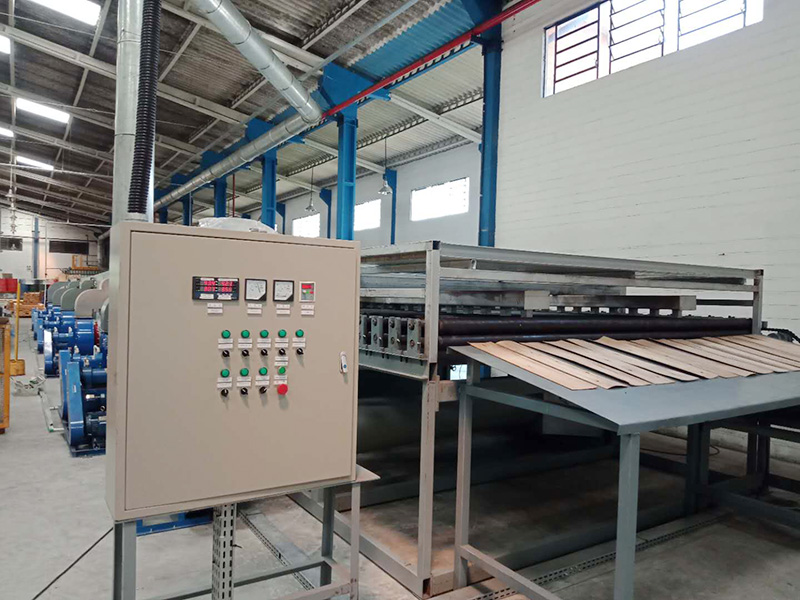
A modern veneer drying line typically moves veneer through feeding, heating, cooling, and discharge areas. The heating section removes moisture; the cooling section helps the sheet transition out of the hot drying environment before downstream handling. In practical purchasing, the common oversight isn't evaluating heating length; it's evaluating only heating length.
Shine Machinery product pages clearly illustrate this structure. Our Shine-20 face veneer dryer, for example, features a 3000 mm working width, 2 decks, 9 heating sections × 2000 mm = 18000 mm, and 1 cooling section × 2000 mm = 2000 mm. It also includes a 1500 mm feeding section and 1500 mm discharge section, making the full line layout easier for mills to evaluate before installation planning.
Heat Length Alone Does Not Define Drying Quality
A longer hot air section might seem appealing on paper, but the discharge-end condition is equally important. When considering a veneer dryer machine, buyers should ask whether the veneer exits at a suitable moisture level, whether the sheet remains flat, and whether the cooling and discharge arrangement matches their production speed.
For our Shine-20 face veneer dryer and related mesh belt models, published parameters include a drying temperature of 150–180℃, drying thickness of 0.2–4 mm, final moisture content of 8–12%, and drying capacity of 1–1.5 m³/h. These figures empower buyers to assess if a proposed line truly aligns with their veneer thickness range and desired output, moving beyond sole reliance on hot air length.
Comparing Hot and Cold Sections in Our Models
To avoid an unbalanced purchase, it's best to examine hot and cold zones in conjunction. The table below summarizes several Shine Machinery configurations listed on our official product pages, showcasing the balanced design of our equipment.
| Machine type | Model | Hot air or heating section | Cooling section | Other listed details |
|---|---|---|---|---|
| Face veneer dryer | Shine-20 | 9 × 2000 mm = 18000 mm | 1 × 2000 mm = 2000 mm | 3000 mm width, 2 decks, 47 KW |
| Continuous mesh belt veneer dryer | Shine-20 | 9 × 2000 mm = 18000 mm | 1 × 2000 mm = 2000 mm | 0.2–4 mm veneer thickness, 1–1.5 m³/h |
| 20 m 1 deck mesh belt dryer | Shine-20 | 6 × 3000 mm = 18000 mm | 1 × 2000 mm = 2000 mm | 31.7 KW total power, 1 deck |
| 6 deck veneer dryer | GTH612-42 | 36 m hot air section | 6 m cold air section | 6120 mm working width, 6 decks |
| Roller veneer dryer machine | GTH30-24 | 20 m heating area | 4 m cooling area | 3 m working width, 1 deck |
This comparison highlights why buyers should consider the entire process path. A roller veneer dryer or mesh belt dryer should be viewed as a cohesive system, not just a heating chamber with add-ons.
What Stable Discharge Means for Veneer Handling
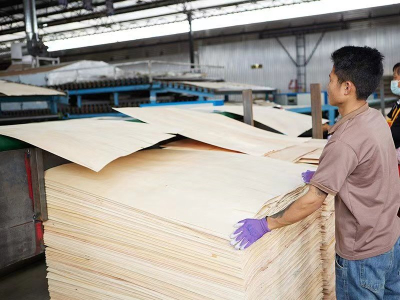
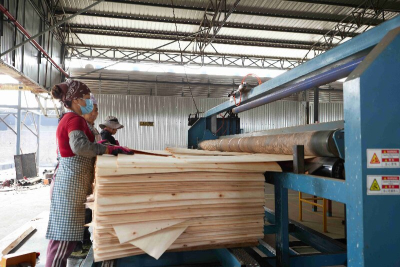
In plywood production, the discharge end is where drying performance becomes visible. Veneer that leaves the machine with uneven moisture or poor flatness can complicate sorting, gluing, or stacking. Shine Machinery's mesh veneer dryer descriptions confirm that dried veneer has uniform moisture content, is flat without buckle or end waviness, is free of splits, and has a surface condition suitable for gluing. Our product information also notes that shrinkage and casehardening are kept to a minimum, while collapse and honeycomb are avoided.
These statements offer a practical purchasing insight: mills should evaluate final veneer condition, not only the machine's installed length. Cooling, speed regulation, discharge space, and moisture target all deserve equal consideration.
Key Checks Before Choosing a Wood Drying Machine
When comparing a wood drying machine, buyers should request a complete line layout and confirm the relationship between capacity, veneer thickness, heating length, cooling length, and discharge handling. A more robust technical discussion typically involves:
Heating section length, not as a standalone selling point but as part of total drying time.
Cooling section length, especially when production speed is increased.
Final moisture target, such as the 8–12% range listed for our Shine-20 face veneer dryer models.
Veneer thickness range, including the 0.2–4 mm range listed for several of our Shine-20 mesh and face veneer dryers.
Speed and temperature control, where applicable, since our 20 m continuous mesh belt veneer dryer page lists automatic temperature control and speed regulation.
Feeding and discharge sections, because unstable transfer can reduce the value of a well-sized heating zone.
For buyers searching for a China veneer dryer manufacturer, China veneer dryer supplier, or China top veneer dryer factory, this checklist is usually more beneficial than merely requesting the longest hot air section.
Where Shine Machinery Excels in Buyer Evaluation
Shandong Shine Machinery Co., Ltd, also known as Shine Machinery, publishes multiple veneer dryer machine configurations on www.veneersdryer.com, including face veneer dryers, mesh belt veneer dryers, roller veneer dryers, vertical veneer dryers, automatic veneer feeders, wire rope face veneer dryers, and hot press dryers. Our comprehensive service scope includes pre-sale consultation, equipment selection support, factory visits, machine inspection before leaving the factory, overseas installation and debugging, first-line operator training, 24-hour online service, installation and debugging videos, and technical exchange.
For procurement teams, the key takeaway is simple: compare the full process from feeding to discharge. A veneer dryer with a well-described hot air section, cold air section, moisture target, and handling layout provides buyers with a more solid foundation for decision-making compared to a machine marketed solely by its hot air length.
Practical Buying Conclusion
Cooling isn't merely a decorative section at the end of a veneer dryer machine. Instead, it's an integral part of the production rhythm, linking drying to subsequent stacking, grading, gluing, and pressing. When a mill focuses only on hot air length, it may overlook the discharge-end stability that determines whether dried veneer can move smoothly into the next process.
A balanced evaluation should start with capacity and heating performance, then continue through cooling length, final moisture content, veneer flatness, and discharge handling. This comprehensive approach offers buyers a more realistic preview of the line's performance post-installation.
FAQs
Why should buyers evaluate the cooling section of a veneer dryer?
The cooling section is a crucial part of the complete drying path. It helps buyers assess how veneer transitions effectively from the heated area to the discharge and stacking stage, ensuring optimal final product quality.
Is a longer hot air section always better?
Not by itself. While important, heating length should be reviewed together with cooling length, veneer thickness, final moisture content, transport speed, and discharge handling to ensure a balanced and efficient drying process.
What final moisture content is listed for Shine-20 face veneer dryer models?
Shine Machinery consistently lists a final moisture content of 8–12% for several of our Shine-20 face and mesh veneer dryer configurations, ensuring consistent quality.
What veneer thickness range is listed for Shine-20 mesh and face veneer dryers?
Several Shine-20 configurations proudly list a versatile drying thickness range of 0.2–4 mm, accommodating various production needs.
What should buyers ask before selecting a veneer dryer machine?
Buyers should inquire about heating section length, cooling section length, working width, deck number, final moisture target, drying capacity, energy medium, and the complete discharge layout to make an informed decision.