
Rainy Season Veneer Regain Starts With Airflow Control
Rainy-season production often highlights every weakness in a plywood mill's drying process. Fresh veneer frequently enters the line with varying moisture conditions, while humid workshops make managing moisture regain after drying even tougher. Here, a robust roller veneer dryer isn't just a heating unit; it's a critical process-control tool, helping mills achieve flatter veneer, consistent moisture, and optimal readiness for gluing.

Why Rainy Season Makes Veneer Drying More Demanding
Moisture regain happens when dried wood reabsorbs moisture from its surroundings. In plywood manufacturing, the key isn't just drying veneer, but ensuring sheets exit the process consistently prepared for the subsequent gluing stage.
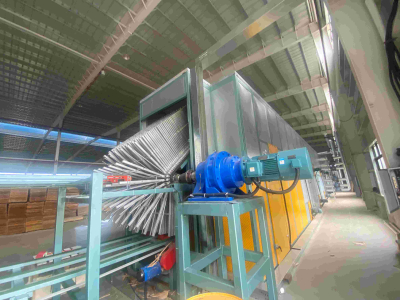
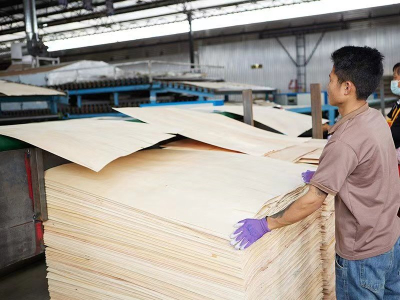
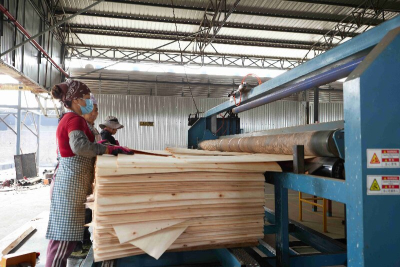
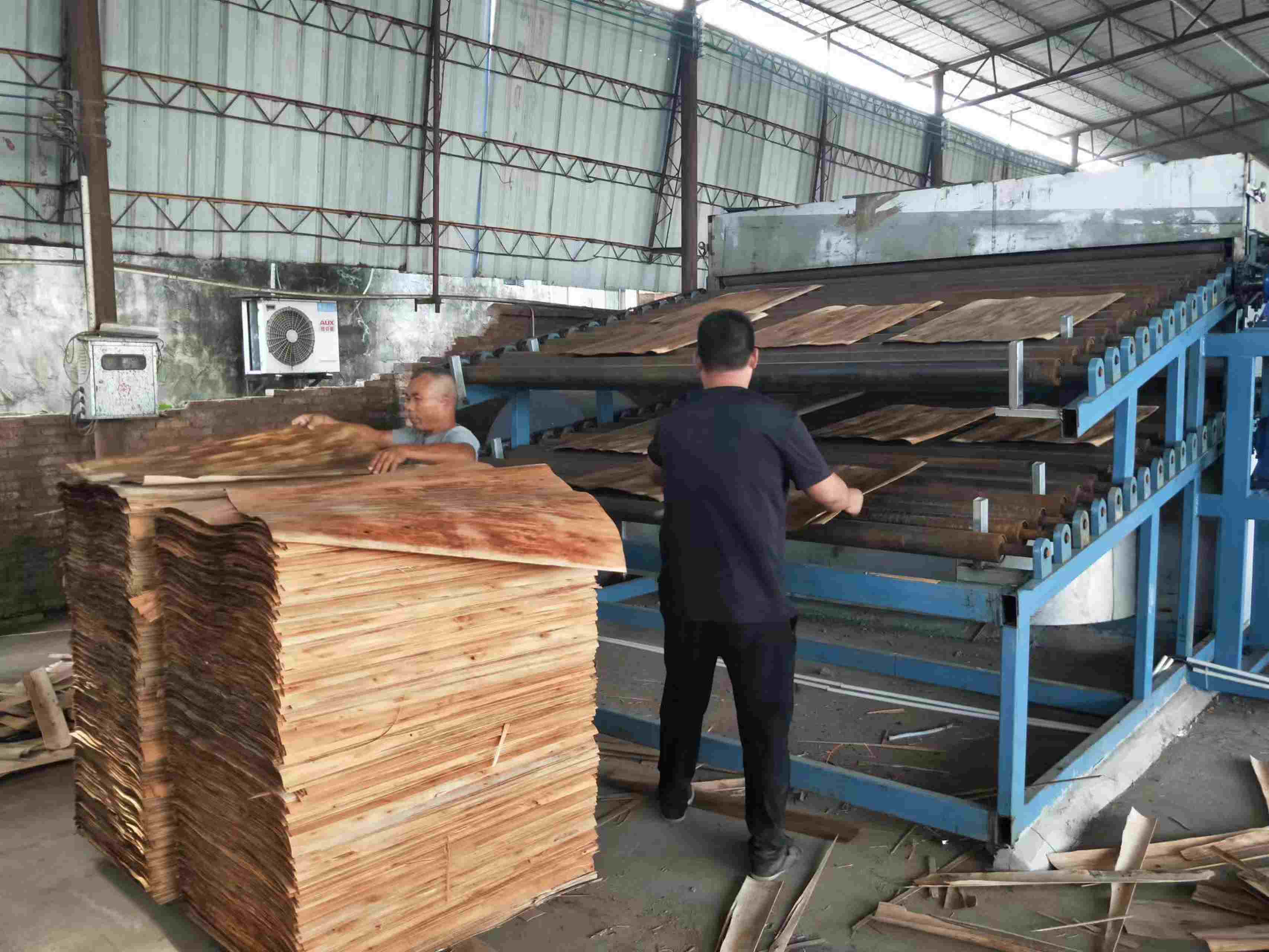
Shine Machinery's veneer drying equipment is engineered around this practical requirement. Its roller system supports veneer as it moves through the drying section, allowing the material to shrink during transport while helping reduce cracking. The company also describes the dried veneer as flat, with uniform moisture content and a surface condition ideal for gluing.
During humid times, simply boosting the temperature is seldom the ideal solution. If airflow is uneven or residence time isn't matched to veneer thickness and incoming moisture, some sheets might remain too wet while others become over-dried. A reliable veneer dryer should therefore be evaluated by its ability to coordinate heat, air circulation, and feeding speed.
Hot-Air Circulation Decides Batch Stability
A modern veneer dryer machine must move heat through the veneer consistently. Shine Machinery utilizes axial-flow fans for both hot-air and cold-air systems, a design intended to reduce power consumption while supporting stable circulation. Its heat exchanger adopts a step-by-step heat exchange structure, with different specifications across heat exchanger sections so that hot air can be distributed evenly to the veneer.

This is crucial because plywood quality relies on batch-by-batch consistency. When airflow distribution is stable, the veneer is more likely to dry evenly across the sheet and across production runs. When airflow is unstable, mills may observe wrinkles, end ripples, cracks, or inconsistent moisture before gluing.
| Production concern | Controlled drying response |
|---|---|
| Variable incoming veneer moisture | Adjust feeding speed according to thickness and moisture content |
| Humid workshop conditions | Keep hot-air circulation stable through the dryer system |
| Uneven dried sheets | Use roller transport and step-by-step heat exchange for more uniform drying |
| Gluing preparation risk | Target flat veneer with suitable surface condition for bonding |
Speed Control Is as Important as Temperature
Shine Machinery's roller veneer dryer employs frequency-conversion speed regulation. This allows operators to adjust feeding speed based on veneer thickness and moisture content. For rainy-season production, such controllability is especially valuable because veneer batches may behave differently from morning to afternoon.
A published Shine configuration, model GTH30-36, illustrates how operating parameters can be practically managed. The machine features a 3.0 m working width, four decks, a 32 m heating area, and a 4 m cooling area. It processes veneer thickness from 0.8–8 mm, with an adjustable drying temperature of 140–200°C and veneer transport speed of 5–22 m/min. The configuration also includes automatic temperature control and speed regulation, boasting a stated temperature control accuracy of ±5°C.
While these values are model-specific, they do highlight a broader operating principle: a veneer dryer machine should be adjusted according to real material conditions, not simply run as a fixed-temperature box.
Core Veneer Drying Needs Flatness and Moisture Control
Core veneer is particularly sensitive to drying quality because it forms the internal structure of plywood. Shine's core veneer dryer utilizes a roller drying principle where upper and lower rollers support the veneer during transport. This design helps produce veneer that is flat, without buckle or end waviness, while maintaining more uniform moisture after drying.
Shine product data encompasses eucalyptus, birch, rubberwood, poplar, beech, pine, and other woods, with a listed veneer thickness range of 0.8–8 mm. Published drying capacity varies by species and deck configuration:
| Dryer configuration | Published capacity range |
|---|---|
| 1-deck veneer dryer | 0.5–2.2 m³/h |
| 2-deck veneer dryer | 1–3.8 m³/h |
| 4-deck veneer dryer | 2–10 m³/h |
| 6-deck veneer dryer | 15–18 m³/h |
For buyers, this implies capacity isn't solely determined by deck count. Wood species, veneer thickness, incoming moisture, final moisture target, and production rhythm all impact real output. A larger wood drying machine can increase throughput, but airflow design and process adjustment still dictate whether the dried veneer is ready for stable plywood bonding.
Fuel Options and Operating Practicality
Operating cost is yet another factor driving plywood mills to meticulously compare veneer dryer designs. Shine Machinery indicates that waste wood or bark from peeling can be used as a fuel source in applicable configurations, helping users significantly reduce fuel costs. Its product pages also describe simple operation, safety, stability, and easy maintenance as integral to the dryer design.
For factories that run long shifts, the after-sales system also holds importance. Shine Machinery lists 24-hour online service, remote operation support, regular follow-up service for existing customers, and timely spare-parts supply. Such service provisions are vital when a mill's plywood production hinges on consistent veneer drying.
How Buyers Should Compare Dryer Types
International buyers searching for a China top veneer dryer factory, China veneer dryer manufacturer, or China veneer dryer supplier often compare terms such as roller veneer dryer, wood drying machine, and flip-type veneer dryer. These terms shouldn't be considered interchangeable. The product information discussed here specifically concerns Shine Machinery's roller veneer dryer and core veneer dryer configurations.
A practical purchasing review should focus on:
Hot-air circulation: whether the dryer supports even heat movement through the veneer.
Heat exchange design: whether the system is built for uniform hot-air distribution.
Speed control: whether feeding speed can be adjusted by veneer thickness and moisture.
Supported veneer range: whether the machine fits the mill's species, thickness, and capacity needs.
Operating cost: whether fuel and power consumption align with the plant's cost structure.
Service support: whether installation, training, remote assistance, and spare parts are adequately addressed.
Optimizing Drying for the Rainy Season
Rainy-season veneer quality depends on control, not excessive heat. An effective roller veneer dryer precisely coordinates hot-air circulation, step-by-step heat exchange, roller transport, and adjustable feeding speed. Shine Machinery's dryer configurations are engineered to meet these practical plywood production demands, particularly where consistent moisture and flat veneer are paramount for subsequent gluing.
For mills evaluating a veneer dryer machine from China, Shine Machinery can be evaluated through the same production lens: examining airflow stability, drying consistency, capacity range, operational inputs, maintenance requirements, and service support. Product specifications and enquiry options are available at www.veneersdryer.com.
FAQs
How does a roller veneer dryer help during rainy-season production?
Controlled drying is achieved through a combination of roller transport, hot-air circulation, step-by-step heat exchange, and adjustable feeding speed. This helps mills achieve more uniform moisture and flatter veneer before gluing.
Can the same veneer dryer setting be used for every batch?
No. Shine Machinery's roller veneer dryer utilizes frequency-conversion speed regulation, allowing feeding speed to be adjusted according to veneer thickness and moisture content.
What veneer thickness range is listed for Shine veneer dryers?
Shine's published product tables list a veneer thickness range of 0.8–8 mm for the referenced configurations.
Does more deck count always mean better drying quality?
Deck count primarily affects production configuration and throughput. Drying quality still depends on airflow distribution, heat exchange, roller transport, and suitable operating parameters.
Is a flip-type veneer dryer the same as a roller veneer dryer?
The terms should be carefully verified during procurement. The Shine Machinery products discussed here are roller veneer dryer and core veneer dryer configurations.