
Stop Veneer Outlet Cracks Before Speed Becomes Scrap
When cracks emerge from a veneer dryer machine outlet, the immediate response in many plywood mills is often to adjust speed. Faster transport certainly looks attractive, promising more sheets per hour, but drying veneer is not just a throughput calculation. Line speed changes residence time, and residence time interacts with temperature, veneer thickness, incoming moisture, hot-air circulation, humidity removal, and cooling. If these variables are pushed out of balance, a wood drying machine might move more material through the line, yet send less usable veneer to downstream plywood production.

Why Speed Alone Can Shrink the Quality Window
A veneer dryer machine functions as a continuous drying system, not merely a simple conveyor. When transport speed increases, each veneer sheet spends less time in the heating section. If the outlet moisture remains too high, operators might be tempted to raise the temperature or intensify drying conditions. This response can indeed reduce moisture quickly, but it may also amplify internal drying stress and create a steeper moisture gradient between different parts of the sheet.
Research in wood and veneer drying consistently links cracking with drying stress and steep moisture-content gradients. Excessive drying has also been associated with surface defects and weaker downstream bonding conditions. In practical plywood production, this means the most valuable dryer setting is not always the fastest one. The better target is a stable operating window where speed, temperature, airflow, and moisture removal work harmoniously.
Shine Machinery roller dryer specifications clearly illustrate why these variables must be considered as a group. Several listed models provide a veneer transport speed range of 5–22 m/min and adjustable drying temperature of 140–200°C, with temperature control accuracy of ±5°C on published configurations. These are adjustment ranges for equipment operation, not one-size-fits-all settings for every species, veneer thickness, or moisture condition.
The Core Controls Behind Stable Drying Veneer Quality
A core veneer dryer must balance four practical controls: transport speed, drying temperature, air circulation, and moisture discharge. If one control is changed without checking the others, outlet quality can quickly become unstable.

Transport Speed and Residence Time
Transport speed directly determines how long the sheet remains inside the heating area. Shine Machinery GTH-series configurations use frequency-controlled traction motors, allowing feeding speed to be adjusted according to specific drying requirements. This is crucial because published Shine models cover veneer thickness ranges such as 0.8–8 mm and, in some configurations, 0.6–8 mm. A setting that works perfectly for thin veneer might not suit thicker core veneer, especially when incoming moisture levels fluctuate.
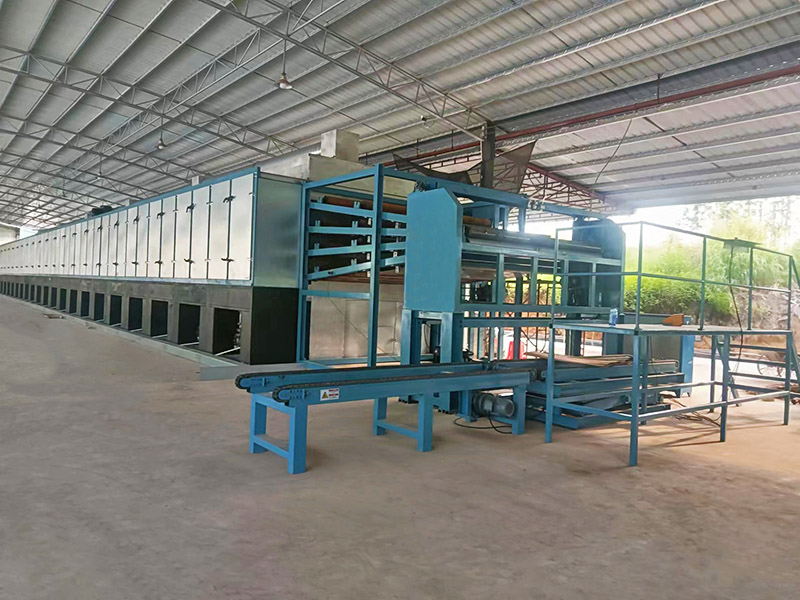
For instance, the GTH30-28 Plywood Veneer Dryer features a 24 m heating area and a 4 m cooling area, designed for drying fresh veneer to approximately 8–10% moisture. A larger GTH45-40 configuration boasts a 36 m heating area and 4 m cooling area, with a listed drying capacity of 180–200 m³/24h. The same speed range can therefore behave quite differently depending on factors like heating length, veneer loading, and the desired moisture target.
Temperature and Moisture Target
Temperature is undoubtedly important, but it should not be treated as an automatic correction for wet outlet veneer. Shine Machinery’s listed roller veneer dryers offer adjustable drying temperature from 140–200°C across several configurations, coupled with an automatic temperature control and speed regulation system. This intelligent integration helps operators coordinate drying intensity effectively with varying veneer thickness and moisture content.
For plywood mills, achieving the precise finished moisture target is critical, as the dried veneer becomes the primary feedstock for subsequent gluing and pressing stages. Several Shine dryer specifications aim for fresh veneer drying to about 8–10% moisture, while one broader veneer drying configuration can handle fresh veneer to about 0–15%. The correct target ultimately depends on the selected equipment and specific process requirements, so mills should always confirm the expected outlet moisture before making any changes to speed or temperature.
Hot-Air Circulation and Humidity Removal
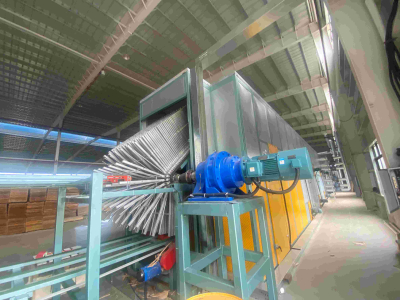
A wood drying machine cannot be evaluated by temperature alone. Shine’s veneer dryer systems include veneer infeeding, veneer outfeeding, robust hot-air circulation, efficient humidity removal, automatic temperature and speed regulation, and dedicated cooling sections on applicable models. Published product details also specify hot-air blowers, cold-air blowers, air intake fans, and various biomass burner options.
This highlights why outlet cracking is best viewed as a systemic process issue. If moisture removed from the veneer is not carried away effectively, the drying environment becomes much harder to control. If airflow is uneven, certain parts of the sheet may dry faster than others, leading to imbalances. Shine Machinery also emphasizes the use of advanced axial-flow blowers in its veneer drying equipment, with product pages noting reduced whole-machine power consumption while consistently maintaining the air volume required for optimal drying.
What Shine Dryer Specifications Reveal About Balanced Settings
The following published model details illustrate how a veneer dryer machine should be carefully matched to actual production demand rather than simply judged by speed alone.
| Model | Working width | Heating area | Cooling area | Veneer thickness | Moisture target | Listed capacity |
|---|---|---|---|---|---|---|
| GTH30-28 | 3.0 m | 24 m | 4 m | 0.8–8 mm | Fresh veneer to about 8–10% | 80–85 m³/day |
| GTH30-36 | 3.0 m | 32 m | 4 m | 0.8–8 mm | Fresh veneer to about 8–10% | 110 m³/day |
| GTH45-40 | 4.5 m | 36 m | 4 m | 0.6/0.8–8 mm | Fresh veneer to about 8–10% | 180–200 m³/24h |
This comparison offers valuable insights for both procurement and day-to-day operations. A longer heating area, wider working width, specific deck configuration, and tailored airflow arrangement all significantly influence how drying veneer behaves inside the line. A mill that frequently processes mixed veneer thicknesses should therefore carefully evaluate not only maximum capacity but also the machine's overall controllability.
Diagnosing Outlet Cracks Without Guesswork
When cracks become visible at the dryer outlet, slowing the line might offer temporary relief, but it should not be the sole response. A controlled diagnosis helps pinpoint whether the problem is linked to moisture, heat, airflow, handling, or a combination of conditions. Consider these steps:
Measure outlet moisture first. Confirm whether the sheet is too wet, within target, or excessively dry.
Compare speed with veneer thickness. Do not evaluate speed only against the machine’s maximum range.
Review drying temperature. A higher temperature may increase drying intensity but can also narrow the quality margin.
Inspect hot-air circulation. Airflow should consistently support uniform drying across the entire sheet.
Check humidity removal. Moisture must effectively leave the drying chamber to maintain control.
Confirm heat-source stability. Shine configurations can utilize a biomass burner that efficiently burns waste wood, with other heat-source options available on product pages.
Evaluate the cooling section. Listed GTH models commonly include a 4 m cooling area, which is vital for proper final sheet handling after the heating process.
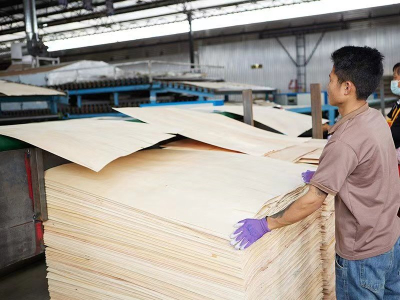
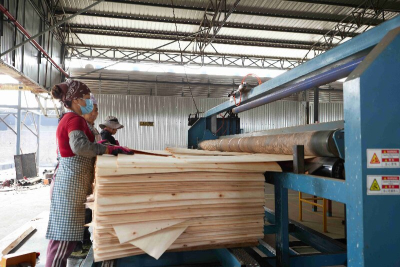
Inspect outlet handling. Splits can also arise from improper veneer handling, so the outfeeding and collection process should be checked in conjunction with dryer settings.
Following this systematic approach allows operators to implement changes incrementally. It also helps prevent a common production mistake: chasing a higher speed number while simultaneously losing more veneer to cracking, waviness, or inconsistent moisture content.
Why Flatness Matters As Much As Moisture
A Core Veneer Drying Machine is expected to do more than simply remove water. Shine Machinery describes dried veneer from its core veneer drying equipment as having uniform moisture content and a flat condition, free from buckling or end waviness. This flatness is incredibly important because reliable plywood production depends on stable sheet feeding, precise glue application, consistent layup, and effective pressing.
Roller structure also significantly contributes to smooth sheet movement through the dryer. Published GTH configurations specify Q235B φ102 special shaft tube roller material on several models, ensuring durability and performance. Deck arrangements vary by required capacity, with Shine roller plywood veneer dryers designed as 1-deck, 2-deck, or 4-deck configurations to meet diverse customer requirements.
For a plywood producer, this shifts the purchasing decision from mere cost to overall quality: how much usable veneer actually leaves the dryer, not just how much veneer enters it. A high headline output loses significant value if outlet cracks lead to increased trimming, redrying, or outright rejection.
Operating Cost Should Include Usable Output
Drying economics are often discussed solely in terms of energy and labor, but they should also encompass usable veneer yield. Shine Machinery product pages list comprehensive operating costs of about US$6–12/m³, covering labor, fuel, and electricity for specified configurations. Model electricity consumption varies: the GTH30-36 is listed at approximately 149 kWh per hour, while a GTH45-40 configuration is listed at about 160 kWh per hour.
These figures clearly demonstrate why a buyer comparing a China veneer dryer manufacturer, China veneer dryer supplier, or China top veneer dryer factory should look beyond initial price and maximum speed. Key procurement checks should include supported veneer thickness, working width, deck count, heating length, cooling length, transport-speed range, drying temperature range, moisture target, heat source, airflow arrangement, and the expected comprehensive operating cost.
A Practical Quality Boundary for Plywood Mills
Balanced drying effectively protects the quality boundary between usable output and costly waste. Shine Machinery’s published roller dryer configurations provide adjustable speed and temperature, frequency conversion control, efficient hot-air circulation, robust humidity removal, and dedicated cooling sections on applicable models. These features are most useful when operators employ them as a coordinated system.
Ultimately, a truly effective Plywood Roller Veneer Dryer is judged by its consistent outlet moisture, flat veneer, realistic drying costs, and the overall yield of usable plywood veneer. When outlet cracking begins to rise, the safer production strategy is to rebalance the entire drying window, preventing increased speed from simply generating more scrap.
For product specifications and model details, visit www.veneersdryer.com. Product inquiries can be sent to info@sdshinemachinery.com or made by phone at +8615806625431.
FAQs
Does the highest veneer dryer machine speed deliver the best output?
Not always. Several Shine models list a 5–22 m/min transport-speed range, but the optimal setting depends on veneer thickness, incoming moisture, drying temperature, airflow, and the required outlet moisture.
What moisture level do Shine veneer dryers target?
Several published Shine roller veneer dryer configurations specify drying fresh veneer to about 8–10% moisture. One broader veneer drying configuration describes fresh veneer to about 0–15%, depending on the specific process and equipment selection.
Why do cracks appear at the dryer outlet?
Outlet cracks can be linked to drying stress, moisture gradients, excessive drying, or improper handling conditions. Operators should methodically check finished moisture, speed, temperature, hot-air circulation, humidity removal, heat supply, cooling, and outfeeding conditions.
Can temperature be raised when veneer exits too wet?
Temperature should always be adjusted in conjunction with speed and overall veneer condition. Shine Machinery’s listed GTH dryers provide automatic temperature control and speed regulation, which supports coordinated adjustment rather than isolated changes.
What should buyers check when selecting a core veneer dryer?
Key considerations include working width, deck configuration, heating and cooling lengths, veneer thickness range, moisture target, speed range, drying temperature range, airflow arrangement, heat source, overall capacity, and comprehensive operating cost.