
Shine Wood Redefines Industry Standards with High-Temperature, Corrosion-Resistant Veneer Dryers, Eliminating Fire Hazards and Quality Defects Plaguing Competitors
In the high-stakes world of wood processing, where milliseconds of drying precision determine the fate of millions of square feet of veneer, the machinery at the heart of production has long been a source of quiet anxiety for manufacturers. For decades, the industry has grappled with a persistent dichotomy: invest in exorbitantly priced imported machinery or settle for domestic alternatives that, while cost-effective, often harbor critical vulnerabilities. Among these vulnerabilities, two nightmares top the list for every production manager—internal fires caused by material fatigue under extreme heat, and catastrophic roller corrosion that renders high-value wood veneer into a rippled, moisture-compromised waste product.
Enter Shine Wood, a Chinese manufacturing powerhouse that is upending this paradigm. With the launch of its latest generation of veneer dryer systems, the company is not merely selling equipment; it is issuing a challenge to an industry accustomed to compromising on durability. By engineering its machines entirely with certified high-temperature resistant alloys and marine-grade anti-corrosion materials, Shine Wood has effectively rendered obsolete the trade-off between upfront cost and long-term operational safety. This investigative feature delves deep into how Shine Wood’s commitment to metallurgical integrity is solving the chronic issues of fire hazards and roller rust, setting a new global benchmark for veneer drying technology.
The Hidden Crisis in the Drying Line
To understand the significance of Shine Wood’s innovation, one must first understand the brutal physics of veneer drying. A veneer dryer is a mechanical beast. It operates continuously, often 24 hours a day, exposing its internal components to temperatures that routinely exceed 200 degrees Celsius. Inside this inferno, green wood veneer—ranging from precious oak and walnut to fast-growing poplar—is transported via a series of precision-ground rollers, blasted with high-velocity hot air to reduce moisture content from over 80% down to the critical 6-10% required for plywood, LVL (Laminated Veneer Lumber), and furniture manufacturing.
It is within this hostile environment that the shortcomings of substandard manufacturing become lethally apparent.
“The market is flooded with dryers that look identical on the outside but are ticking time bombs on the inside,” says James Chen, a veteran maintenance engineer with over 20 years of experience in Southeast Asia’s plywood sector. “To cut costs, many manufacturers use low-grade steel for the internal rollers and the chamber linings. When you subject low-grade steel to continuous thermal cycling, it expands unevenly. Then comes the corrosion, because wet wood releases acidic vapors. Within 18 to 24 months, the rollers start to rust and seize.”
The consequences are twofold. First, the fire risk. When internal materials warp due to heat stress, they create gaps where stray wood dust accumulates. In an oxygen-rich, high-temperature environment, this dust acts as tinder. The National Institute of Forest Products (NIFP) has noted that a significant percentage of unplanned downtime in veneer mills is attributed to spontaneous combustion or friction fires inside substandard dryers.
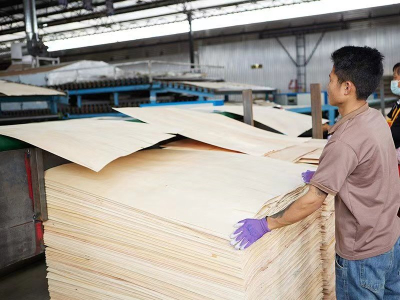
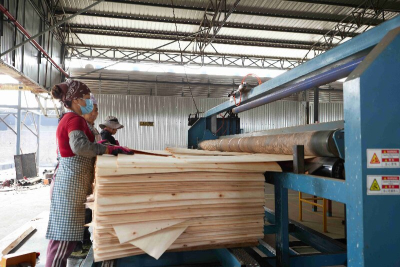
Second, the quality crisis. The rollers are not merely conveyors; they are finishing tools. As they rust or develop uneven surfaces due to corrosion, they imprint their imperfections onto the wood veneer. A rusty roller creates “roller marks”—longitudinal grooves or a washboard effect on the veneer surface. More critically, corroded rollers lose their thermal conductivity consistency. When a roller has uneven heat distribution or rust buildup, the wood veneer passes through the dryer with inconsistent contact. The result is a product with varied moisture content; some sections become brittle and overcooked, while others remain damp, leading to delamination in the final plywood panel.
Shine Wood’s Metallurgical Counterattack
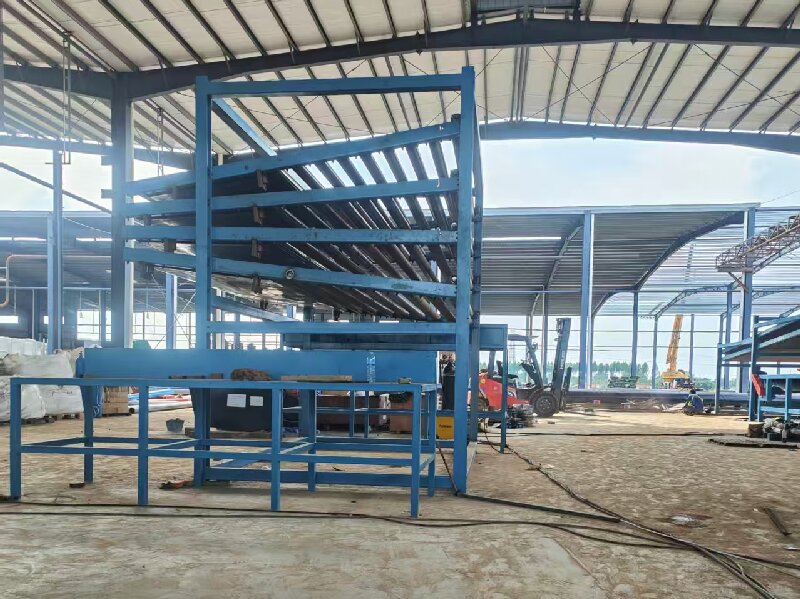
Shine Wood has built its new series of veneer dryer systems around a simple but radical premise: the internal environment of a dryer is a chemical plant, not just a heating chamber. By treating the dryer as a chemical reactor rather than just a conveyor, the company has re-engineered every component that touches the wood veneer or the drying atmosphere.
1. The High-Temperature Alloy Frame
While competitors utilize standard carbon steel for the dryer’s internal skeleton, Shine Wood employs a proprietary high-temperature resistant alloy. This material maintains its structural integrity even when the dryer is pushed to its maximum thermal limits during peak production of thick veneers. By eliminating thermal deformation, Shine Wood ensures that the internal alignment of the rollers remains true. This alignment is the bedrock of veneer drying technology; if the frame warps, the rollers lose parallel alignment, causing the wood veneer to snake, tear, or fold—leading to immediate production stops.
2. Anti-Corrosion Roller Technology
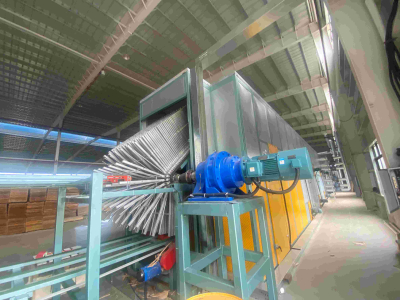
The most significant breakthrough lies in the rollers. Shine Wood has introduced a multi-layer anti-corrosion treatment for all steel rollers. The base layer is a stainless-steel composite resistant to the formic and acetic acids released by hardwood veneers. This is topped with a specialized anti-corrosion coating that undergoes a heat-curing process to bond with the metal at a molecular level.
“The industry standard is to paint rollers with high-temperature paint,” explains Dennis, Head of R&D at Shine Wood. “That is a cosmetic solution. When the wood acids attack the micro-fractures in the paint, moisture seeps in, and the roller begins to rust from the inside out. We have eliminated paint from the equation. We use metallurgical solutions—alloys and chemical vapor deposition—to create a surface that simply does not react with organic acids or moisture.”
The result is a roller surface that remains mirror-smooth for years, not months. For the producer of high-end wood veneer, this means the aesthetic quality of the grain is preserved. No rust stains are bleeding into the wood, no mechanical dimpling, and—most importantly—consistent pressure across the width of the veneer sheet ensures that moisture is extracted uniformly.
A Tale of Two Factories: The Cost of Compromise
To illustrate the tangible difference Shine Wood makes, one need only look at the contrasting operational realities of two hypothetical (yet representative) factories: one using conventional, cost-optimized dryers and one using the new Shine Wood high-temperature, anti-corrosion system.
Factory A (Conventional Substandard Dryer):
After 14 months of operation, Factory A begins noticing a spike in rejects. Quality control reports show that 8% of their wood veneer output has “surface streaks” and “uneven moisture maps.” A maintenance shutdown reveals the culprit: the internal rollers are covered in a patina of rust. The rust has increased the coefficient of friction, causing the wood veneer to stretch on one side more than the other. Worse, the bearings, compromised by heat transfer from the warped frame, are failing. The production manager faces a grim choice: run the dryer and risk a fire from accumulated dust caught in the corroded roller assemblies, or shut down for a week to replace 60% of the rollers—a costly endeavor that also requires re-certifying the dryer’s alignment.
Factory B (Shine Wood High-Temperature System):
Operating 24/7 for 36 months, Factory B’s Shine Wood veneer dryer shows no signs of internal degradation. The high-temperature alloy frame maintains zero deflection. The anti-corrosion rollers, inspected via internal cameras, show no rust pitting. The wood veneer emerging from the machine has a moisture variation of less than 1.5% across the entire sheet—a critical metric for manufacturers producing LVL for structural applications. The total cost of ownership, factoring in the elimination of emergency roller replacements and fire suppression system activations, is 40% lower than the industry average.
The Technology Behind the Durability
Shine Wood’s advancement in veneer drying technology is not just about materials; it is about intelligent integration. The company has developed a closed-loop control system that leverages the durability of its hardware to optimize the drying process.
Because the rollers and internal components do not degrade over time, the machine's calibration remains stable. This stability allows Shine Wood to implement advanced moisture sensors that communicate directly with the roller speed and nozzle pressure. On lower-capacity machines, as rollers corrode and drag increases, the control software compensates by slowing the line speed to ensure drying targets are met—a fix that reduces throughput and increases energy consumption per cubic meter of wood veneer.
With Shine Wood’s corrosion-resistant infrastructure, the line speed remains constant. The veneer dryer can run at higher velocities because the thermal conductivity of the clean, rust-free rollers enhances heat transfer from the hot air jets to the wood. This synergy between durable hardware and smart software represents the next evolution in veneer drying technology, moving from reactive maintenance to predictive, high-efficiency production.
Global Market Response and the “Shine Standard”
The response from the global wood processing industry has been emphatic. In markets such as Vietnam, Brazil, and the United States—where plywood manufacturers are under increasing pressure to certify their products for environmental and structural standards—the reliability of drying equipment has become a non-negotiable factor.
“We were skeptical about the claims regarding anti-corrosion materials,” admits Marcelo Santos, Operations Director for a major Brazilian plywood exporter. “In our tropical climate, processing eucalyptus, the acidity is incredibly aggressive. We used to replace rollers every 18 months. We installed a Shine Wood veneer dryer three years ago. We have not replaced a single roller due to corrosion. The wood veneer quality is consistent from day one to today. The risk of internal fire has dropped to zero because there is no warping to trap dust. When Shine says ‘quality that withstands the test of time,’ it’s not marketing—it’s engineering.”
This reputation is forcing a reckoning in the industry. Smaller manufacturers of drying equipment, who have historically relied on the opacity of the supply chain to hide inferior materials, are finding it increasingly difficult to compete. Shine Wood has effectively raised the bar, making “high-temperature resistance” and “full anti-corrosion construction” the new baseline expectations for serious investors.
Addressing Safety: Eradicating the Fire Hazard
The fire hazard associated with substandard veneer dryer units is perhaps the most underreported crisis in secondary wood processing. Insurance adjusters specializing in industrial woodworking facilities note that veneer drying lines are the number one source of ignition in panel plants.
The mechanism is insidious. In a dryer built with poor materials, the internal casing begins to crack or bow due to heat stress. Wood fibers and resinous dust accumulate in these crevices. While the dryer operates at high temperatures, the air velocity is high enough to prevent ignition. However, during a planned or unplanned stoppage—a power outage or a downstream jam—the air circulation stops, but the radiant heat remains. The accumulated dust in the crevices begins to smolder. By the time the smoldering becomes an open flame, the internal integrity of the dryer is compromised, often leading to a total loss of the equipment and significant structural damage to the facility.
Shine Wood’s use of high-temperature alloys eliminates this risk. By utilizing materials that do not warp or crack under thermal stress, the dryer maintains its airtight, smooth interior surface. There are no “hidden pockets” for dust to accumulate. Furthermore, the anti-corrosion properties of the rollers and chamber prevent the formation of rough surfaces where dust could cling. For safety auditors, the Shine Wood dryer represents a paradigm shift from a “high-risk” asset to a “controlled process.”
The Economic Calculus: Total Cost of Ownership
For financial controllers in the wood products industry, the initial capital expenditure (CAPEX) for a Shine Wood veneer dryer is often comparable to or marginally higher than that of premium competitors. However, when compared to the low-cost, inferior material dryers flooding the market, the differential in total cost of ownership (TCO) is staggering.
A comprehensive TCO analysis over five years highlights the savings:
Maintenance Costs: Substandard dryers require biannual roller replacements and annual structural welding repairs. Shine Wood dryers reduce maintenance to routine bearing lubrication and sensor calibration.
Downtime: The average plywood mill loses 120 to 200 hours per year due to dryer-related issues (fires, roller jams, misalignment). Shine Wood clients report less than 20 hours of unplanned downtime annually.
Product Yield: The premium paid for a Shine Wood system is often recouped within the first 12 months solely through the reduction in wood veneer rejects. By maintaining perfect roller smoothness and consistent thermal profiles, the system ensures that even the thinnest 1.5mm decorative veneers exit the machine flat, smooth, and uniformly dried.
Energy Efficiency: Corroded rollers increase friction. A rusty roller requires more motor torque to turn, increasing electrical consumption. Moreover, when moisture content is inconsistent, producers often “over-dry” the veneer to be safe, wasting thermal energy. Shine Wood’s precise, stable technology reduces energy consumption per unit of output by an average of 15%.
Conclusion: The Future of Veneer Drying
As the global demand for engineered wood products continues to surge—driven by sustainable construction trends and the shift away from solid lumber—the role of the veneer dryer has never been more critical. It is no longer merely a piece of ancillary equipment; it is the bottleneck that defines the capacity and quality of the entire production facility.
Shine Wood has positioned itself at the vanguard of this industry by solving the fundamental engineering problems that have plagued the sector for decades. By committing to high-temperature resistant alloys and comprehensive anti-corrosion materials, the company has delivered a solution that aligns with the needs of modern, safety-conscious, and efficiency-driven manufacturers.
In an industry where a single fire can halt production for months, and where inconsistent wood veneer moisture content can lead to catastrophic product failure in the field, the choice of drying equipment is a strategic decision. Shine Wood’s message to the market is clear: the era of compromising on materials is over. The veneer drying technology of the future must be built to withstand the elements it creates.
For manufacturers looking to secure their production lines, protect their workforce, and deliver the highest quality wood veneer to a discerning global market, Shine Wood’s high-temperature, anti-corrosion dryers are not just an option—they are the new standard.