In the sprawling industrial parks of Linyi, Shandong Province—often called the "Capital of Plywood" in China—the air no longer smells of coal smoke. Instead, a new sound is echoing through the veneer production facilities: the steady, efficient roar of biomass burners consuming what was once considered worthless debris.
At the heart of this transformation is Shandong Shine Machinery Co., Ltd., a company that has successfully re-engineered one of the most energy-intensive processes in wood processing: drying veneer. With global energy prices remaining volatile and environmental regulations tightening across Asia, Africa, and South America, Shine Machinery’s patented biomass burner technology is emerging not just as an eco-friendly alternative but as a superior economic imperative.
The High Cost of Dryness
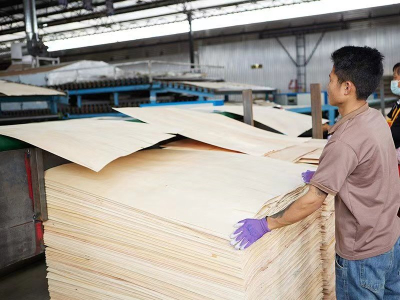
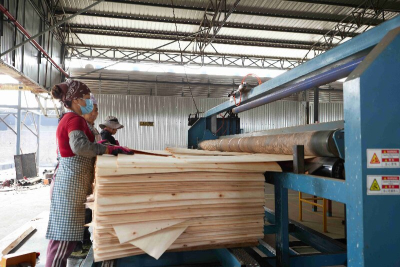
To understand the scale of this innovation, one must first understand the plywood manufacturing process. Freshly cut veneer, or "peeler log" sheets, contains a moisture content ranging from 50% to 80%. Before these thin sheets can be glued together to form plywood, the moisture must be reduced to approximately 10%. Failure to do so results in warping, delamination, and a finished product prone to rot.
Traditionally, this drying process has been a massive drain on finances and the environment. Conventional veneer dryers rely on steam boilers or thermal oil heaters. These systems require secondary heat exchange processes—burning fuel to heat water or oil, which then circulates to heat air—resulting in significant thermal loss. The fuel for these systems has historically been coal, heavy oil, or natural gas, the costs of which have seen extreme volatility since the global energy crisis.
"We were essentially burning money to get rid of water," admits a plant manager from a medium-sized plywood facility in Malaysia, who recently retooled his production line with Shine equipment. "We spent hours maintaining a separate boiler house, and the fuel accounted for nearly 60% of our operational costs."
The Shine Solution: Direct Combustion and Circular Economy
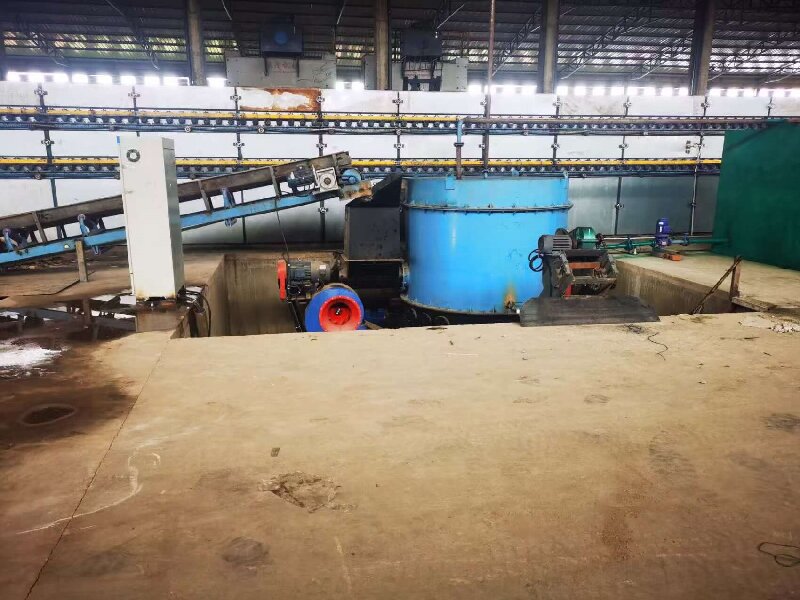
Shine Machinery’s flagship innovation lies in its patented Biomass Burner (Patent No. CN201810847742.6), a device that allows for the direct combustion of waste wood to generate drying heat. Unlike conventional furnaces or hot air stoves that require processed fuel, the Shine system is an industrial-scale consumer of refuse.
The technology is deceptively simple in concept but complex in execution. The system consumes crushed waste wood, tree bark, wood chips, sander dust, and even waste veneer strips—materials that were once a disposal liability for wood processors. This feedstock is fed into the burner where, through a controlled high-temperature process, it combusts at temperatures exceeding 1,000 degrees Celsius (1,832 degrees Fahrenheit).
This intense heat directly heats the air, which is then channeled into the dryer. By eliminating the intermediary of steam or oil, Shine’s system achieves what engineers call "zero heat loss" through secondary exchange. The result is a drying temperature inside the machine consistently maintained between 140°C and 200°C, hot enough to flash off moisture but controlled enough to prevent veneer cracking.
Economic Alchemy: Turning Scrap into Savings
The financial metrics of the Shine biomass system are turning heads in an industry known for thin margins. According to company specifications for their 38-meter three-layer roller dryer, the comprehensive drying cost falls to approximately 80 RMB per cubic meter (approx. $11 USD). For their larger 52-meter double-layer systems, the cost drops even further, to between 40 and 70 RMB per cubic meter ($5.50 to $9.60 USD).
To put this in perspective, a medium-sized operation drying 100 cubic meters of veneer per day could see daily fuel costs as low as $500 to $1,000. Comparatively, gas or oil-fired systems often run three to four times that amount.
These savings are validated by broader academic research. A 2025 study published in Energy Reports on optimizing biomass boiler parameters found that transitioning from experience-based manual operation to optimized, automated biomass heating could reduce operating costs by nearly 30%, with seasonal savings exceeding $13,000 USD for medium-sized industrial applications. Shine’s integration of automated controls capitalizes on this exact principle.
"A plywood factory is essentially a giant wood chipper, and for every ton of veneer produced, there is a significant percentage of waste," explains a senior engineer from Shine Machinery. "In the past, factories had to pay to haul this waste away, or they would burn it inefficiently in the open, polluting the neighborhood and angering environmental regulators. Our system takes that waste—which has a cost of zero or even negative—and converts it into a heat source that outperforms fossil fuels."
Technical Specifications and Scalability
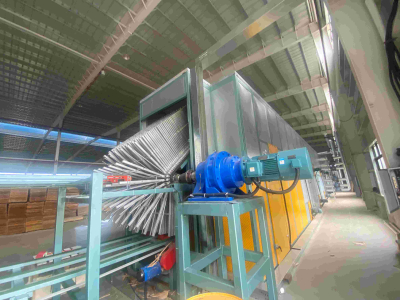
Shine Machinery, operating under the umbrella of Shandong Wanda Heavy Industry Co., Ltd., has invested heavily in R&D to ensure that the heat delivery is as sophisticated as the fuel source. The biomass burner is paired with a "progressive heat exchange" system within the dryer. This system utilizes different heat exchanger specifications in different sections, ensuring that hot air is evenly dispersed over the veneer sheets.
This prevents common drying defects such as end waviness, cracking, or "honeycombing" inside the veneer structure. The result is a high-quality surface ready for gluing, which reduces waste in the final pressing stage.
The dryers are equipped with fully automatic electronic control and frequency conversion systems. Operators can adjust the transmission speed and temperature based on the specific thickness and moisture content of different veneer species. For example, thicker hardwood veneers (up to 8mm) require different heat exposure times than thin, softwood face veneers (0.6mm). The system’s temperature control accuracy of ±5°C ensures consistency across the entire production run.
Furthermore, the engineering addresses a critical pain point in high-heat industrial environments: maintenance. The bearings installed in Shine dryers are rated to withstand temperatures up to 500°C and are maintenance-free, requiring no lubrication, which reduces downtime.
The Environmental Calculus: More Than Just Carbon Neutral
In an era of "greenwashing," the biomass solution requires a nuanced look at its environmental impact. The combustion of biomass releases CO2. However, the scientific consensus, supported by institutions like the Czech University of Life Sciences Prague, views biomass combustion as carbon neutral when sourced sustainably. The CO2 released is roughly equivalent to the CO2 absorbed by the trees during their growth cycle.
But Shine’s technology goes beyond the basic carbon cycle. By utilizing direct combustion, the system avoids the release of methane that would occur if waste wood were left to rot in landfills. More importantly, the high-temperature combustion process effectively eliminates the release of unburned hydrocarbons and tars that plague older, inefficient wood stoves.
According to industry data on modern biomass burners, the technology employed by Shine utilizes high-temperature pyrolysis and secondary air distribution. This ensures a burn-out rate exceeding 98%, minimizing particulate matter and virtually eliminating visible smoke when operated correctly. The closed-loop system means there is no wastewater or tar residue, solving a major pollution problem associated with early-stage biomass gasification.
Global Adoption: From Southeast Asia to South America
The proof of concept is visible in the field. Shine Machinery has successfully deployed numerous veneer dryers across Thailand, Malaysia, Laos, and has made significant inroads into African and South American markets.
In these regions, the value proposition is twofold. In established markets like Thailand, factories use the system to manage waste from rubberwood plantations. In emerging markets, the ability to use locally available biomass—whether eucalyptus waste in Brazil or mixed tropical hardwoods in Africa—allows producers to achieve energy independence.
"The customers are telling us this is the most advanced dryer they have used," notes a Shine sales representative. "They see the savings immediately. When you have a sawmill attached to your plywood line, the fuel is literally falling on the floor."
Synergy with Global Research Trends
The move toward self-sufficiency in industrial heating aligns perfectly with global energy trends. Recent research published in Renewable Energy highlights the development of distributed pyrolysis equipment for yard waste, converting it into solid biofuels with higher heating values (HHV) comparable to low-rank coal. While Shine’s system primarily focuses on direct combustion rather than charcoal production, the underlying economic driver is the same: consumable expenditure is the major factor influencing profitability.
Furthermore, the scalability of biomass solutions is being proven beyond the plywood sector. University enterprises in Europe, such as CZU Forests in Czechia, have adopted wood chip boilers to heat large complexes, citing reduced dependence on external sources and the positive CO2 balance as key drivers. Shine Machinery is adapting this principle for the industrial manufacturer, allowing them to recycle surpluses from their own production lines.
Conclusion: The Future of Heat
As the world moves toward decarbonization, the "electrify everything" movement is strong. However, for heavy industries like plywood manufacturing, the energy density and reliability required for drying are immense. Battery technology and electric boilers currently struggle to match the instantaneous heat output of combustion.
Shine Machinery offers a bridge to the future—a future that relies on circularity rather than extraction. By perfecting the science of burning waste, they have provided an industrial solution that is profitable, scalable, and sustainable.
For the plywood industry, the message is clear: the cheapest energy is the energy you already own. And with the help of Shine's biomass burners, woodworkers are learning to heat their businesses with the very scraps that once littered their floors.