
Shine Machinery Unveils Next-Generation Wood Veneer Dryer: A New Era of Efficiency and Performance for 2026
SHANDONG, CHINA – February 2026 – As the global wood processing industry embarks on a new year marked by rising energy costs, increasing demand for premium materials, and intensifying environmental scrutiny, Shine Machinery Co., LTD. has answered the call with a bold declaration: the completion of a comprehensive product upgrade program that redefines the very essence of wood veneer drying. The company announced today that its flagship line of industrial dryers has undergone a transformative redesign, achieving unprecedented breakthroughs in energy efficiency, production throughput, and drying precision. This milestone, achieved in the opening weeks of 2026, positions Shine and its global partners at the forefront of a new industrial era—one where intelligent technology, sustainability, and superior product quality converge.
For decades, the drying phase has stood as the most critical—and often most problematic—bottleneck in veneer drying operations. Traditional methods, reliant on uniform heat application and manual oversight, have consistently struggled with the inherent variability of natural wood. Sheets cut from different parts of the log, representing various species with unique densities and grain structures, enter the dryer with widely divergent initial moisture contents. Conventional systems, applying blanket heat across the entire batch, inevitably produce inconsistent results: some sections emerge over-dried, brittle, and prone to cracking, while others retain excessive moisture, compromising subsequent lamination and finishing processes. These inefficiencies translate directly into material waste, energy waste, and diminished profitability.
Shine Machinery's engineering team, recognizing these systemic challenges as opportunities for fundamental innovation, embarked five years ago on a mission to reimagine veneer drying technology from first principles. The result, now fully realized and entering production in 2026, is a suite of next-generation dryers that operate not merely as heating chambers but as intelligent, adaptive processing systems capable of "sheet-level cognition"—treating each piece of wood veneer according to its unique drying requirements.
"The new year represents a fresh start for industries worldwide, but for Shine, it marks the culmination of years of dedicated research and the beginning of a new chapter in industrial drying," stated Sophia Jiao, Chief Executive Officer of Shine Woodworking Machinery. "We have not simply added features to existing models. We have fundamentally re-engineered our veneer dryer systems to achieve breakthroughs that our clients told us mattered most: dramatically lower energy consumption, significantly higher throughput, and near-perfect drying consistency. These upgrades are our commitment to helping our partners lead their markets in 2026 and beyond."
The Cognitive Drying Engine: Intelligence at the Core
At the heart of Shine's 2026 product transformation lies the proprietary Cognitive Drying Engine (CDE), an AI-driven platform that elevates veneer drying from an artisanal craft to a precise, data-rich industrial science. Unlike conventional control systems that merely monitor temperature and humidity at fixed points, the CDE creates a dynamic, three-dimensional understanding of every drying cycle in real time.
Hyperspectral Sensing and Moisture Mapping
The foundation of this intelligence is a dense array of hyperspectral sensors strategically positioned throughout the drying chamber. These non-contact instruments penetrate beyond the surface of the wood veneer, measuring moisture content at depth and generating a continuous, high-resolution moisture map for every sheet in the batch. Where traditional dryers rely on occasional sample measurements that assume batch homogeneity, Shine's system identifies and quantifies natural variations from sheet to sheet and even within individual sheets.
"The industry's legacy has been 'batch thinking'—treating an entire load as homogeneous," explained Dr. Dennis, Shine's Head of Thermal Dynamics Engineering. "Our breakthrough is in 'sheet-level cognition.' We understand that wood veneer from different parts of the log, with varying grain densities and initial moisture profiles, requires a bespoke drying trajectory. The IntelliDry Pro delivers precisely that".
This real-time moisture mapping capability fundamentally transforms the drying equation. As wet wood veneer enters the system, the sensors immediately detect which areas require more aggressive drying and which demand gentler treatment. This information feeds directly into the dryer's adaptive control systems, enabling instantaneous adjustments that prevent defects before they can form.
AI-Powered Drying Curve Optimization
The CDE's machine learning algorithms continuously analyze the data streaming from thousands of drying cycles, building an increasingly sophisticated understanding of how different wood veneer species, thicknesses, and initial moisture conditions respond to various thermal profiles. Over time, the system develops optimized drying curves tailored to each specific material configuration—whether paper-thin decorative maple for luxury furniture or thicker construction-grade birch for structural plywood.
This predictive capability eliminates the safety margins that plague conventional drying. Traditional operators, lacking precise knowledge of when a batch reaches target moisture content, typically extend cycles "just to be safe," wasting energy and risking over-drying damage. Shine's AI knows exactly when each zone of each sheet has achieved its ideal moisture level, terminating the process at the perfect moment and ensuring consistent, repeatable results batch after batch.
Energy Efficiency Breakthrough: Doing More with Less
Perhaps the most striking achievement of Shine's 2026 upgrades lies in the realm of energy efficiency. In an era where industrial energy costs have become a primary driver of profitability, the new generation of veneer dryers delivers documented reductions in specific energy consumption that fundamentally improve the economics of wood processing.
Closed-Loop Heat Recovery System
The centerpiece of this efficiency revolution is an advanced closed-loop heat recovery system that captures thermal energy that would otherwise be wasted. In conventional dryers, the hot, moisture-laden air exhausted from the drying chamber carries away vast quantities of heat—energy purchased at high cost that simply dissipates into the atmosphere. Shine's engineering team has developed a high-efficiency heat exchanger that captures up to 40-50% of this thermal energy and redirects it to preheat incoming fresh air.
This recovery process is not merely an add-on feature but an integral element of the dryer's thermodynamic design. The recovered energy reduces the load on primary heaters—whether gas-fired, thermal oil, or steam-based—by a margin that translates directly to lower operating costs and reduced carbon emissions. For a typical mid-sized veneer operation, these savings can amount to hundreds of thousands of dollars annually, delivering equipment payback periods that industry analysts describe as "highly attractive".
Phase-Change Thermal Storage
Beyond heat recovery, Shine's 2026 models introduce phase-change thermal batteries that store excess energy during periods of low demand for use during peak processing times. This innovation allows facilities to take advantage of off-peak electricity rates, shifting energy consumption to more economical periods without disrupting production schedules. The thermal batteries absorb heat when available, storing it in materials engineered to change phase at specific temperatures, and release it gradually when the drying cycle demands additional energy.
This technology represents a significant advance in industrial energy management, effectively decoupling the timing of energy purchase from the timing of energy use. For manufacturers operating in regions with time-of-use electricity pricing, the savings potential is substantial.
Precision Drying Eliminates Energy Waste
The cognitive capabilities of the CDE contribute to energy efficiency in equally important ways. By drying each zone of each sheet precisely to target the moisture content and no further, the system eliminates the energy waste inherent in over-drying. Conventional dryers, lacking the intelligence to know when drying is complete, often continue applying heat long after the optimal endpoint has passed. Shine's sensor-driven automatic cycles stop exactly when the job is done, conserving energy while protecting product quality.
"Operators can expect a 40-50% reduction in specific energy consumption per board foot compared to conventional single-pass vented dryers," noted Michael Roberts, Shine's Sustainability Officer. "We are not just reducing kiln drying time; we are redefining the thermodynamics of the process. This delivers a rapid ROI and a dramatically smaller carbon footprint".
Throughput Revolution: Faster Drying Without Compromise
For production managers, time is the most finite resource. The speed at which a facility can process raw wood veneer into finished, stable material directly determines overall plant capacity and the ability to respond to customer demand. Shine's 2026 upgrades address this fundamental metric with innovations that dramatically accelerate drying cycles while maintaining—and in many cases improving—final product quality.
Three-Dimensional Cyclical Airflow Technology
Traditional veneer dryer designs rely on linear airflow patterns that inevitably create "dead zones"—areas within the chamber where heat penetration is less effective, requiring longer drying times to bring all material to specification. Shine's engineers have overcome this limitation with a patented Three-Dimensional Cyclical Airflow Design that engineers a multidirectional, turbulent airflow pattern throughout the drying chamber.
This approach ensures that every sheet of wood veneer, regardless of its position on the conveyor, receives identical exposure to moving air. The turbulent flow effectively breaks down the boundary layer of stagnant, moisture-saturated air that insulates the wood surface, dramatically enhancing the rate of heat and mass transfer. The result is a reduction in drying time of up to 40% compared to traditional single-direction systems—a transformative improvement that effectively increases plant capacity without requiring additional floor space.
Multi-Zone Adaptive Control
The accelerated drying enabled by improved airflow is managed and controlled through the dryer's multi-zone adaptive architecture. The drying chamber is divided into multiple independent climate zones, each capable of maintaining distinct temperature, humidity, and airflow parameters. This segmentation allows the system to apply precisely the conditions needed at each stage of the drying process.
In the initial zones, where raw wood veneer enters with moisture content often ranging from 60% to 100%, the system employs higher humidity and moderate temperatures to prevent case hardening—a condition where the surface dries and seals too quickly, trapping moisture within the core. Subsequent zones gradually reduce humidity and increase temperature to drive efficient moisture removal from the interior. Final zones focus on conditioning, stress-relieving the dried veneer to achieve equilibrium moisture content, and eliminating residual stresses that would otherwise cause curling or warping.
This staged approach allows each phase of drying to operate at maximum efficiency without compromising the others. The overall cycle is shorter than in conventional systems, yet the risk of drying defects is actually reduced.
Seamless Integration with Automated Material Handling
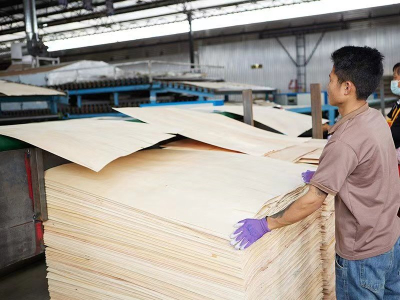
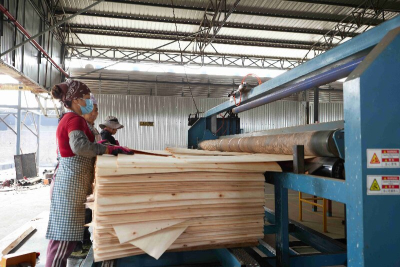
Throughput gains extend beyond the dryer itself to encompass the entire production flow. Shine's upgraded systems are designed for seamless integration with automated loading and unloading equipment, minimizing the manual handling that often creates bottlenecks at the dryer infeed and outfeed. The dryers communicate directly with upstream and downstream equipment, coordinating material flow to maintain continuous operation at optimal speed.
For manufacturers transitioning toward fully automated "smart factory" operations, this integration capability is essential. The dryers support open communication protocols, including OPC UA and Modbus TCP/IP, allowing them to receive job orders from central Manufacturing Execution Systems (MES) and send back completion reports and quality data. This transforms the veneer dryer from a standalone processing unit into a communicative node in an intelligent production network.
Quality Outcomes: Preserving Value at Every Step
While efficiency and throughput gains command attention in production planning discussions, it is ultimately product quality that determines market position and profitability. Shine's 2026 upgrades deliver measurable improvements in the consistency, integrity, and aesthetic value of dried wood veneer.
Unprecedented Moisture Uniformity
The ultimate measure of drying success is the uniformity of final moisture content across every square inch of every sheet. Shine's IntelliDry Pro achieves this with remarkable fidelity, delivering a consistency rate of 99.8% in moisture content variance. This level of precision, unprecedented in industrial veneer drying, virtually eliminates the moisture-related defects that plague downstream processes.
For plywood manufacturers, uniform veneer moisture means more predictable glue application, stronger bonds, and flatter finished panels. For furniture producers, it means veneers that respond consistently to finishing processes and maintain dimensional stability in varying environmental conditions. In both cases, the result is higher product quality, reduced rejection rates, and enhanced customer satisfaction.
Preservation of Natural Aesthetics
Wood veneer is valued not only for its structural properties but for its natural beauty—the distinctive grain patterns, color variations, and textural qualities that make each sheet unique. Harsh or uneven drying can permanently degrade these aesthetic attributes, causing discoloration, surface checking, and loss of grain clarity.
Shine's Gentle-Grade Ramp Technology addresses this challenge by modulating temperature and humidity in perfect synchrony with the veneer's core moisture migration, preventing stress buildup within the wood's cellular structure. An integrated ColorLock™ atmosphere control minimizes oxidative reactions that lead to darkening, preserving the natural hue of species from delicate maple to rich walnut.
For producers of decorative wood veneer destined for high-end architectural panels, luxury furniture, and musical instruments, these capabilities directly translate to higher-grade classifications and premium pricing.
Defect Reduction and Material Yield
The combination of precise moisture control and gentle handling yields dramatic reductions in drying-induced defects. Field installations of Shine's upgraded systems have documented defect rate reductions of up to 70% compared to conventional drying equipment. For a typical operation processing valuable hardwood species, these savings in material waste can represent hundreds of thousands of dollars annually.
A leading European furniture manufacturer, after installing the IntelliDry Pro line, reported a 22% reduction in material waste and a 30% increase in throughput. "It has transformed our most variable process into our most reliable one," said Plant Manager Klaus Weber. Similar results have been documented across a range of applications, from engineered wood flooring to architectural panel production.
Industry 4.0 Integration: The Connected Dryer
As manufacturing enterprises worldwide embrace digital transformation, Shine has ensured that its 2026 dryer upgrades fully support the transition to smart, connected operations.
IoT-Enabled Remote Monitoring
Every new-generation Shine veneer dryer comes equipped with an integrated IoT platform that allows operators to monitor the entire drying process remotely via smartphones, tablets, or computers. Real-time data on temperature, humidity, fan speeds, and energy consumption are displayed on a customizable dashboard, providing complete visibility into dryer performance from any location.
Production managers can track key performance indicators, including energy consumption per cubic meter of dried wood veneer, overall equipment effectiveness, and batch quality metrics. This data supports continuous process optimization and provides the foundation for data-driven decision-making.
Predictive Maintenance Capabilities
Perhaps the most valuable IoT feature for operations managers is the system's predictive maintenance capability. AI-driven algorithms continuously analyze performance data, identifying patterns that precede component failures and alerting maintenance personnel before problems occur. This predictive approach can reduce unplanned outages by up to 80%, ensuring that production lines remain operational and that costly emergency repairs are avoided.
The system tracks component wear, operating hours, and performance degradation, building a comprehensive maintenance history that supports proactive replacement scheduling. For facilities operating multiple shifts, this reliability is essential to meeting production targets.
Digital Twin Technology
For the most advanced applications, Shine offers digital twin technology—a virtual replica of the physical dryer that mirrors its real-time operation. Engineers can use the digital twin to simulate process changes, test optimization strategies, and troubleshoot issues without interrupting production. The virtual model also serves as a training platform, allowing operators to gain experience with the system in a risk-free environment.
As manufacturing continues its evolution toward fully digital operations, these Industry 4.0 capabilities position Shine's clients at the forefront of the transformation.
Sustainability and Environmental Stewardship
Beyond the direct business benefits of reduced energy consumption and material waste, Shine's 2026 upgrades contribute meaningfully to the environmental sustainability of wood processing operations.
Reduced Carbon Footprint
The combination of heat recovery, precision control, and optimized drying cycles dramatically reduces the carbon footprint of veneer drying. For every unit of wood veneer processed, significantly less fossil fuel or grid electricity is required, translating directly to lower greenhouse gas emissions. In an era of increasing regulatory pressure and customer demand for sustainable products, this environmental performance is becoming a competitive differentiator.
Biomass Heating Compatibility
Recognizing that many wood processing facilities have access to biomass fuels, Shine's upgraded dryers are designed for seamless integration with biomass heating systems. This allows manufacturers to power their drying operations with renewable energy derived from wood waste and other biomass sources, further reducing both operating costs and environmental impact.
Material Conservation
Perhaps the most fundamental sustainability contribution is the dramatic reduction in material waste. Every sheet of wood veneer that emerges from the dryer free of cracks, checks, and warping represents wood fiber that will ultimately become a valuable finished product rather than scrap. In an industry where raw material costs represent a significant portion of total production expense, this conservation of resources is both economically and environmentally significant.
Shine is already exploring integrations with blockchain technology for supply chain traceability, allowing customers to verify the sustainability credentials of their wood from forest to finished product. This aligns with global trends toward circular economies and certified green building materials.
Market Response and Industry Recognition
The wood processing industry has responded enthusiastically to Shine's 2026 announcements. Early installations across Asia and Europe have generated documented results that validate the company's performance claims.
In Southeast Asia, a leading plywood manufacturer reported a 30% increase in production efficiency and a 25% reduction in energy bills after switching to Shine's new dryer system. The combination of higher throughput and lower operating costs transformed the facility's economics, allowing it to compete more effectively in export markets.
A European high-end furniture producer noted a significant drop in wood veneer wastage due to the machine's precision drying, enhancing both sustainability and profit margins. The consistency of the dried material allowed the company to reduce inspection requirements and move more confidently into higher-value product segments.
For engineered wood flooring producers, the stability of the dried wood veneer has led to a significant decrease in post-installation warping complaints—a critical quality metric in a market where customer satisfaction drives brand reputation. In the architectural panel sector, the guaranteed flatness and consistency are enabling larger, more seamless installations that would not have been possible with conventionally dried material.
"We are not just selling a machine; we are providing a comprehensive veneer drying solution," stated Ms. Selena, Global Sales Director at Shine. "Our technical support network spans over 50 countries. From initial installation and operator training to ongoing process optimization and spare parts logistics, we partner with our clients for the entire lifecycle of the equipment".
Technical Excellence: Built for Longevity
Behind the advanced intelligence and efficiency features lies a foundation of robust mechanical engineering designed for decades of reliable operation in demanding industrial environments.
Aerospace-Grade Materials
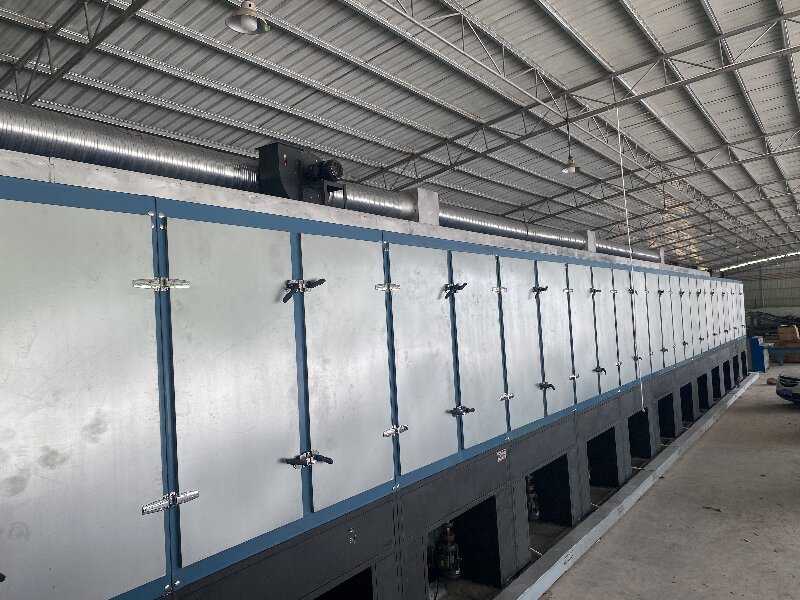
Shine's 2026 dryers are constructed with corrosion-resistant alloys originally developed for aerospace applications, ensuring longevity even in the harsh conditions of continuous industrial operation. Bearings exposed to high temperatures are fabricated from stainless steel selected for its resilience to corrosion under severe thermal shifts. The machine's structural integrity ensures minimal thermal leakage and consistent performance over a projected lifespan 50% longer than industry averages.
Advanced Insulation Systems
To hold internal heat and protect the operating environment, the dryers employ high-grade aluminum silicate rock wool insulation at least 7.5 cm thick. This exceptional insulation ensures minimal thermal leakage, reducing energy waste and maintaining consistent internal temperatures regardless of external conditions. The insulation also protects the facility environment, keeping the surrounding work areas comfortable and safe.
Precision Fan Engineering
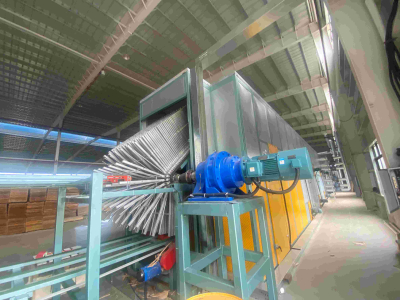
The distinctive axial flow fans, engineered with an 8-blade design, are crafted for longevity and efficiency. Variable-frequency drives provide precise control over airflow, allowing the system to adjust from a gentle breeze suitable for delicate decorative veneers to high-velocity impingement for thicker construction material. Air ducts formed from galvanized sheet metal feature an inventive sawtooth thread pattern that prevents veneer jams—a frequent cause of downtime in traditional setups.
A Vision for the Future
As Shine Machinery moves through 2026, the company's vision extends beyond the immediate capabilities of its upgraded product line. The innovations announced in the first weeks of the year represent not a final destination but a platform for continued advancement.
"We believe intelligent, sustainable drying is the future of wood processing," concluded Dr. Dennis. "By solving the fundamental challenges of veneer drying, we are empowering our customers to be more productive, profitable, and planet-friendly. This is just the beginning of our roadmap for innovation in industrial drying".
The company is already developing next-generation capabilities, including deeper integration with artificial intelligence for autonomous process optimization, expanded use of renewable energy sources, and enhanced connectivity for comprehensive factory automation. For the global wood processing industry, the message is clear: the future of drying has arrived, and it is being built by Shine Machinery.
Conclusion: A New Benchmark for Veneer Drying
The completion of Shine Machinery's comprehensive product upgrade program marks a significant milestone in the evolution of industrial veneer drying technology. By achieving simultaneous breakthroughs in energy efficiency, production throughput, and drying precision, the company has established a new benchmark against which all veneer dryer systems will be measured.
For manufacturers of plywood, furniture, decorative panels, and engineered wood products, these advances translate directly to competitive advantage. Lower energy costs improve profitability. Higher throughput increases capacity without capital investment. Superior quality enhances market position and customer satisfaction. Reduced waste conserves valuable resources and supports sustainability goals.
As the global market for wood veneer products continues to grow—driven by demand from furniture, flooring, interior design, and automotive applications—the ability to produce consistently high-quality material at competitive cost becomes increasingly critical. Shine's 2026 upgrades provide manufacturers with the tools they need to meet this challenge and emerge as leaders in their markets.
The new year has brought new capabilities to the wood processing industry. With its next-generation veneer dryer systems, Shine Machinery is ensuring that its partners around the world are equipped to make the most of every opportunity 2026 presents.
For more information about Shine Machinery's upgraded veneer dryer systems, including detailed specifications, performance data, and customization options, visit www.veneersdryer.com or contact the sales engineering team.