
Do Not Overspend on Veneer Dryer Automation
For plywood manufacturers, achieving a higher level of automation doesn't always translate into a better investment. If semi-automatic handling already keeps a veneer dryer machine operating at its required feed rate, immediately upgrading to a fully automatic system might tie up capital. That same capital could otherwise support future capacity expansion. The smarter question then isn't about installing the most automation possible, but rather which Roller Veneer Dryer setup effectively meets today’s Plywood Veneer Drying targets while keeping funds available for tomorrow’s growth.

Automation Should Follow the Real Bottleneck
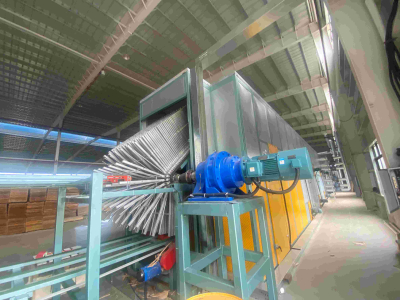
In a veneer drying line, drying capacity and material handling are connected, but they represent distinct decisions. A factory might opt for manual, semi-automatic, or fully automatic operation based on labor conditions, loading rhythm, production scale, and future expansion plans. Shine Machinery’s veneer roller dryer machine configurations offer customization in working length, width, and number of decks, allowing buyers to align the dryer precisely with actual production needs.
This flexibility is important because the bottleneck isn't always in the feeding area. In many plywood plants, the actual limitation could be the dryer's length, deck count, veneer moisture, transport speed, heat source, or even operating hours. If semi-automatic loading already consistently supplies the wood drying machine, a fully automatic upgrade might offer convenience but may not immediately boost saleable output.
Size the Dryer Before Choosing the Automation Level
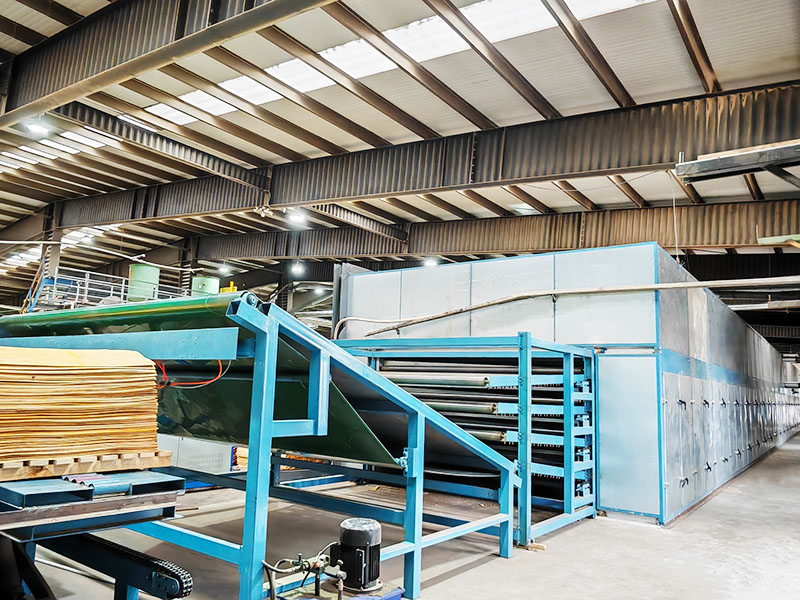
The initial technical consideration should be straightforward: how much veneer needs to be dried per shift or per day? For example, Shine Machinery’s GTH30-32 conveyor veneer dryer configuration features a 3 m working width, 2 decks, a 28 m heating area, and a 4 m cooling area. It handles veneer thicknesses from 0.8–8 mm, uses a veneer transport speed of 5–22 m/min, and is rated for 40–45 m³ per 24 hours. The drying temperature is adjustable from 140–200°C, complete with automatic temperature control and speed regulation.
Other Shine core veneer dryer configurations can be designed with 1, 2, or 4 decks, with reported capacities ranging from 15 to 150 m³ per day, depending on the setup. For buyers comparing a China veneer dryer manufacturer or supplier, this means capacity planning should take precedence over automation preferences. A Roller Veneer Dryer should first be specified based on veneer species, thickness, incoming moisture, target moisture, and available space.
Where Semi-Automatic Handling Can Protect Cash Flow
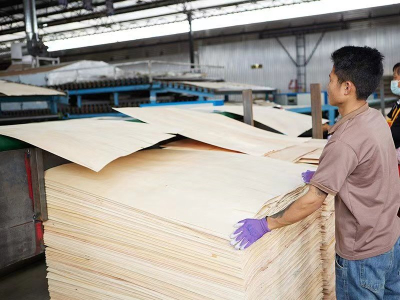
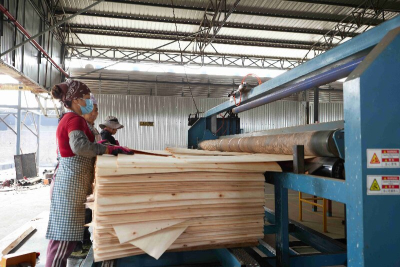
Semi-automatic handling can be a pragmatic choice when the dryer section is already receiving a steady supply of veneer. It enables a plywood factory to prioritize investment in the core drying system, rather than allocating more capital to handling automation before the production need is definitively clear. This approach is particularly relevant for factories aiming to reserve funds for a second dryer, a larger deck configuration, an improved layout, or upstream and downstream process upgrades.

A staged approach doesn't mean avoiding automation entirely. Instead, it means aligning automation with measurable constraints. When semi-automatic loading maintains stable utilization, the capital saved can remain available for future expansion. When, however, loading or unloading starts to disrupt continuous operation, a fully automatic veneer feeding system becomes much easier to justify.
What the Dryer System Itself Can Already Deliver
Several Shine Machinery dryer models incorporate efficiency measures that are distinct from the loading method. Certain Shine products report an output 2–3 times greater than traditional dryers. Some configurations use axial flow fans and report a 35% reduction in total machine power consumption, while other specific configurations achieve a 38% reduction. A high-efficiency veneer dryer also features automatic temperature and speed control, adjusting according to veneer thickness.
These points are crucial because the economics of a Roller Veneer Dryer stem from the entire drying process, not just automation. Electricity consumption, heat source, labor allocation, final moisture stability, and dryer utilization all significantly influence operating costs. While a fully automatic system can be highly valuable, it should be evaluated as one component of the broader Plywood Veneer Drying line.
When Fully Automatic Veneer Feeding Makes Sense
Fully automatic veneer feeding becomes more compelling when material handling is the primary restriction on dryer performance. Shine Machinery’s automatic 4-deck Roller Veneer Dryer utilizes an automatic feeding system to maintain a high feed rate. It also incorporates frequency-conversion speed regulation, allowing the feed speed to be adjusted based on veneer thickness and moisture content.
A factory should consider fully automatic feeding when:
Existing loading methods cannot consistently supply the veneer dryer machine.
Manual handling frequently causes interruptions in production.
Higher planned utilization demands steadier, uninterrupted feeding.
Labor availability is unstable or labor costs are high.
The project is designed from the outset for automatic feeding and receiving.
Future capacity plans clearly justify a higher initial automation investment.
If none of these conditions apply, full automation might still be appealing, but the decision should be grounded in the incremental benefits it provides, rather than the assumption that the highest level of automation always offers the fastest return on investment.
Calculate ROI From the Difference Between Options
A practical ROI calculation should compare the additional investment needed for full automation against the annual incremental benefit it generates. A useful formula for this is:
Incremental Automation Investment ÷ Annual Incremental Cash Benefit
The annual benefit might encompass changes in labor costs, fewer handling interruptions, more stable output, and additional sellable production directly tied to the automation upgrade. This approach keeps the investment decision firmly connected to the factory’s own financial metrics.
For reference, one Shine GTH30-36 veneer dryer machine configuration includes a 4-deck design, 110 m³/day drying capacity, approximately 149 kWh per hour of actual electricity consumption, and a combined labor, fuel, and electricity cost of USD 6–12 per m³. These figures are specific to that configuration and are best used as a product-specific operating reference when discussing project economics with the supplier.
A Practical Purchasing Checklist
Before selecting a semi-automatic or fully automatic wood drying machine, purchasing and production teams should confirm the following key points:
Current daily and target daily drying volumes.
Veneer species, thickness, incoming moisture content, and target moisture content.
Required transport speed and anticipated operating hours.
Whether loading or unloading operations currently cause production interruptions.
Necessary deck count and working width for the dryer.
Available factory space for both the dryer and handling areas.
Labor availability and the preferred operating arrangement.
Assumptions regarding electricity and heat sources.
Capital specifically reserved for future expansion.
Whether semi-automatic or fully automatic operation best integrates with the existing workflow.
This checklist helps buyers avoid over-investing in automation before the process genuinely requires it. It also facilitates clearer discussions with suppliers when evaluating China's top veneer dryer factory search results, various China veneer dryer manufacturer options, and specific China veneer dryer supplier quotations.
Conclusion
For Plywood Veneer Drying, automation should serve the production plan, not dictate it. If semi-automatic handling already keeps the Roller Veneer Dryer consistently supplied, immediate full automation might reduce financial flexibility without yielding a proportional increase in output. However, if feeding becomes the bottleneck, fully automatic veneer feeding can then be evaluated based on measurable benefits related to labor, utilization, and production.
Shandong Shine Machinery Co., Ltd offers configurable veneer drying equipment through www.veneersdryer.com, providing options for different working lengths, widths, deck counts, and operating arrangements. For plywood factories planning capacity expansion, the most effective wood drying machine investment is often the one that skillfully matches today’s throughput needs while ensuring ample room for tomorrow’s growth.
FAQs
Does every veneer dryer machine need fully automatic feeding?
No. Shine Machinery provides configurations that can be manual, semi-automatic, or fully automatic. The choice should align with the factory’s production rate, labor conditions, and specific loading requirements.
When should a factory consider fully automatic veneer feeding?
Fully automatic feeding is worth evaluating when handling limitations restrict dryer utilization, manual loading causes production interruptions, or future output targets demand steadier feeding.
Can Shine Machinery customize a Roller Veneer Dryer?
Yes. Shine Machinery states that working length, width, and number of decks can be customized to match production capacity and customer requirements.
Are the 35% and 38% power reductions universal for every model?
No. These figures are configuration-specific. Selected Shine equipment reports a 35% reduction in total machine power consumption, while other specified models report 38%.
What is the best way to calculate automation payback?
Compare the additional cost of full automation with the annual incremental benefit derived from labor savings, steadier operation, and additional productive output directly attributable to the upgrade.