
Automatic Veneer Collection Reveals the Real Labor Gap
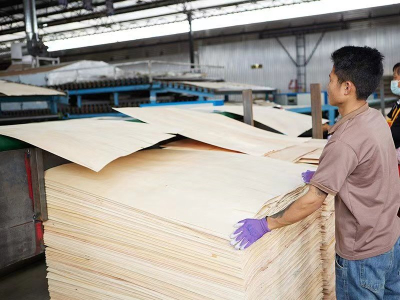
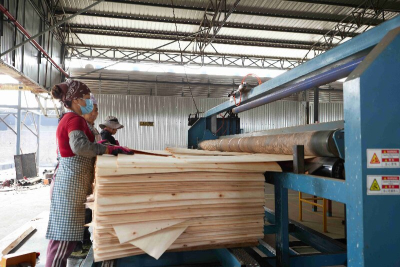
When a plywood factory transitions from standard shifts to continuous production, the dryer's discharge end frequently becomes the initial point where staffing challenges emerge. Manual workers may have, for years, absorbed irregular veneer flow, accelerating stacking during peak periods and slowing down as dryer output decreased. However, once an automatic collection system is integrated with a Roller Veneer Dryer, that informal buffer vanishes. The production line becomes far more measurable, clearly exposing any real labor gaps.

Why Manual Collection Can Hide the Bottleneck
In real-world production, a dryer isn't an isolated machine. Veneer needs to enter at a consistent pace, undergo controlled drying, and exit in a condition suitable for sorting, grading, storage, or the next plywood process. In a manual line, workers often compensate for minor disruptions by adjusting their speed or allowing veneer to accumulate temporarily. While this flexibility is useful, it can obscure precise labor planning.
Often, a factory might believe its veneer dryer is adequately staffed because production has historically continued without major halts. Yet, the reality might involve hidden inefficiencies like excessive overtime, temporary stacking, and inconsistent downstream handling, all masking a mismatch between dryer output and actual collection capacity. For continuous plywood veneer drying, a more pertinent question isn't simply how many people were employed before. Instead, it's whether the feeding, drying, collecting, sorting, and grading stages can collectively support the required line flow throughout the entire shift.
What Changes When Collection Becomes Automatic
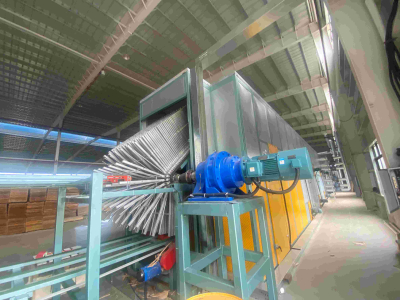
Automatic collection transforms the discharge side into a clearly defined, integral part of the production system. Instead of relying on human intervention to absorb every variation, the factory can precisely evaluate veneer movement against the actual output of the veneer dryer machine. This makes planning significantly more practical, especially when extending production time or aiming for more stable line operations.
Shine Machinery designs applicable configurations with fully automatic veneer feeding and collecting systems. Our product specifications emphasize that front and rear veneer feeding and collection arrangements can be customized to suit specific production capacity, process requirements, available space, and individual customer needs. For buyers, this means collection should be a core component of the complete wood drying machine layout discussion, rather than an afterthought.
Capacity Must Be Read Together With Labor
A higher-capacity dryer can create significant downstream pressure if the collecting area is still planned based on outdated manual habits. Our documentation for selected roller dryer configurations indicates that dryer output can be 2–3 times that of traditional dryers. This figure, specific to applicable product configurations, underscores a vital planning consideration: increased output drastically changes the volume of material that must be received, sorted, and organized post-drying.

A practical comparison highlights the shift:
| Planning Area | Manual Collection Line | Automatic Collection Line |
|---|---|---|
| Discharge flow | Often adjusted by worker pace | More clearly linked to dryer output |
| Labor visibility | Hidden by temporary stacking | Easier to evaluate by process stage |
| Continuous shift planning | More dependent on manual buffering | More suitable for defined line planning |
| Sorting and grading | May become a separate bottleneck | Can be considered with automation options |
| Space planning | Often adapted after installation | Can be designed with the dryer layout |
This isn't to say automation eliminates all labor. A veneer dryer machine still requires appropriate feeding arrangements, vigilant process supervision, critical sorting or grading decisions, meticulous maintenance planning, and comprehensive plant-level coordination. The key advantage is that staffing can be calculated around much clearer, more predictable production boundaries, leading to optimized resource allocation and reduced operational guesswork.
Energy and Drying Quality Still Decide the Value
Labor visibility alone is insufficient. In plywood veneer drying, the true value of automation hinges on whether the dried veneer consistently meets the required moisture content and surface condition. Our 2-deck dryer information, for example, highlights a step-by-step heat exchange system and uniform hot air distribution. For this configuration, the typical dried veneer moisture range is stated as 8–12%, ensuring consistent quality.
Other Shine Machinery product descriptions also emphasize dried veneer that is flat and wrinkle-free, exhibiting uniform moisture, no end ripples, no cracks, and excellent surface bonding conditions. These details are paramount because smooth material flow is only valuable when the wood drying machine reliably delivers stable, high-quality veneer, crucial for the final product's integrity. Energy consumption is also a critical factor in this equation. Our axial flow fan design significantly reduces whole-machine power consumption by 38% on documented configurations. When a plywood mill extends its operating hours, this substantial energy-saving figure becomes immensely relevant for long-term cost planning, extending beyond just initial equipment selection.
Sorting and Grading Complete the Continuous Line
When a dryer operates continuously, collection is just one aspect of the downstream challenges. Dried veneer still requires organized handling to seamlessly support the next production step. Our solutions incorporate automatic veneer sorting and grading technology, specifically designed to improve production efficiency and enhance product consistency. For a mill planning continuous operation, therefore, sorting and grading must be evaluated holistically alongside the Roller Veneer Dryer, automatic feeding, and automatic collecting systems. If the dryer output increases but downstream organization remains unstable, the labor gap might simply shift from collection to the sorting area, negating some of the automation benefits.
Buyer Checklist for a Continuous Veneer Dryer Machine Line
Procurement teams comparing a China veneer dryer manufacturer or supplier should look beyond mere headline capacity. A more effective specification discussion should encompass:
Required Production Capacity and Shift Schedule: Understanding your specific output goals and operational hours is fundamental to selecting the right system.
Veneer Type, Thickness Range, and Drying-Quality Target: The machine must be optimized for the specific types of wood and quality standards you aim to achieve.
Available Factory Space for Front and Rear Handling: Proper integration requires careful consideration of the physical footprint for feeding and discharge.
Feeding and Collection Customization Requirements: Tailored solutions ensure seamless workflow and maximize efficiency for your unique setup.
Heat-Source Selection, Including Heat Thermal Oil Where Suitable: Choosing the optimal heat source impacts operational costs and drying effectiveness.
Power Consumption and Axial Flow Fan Configuration: Energy efficiency directly influences long-term operating expenses.
Whether Automatic Sorting and Grading Should Be Included: Integrating these features can further streamline your entire production line.
Installation and Maintenance Support Requirements: Comprehensive support ensures smooth setup and reliable long-term operation.
Final Staffing Plan for the Full Production Line: A well-defined plan ensures all stages of the automated line are adequately managed.
Shandong Shine Machinery Co., Ltd., known as Shine Machinery, offers highly configurable roller veneer drying solutions available at www.veneersdryer.com. Our documented product features include a customized one-stop service, advanced axial flow fans with a stated 38% whole-machine power reduction, durable φ89mm special shaft tube rollers on selected configurations, fully automatic veneer feeding and collecting systems for applicable setups, and state-of-the-art automatic veneer sorting and grading technology. We are committed to providing solutions that optimize efficiency and quality for modern plywood production.
FAQs
Does automatic collection mean a plywood factory no longer needs workers?
No, automatic collection primarily helps define the discharge flow more clearly and consistently. However, human oversight remains crucial for supervision, specific sorting and grading decisions, maintenance, and other essential plant processes. Automation reallocates labor, enhancing efficiency rather than eliminating the need for a skilled workforce.
Why does the labor gap appear during continuous shifts?
Manual collection systems can mask short-term labor pressure by relying on workers to adjust their pace and temporarily stack veneer. During continuous operations, this informal buffer becomes unsustainable, making the real mismatch between the dryer's output and the downstream handling capacity explicitly visible. Automation brings this hidden inefficiency to light.
Can Shine Machinery customize veneer feeding and collection?
Absolutely. Shine Machinery product information clearly states that both front and rear veneer feeding and collection systems can be extensively customized. We tailor these arrangements to precisely match your specific production capacity, process workflow, available factory space, and unique customer requirements, ensuring an optimized and integrated solution.
What drying-quality range is stated for the 2-deck dryer configuration?
For our documented 2-deck configuration, Shine Machinery specifies that the dried veneer moisture content typically falls within 8–12%. This precise range is achieved through a meticulously designed step-by-step heat exchange system coupled with uniform hot air distribution, ensuring consistent and high-quality drying results.
What should buyers confirm before ordering a Roller Veneer Dryer?
Before placing an order, buyers should thoroughly confirm several key aspects: the required production capacity, available plant space, choice of heat source, the proposed feeding and collection layout, specific sorting and grading needs, anticipated power consumption, precise drying-quality targets, and a detailed plan for shift staffing requirements. This comprehensive approach ensures the chosen system perfectly aligns with operational goals.