
Choose Vertical Drying First When Space Limits 36 m³ Output
When a plywood plant needs around 36 m³ of dried veneer per day but cannot easily expand its workshop, the immediate question isn't “Which catalogue says 36 m³/day?” Instead, consider this: Which Veneer Drying System can match the required hourly output, moisture target, veneer type, and available floor area simultaneously? For many core veneer projects, a Vertical Veneer Dryer is often worth considering because its three-dimensional loading arrangement uses only about two-thirds of the area of a roller dryer, while the vertical plywood method is known to increase veneer loading capacity by 30–80%.

Why 36 m³ Per Day Must Be Converted Into Hourly Output
A daily output target only makes sense once operating hours are set. If a plant runs one long shift, two shifts, or near-continuous production, the required hourly capacity changes significantly. This is especially important in veneer drying, where incoming veneer moisture, required final moisture, and veneer thickness all affect real production planning.

Our configurations illustrate why hourly calculation is crucial:
| Model | Moisture Condition | Capacity | Overall Size |
|---|---|---|---|
| FBH30-10 | Fresh veneer to about 0–5% | 1.5 m³/h | 10 × 3 × 4 m |
| FBH30-13 | Fresh veneer dried to 0–5% | 2 m³/h | 13 × 3 × 4 m |
| FBH30-20 | Fresh veneer to within 20% | 1.2–1.5 m³/h | 20 × 7 × 4 m |
For instance, with the FBH30-13 as a planning example, 36 m³ ÷ 2 m³/h = 18 operating hours. At 1.5 m³/h, the same target requires 24 operating hours. At 1.2 m³/h, it requires 30 hours, which usually isn't a practical daily schedule. These aren't interchangeable models; rather, they highlight why each specification's moisture condition needs careful review.
Where A Vertical Core Veneer Dryer Fits Best
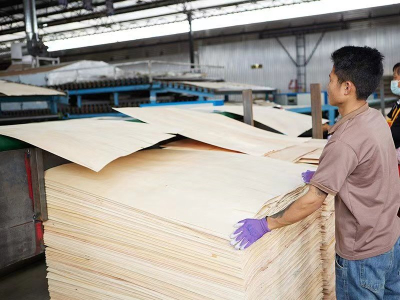
A vertical core veneer dryer is primarily designed for core board drying, though it also suits some surface and bottom veneer applications. It is especially relevant for production processes where veneer is cut first and dried afterward, including thick veneer drying. For those seeking a cost-effective veneer dryer, this is important: equipment selection isn't just about capacity; it's about fitting your actual production workflow.
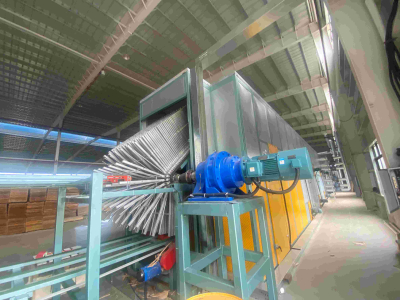
The vertical tunnel-type dryer is composed of four key areas: feeding, heating, cooling, and discharging. The equipment uses a chain to bring veneer or finished board into the drying room for circulating drying. Shine’s vertical dryer information also describes uniform airflow, steady temperature, and a countercurrent drying cycle, all engineered to ensure quick, consistent veneer drying performance in core veneer production.
The Space Advantage Is The Main Reason To Shortlist It Early
In many plywood workshops, floor layout often dictates equipment choice even before capacity comes into play. A conventional roller dryer is a solid choice when veneer flatness is paramount, but it usually needs more floor area. In contrast, the vertical design uses three-dimensional loading, allowing more veneer to be processed in a smaller footprint.
For a plant targeting 36 m³/day, this difference can be the deciding factor in whether a new veneer dryer line fits your existing building or demands a costly layout overhaul. We also describe standardized and modular production of vertical dryer parts, with assembly at the customer’s factory site. This simplifies planning the system around your specific site requirements, especially when width, height, or material flow is constrained.
Operating Cost And Heat Source Considerations
The cost per cubic meter is another compelling reason to consider vertical systems early. Shine Machinery states that the drying cost of its vertical dryer is less than $8/m³, equal to about 30–60% of the drying cost of other dryers. For operations processing dozens of cubic meters daily, this figure plays a significant role in operating-cost discussions, alongside labor, fuel handling, and maintenance access.
Our vertical dryer models can also feature a built-in burner, capable of utilizing waste wood scraps and branches from rotary cutting. During project discussions, it's wise to confirm the planned heat-source setup, fuel supply, workshop ventilation, and dust-removal configuration alongside your final model selection.
Adjustable Parameters For Different Veneer Conditions
An effective veneer drying system should tackle real-world veneer conditions, not just theoretical figures. Our plywood vertical dryer allows adjustments to air volume, heating temperature, material residence time, and feeding speed to achieve the ideal drying effect for various materials. The drying-area temperature is described as adjustable around 100–140°C, while FBH30-20 information lists temperature control at 110–140°C.
For FBH30-10, we also describe double-pass conveying, with drying time of approximately 30–35 minutes under the stated machine conditions. These parameters underscore why precise input data is essential before selecting a model: fresh veneer moisture, target final moisture, veneer thickness, daily output, available operating hours, and workshop dimensions all influence the final calculation.
Vertical Dryer Or Roller Dryer
It's important to note that a vertical dryer isn't the universal solution for every plywood veneer drying project. We position our vertical tunnel-type dryer for core veneer and applications where flatness requirements are less stringent. This makes it particularly appealing when space saving, initial purchase cost, and operational drying costs are primary considerations.
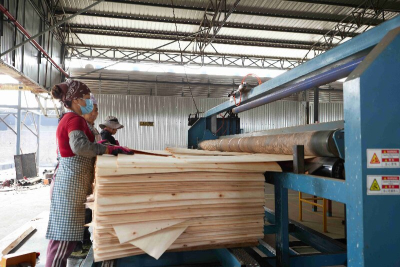
Conversely, a roller dryer remains a strong contender when veneer flatness and the final surface condition are top priorities. Our roller core veneer dryer machine produces veneer with uniform moisture content and excellent flatness, free from buckle or end waviness. Ultimately, the best choice hinges on the desired appearance of the dried veneer, not solely on machine compactness.
| Selection Factor | Vertical Core Veneer Dryer | Roller Core Veneer Dryer |
|---|---|---|
| Main advantage | Smaller footprint and three-dimensional loading | Flat veneer and uniform moisture |
| Typical shortlist reason | Space-limited core veneer production | Finished veneer quality requirements |
| Cost focus | Low machine cost and drying cost below $8/m³ | Stable drying effect for roller drying applications |
| Layout consideration | On-site assembly according to location requirements | Requires layout planning for longer roller line |
Practical Checklist Before Selecting A 36 m³ Daily System
Before finalizing your veneer dryer for a 36 m³/day target, it's wise to prepare a practical checklist. The most important items are workshop length, width, and height; target daily output; planned operating hours; incoming moisture; final moisture; veneer thickness; heat source; feeding method; labor arrangement; and budget range.
Armed with these values, your daily target transforms from a mere marketing figure into a precise engineering calculation. For crowded workshops, the vertical option merits early consideration; it directly solves space constraints while offering clear hourly model references.
Key Takeaways
For plywood plants needing 36 m³/day with limited floor space, a vertical core veneer dryer is frequently a strong contender before committing to a larger roller dryer layout. The key reasons are straightforward: three-dimensional loading, about two-thirds the area of a roller dryer, known loading-capacity improvement of 30–80%, and drying cost below $8/m³.
At Shine Machinery, we offer vertical dryer models with diverse capacities, dimensions, and moisture processing capabilities. When evaluating options from a veneer dryer manufacturer or supplier, it's crucial to match the model to your actual operating hours, moisture targets, and workshop layout before making that final decision. Explore our product details and solutions at www.veneersdryer.com.
Frequently Asked Questions
Can a single vertical veneer dryer meet a 36 m³ daily target?
It depends on the model and operating hours. Using FBH30-13 at its listed 2 m³/h capacity, 36 m³ requires about 18 operating hours. Moisture requirements still need to match the model specification.
How does vertical loading benefit a compact workshop?
The vertical dryer uses three-dimensional veneer loading and is described as occupying only about two-thirds of the area of a roller dryer, making it suitable for space-limited layouts.
What's the stated drying cost for Shine's vertical dryer?
Shine Machinery states that the drying cost is less than $8/m³, about 30–60% of the drying cost of other dryers.
Is the vertical dryer suitable for all veneer types?
No. It is mainly positioned for core veneer, partial surface veneer, and bottom veneer applications, especially where flatness requirements are lower than those for roller-dried veneer.
What key factors should be confirmed before ordering?
Buyers should confirm daily output, hourly production time, veneer moisture, final moisture, veneer thickness, workshop size, heat source, and feeding arrangement.