
Daily maintenance guide for veneer dryers
The Essential Guide to Maintaining Your Veneer Dryer and Wood Roller Veneer Dryer for Longevity and Performance
In the wood processing industry, veneer dryers and wood roller veneer dryer systems represent substantial capital investments. These machines are engineered as heavy-duty, high-intensity equipment designed to withstand continuous operation under demanding conditions. However, their long-term stability, operational efficiency, and service life are profoundly dependent on consistent, scientific daily maintenance. Neglecting regular upkeep can lead to decreased drying efficiency, higher energy consumption, unplanned downtime, and ultimately, a shortened equipment lifespan.
To help users maximize the return on their investment and ensure uninterrupted production, a professional maintenance team with decades of field experience has compiled the following comprehensive maintenance recommendations. This guide is structured into daily, weekly, monthly, and yearly cycles, providing a clear, actionable framework to keep your veneer dryer operating at peak performance.
1. Daily Inspection Items: Building a Foundation of Reliability
A rigorous daily inspection routine is the first line of defense against unexpected failures. For operators of a wood roller veneer dryer, these quick checks can identify minor issues before they escalate into major problems.
Inspect the Heat Source System: Begin by checking whether the hot air furnace or biomass burner is operating normally. Listen for unusual noises and observe the flame pattern (if visible). Crucially, verify the accuracy of the temperature sensors at various zones within the dryer. Inaccurate sensors can lead to under-drying or over-drying of the veneer, directly impacting product quality and energy costs. This is a fundamental step for maintaining the thermal efficiency of any veneer dryer.
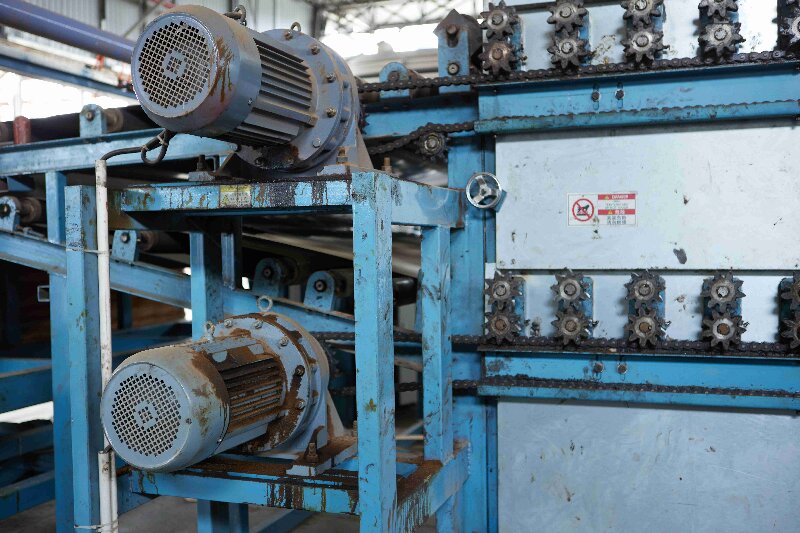
Monitor the Conveyance System: The heart of a wood roller veneer dryer is its material handling system. Listen carefully as the conveyor chains or drums rotate. Any grinding, squealing, or knocking sounds indicate potential misalignment, worn bearings, or a lack of lubrication. A smooth, quiet operation is a sign of a healthy system.
Ensure Unobstructed Airflow: The drying process relies on consistent and uniform airflow. Regularly clean any accumulated dust and debris from the air supply ducts and return air systems. Blockages can create uneven air volume across the width of the machine, leading to inconsistent moisture content in the dried veneer—a critical quality issue.
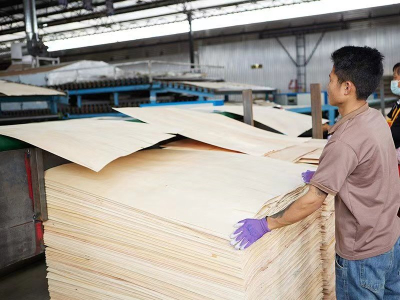
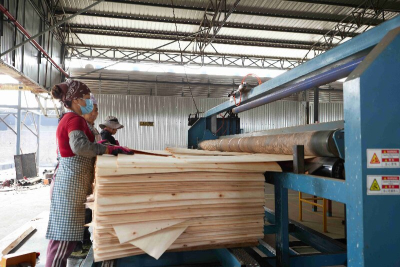
Evaluate Final Product Quality: The best indicator of your veneer dryer's performance is the output itself. Continuously observe the drying condition of the veneer at the outlet. Check for consistency in color and moisture content. If variations are detected, be prepared to promptly adjust the conveyor speed or zone temperatures to compensate.
2. Weekly Maintenance Points: Preserving Performance and Efficiency
Weekly maintenance tasks delve deeper into the machine’s subsystems to prevent wear and ensure optimal operation of your wood roller veneer dryer.
Electrical System Check: Power down the system and open the electrical control cabinet. Check for loose wiring connectors and tighten them as necessary. Loose connections can lead to arcing, voltage drops, and premature failure of electrical components, causing unpredictable behavior in your veneer dryer.
Comprehensive Lubrication: Adhere to a strict weekly schedule for lubricating all drum bearings, sprockets, and chain linkages. Dry friction is a primary cause of overheating and premature bearing failure, which can halt production for hours. Using the correct high-temperature grease is essential for the demanding environment inside a wood roller veneer dryer.
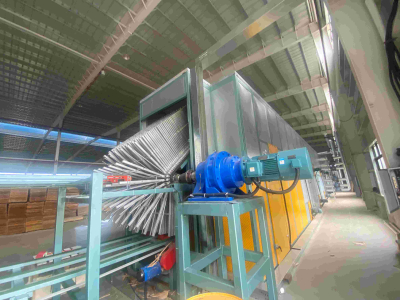
Fan Impeller Maintenance: The fans are responsible for the vital movement of hot air. Dust accumulation on the fan impellers unbalances them, reducing their efficiency and air volume output, and potentially causing damaging vibrations. Weekly cleaning ensures maximum airflow and thermal transfer.
Inspect for Leaks and Blockages: Conduct a visual and operational check of the entire heating system and its pipeline interfaces. Look for signs of heat leaks, which waste energy, or blockages that restrict flow. Addressing these issues weekly maintains the energy efficiency of your veneer dryer.
3. Monthly Maintenance Recommendations: A Deeper Dive into System Health
Monthly maintenance involves more detailed inspections and data collection to track the long-term health and efficiency of your wood roller veneer dryer.
Control System Diagnostics: The inverter and PLC are the brains of the modern veneer dryer. Monthly, check their operating status screens for any error codes, abnormal voltage fluctuations, or irregular current draws. These can be early warnings of motor issues or power supply problems.
Maximize Thermal Efficiency: A monthly thorough cleaning of the heat exchanger and combustion chamber (if applicable) is non-negotiable. Soot and residue act as insulators, drastically reducing thermal efficiency and forcing the burner to work harder, thereby increasing fuel costs. A clean system is an efficient system.
Mechanical Alignment Check: Inspect the infeed and outfeed devices for any signs of misalignment, jamming, or veneer accumulation. Adjust belt tensions and roller levels to ensure smooth, centered travel of the veneer through the wood roller veneer dryer, preventing damage to both the machine and the product.
Performance Benchmarking: Create a detailed running curve record for the equipment. Log energy consumption (fuel and electricity) against output volume and quality. This data allows you to calculate the energy consumption-to-output ratio, providing an objective measure of efficiency and helping to identify gradual performance degradation.
4. Equipment Overhaul Cycle Reference: Ensuring Long-Term Stability
Even with impeccable daily care, the high-intensity nature of drying operations necessitates planned downtime for a comprehensive overhaul. For a heavy-duty veneer dryer, it is highly recommended to perform a medium overhaul every 4,000 operational hours or at least once a year, whichever comes first.
A full overhaul should include a comprehensive inspection, cleaning, and replacement of all wearing parts. Key components to focus on include:
Fans and Motors: Check for bearing wear, balance, and electrical integrity.
Chains and Sprockets: Look for stretch, wear, and tooth deformation.
Rollers and Bearings: The core of the wood roller veneer dryer must be inspected for straightness, surface wear, and smooth rotation.
Entire Heating System: This includes burners, heat exchangers, ducts, and insulation, ensuring there are no leaks and that thermal efficiency is restored to like-new condition.
This proactive approach to maintenance is the most effective strategy for ensuring the long-term, stable operation of your veneer dryer and wood roller veneer dryer systems. It transforms maintenance from a reactive cost center into a strategic investment, guaranteeing reliability, quality, and profitability for years to come.