
Plywood Manufacturer Selection Guide
Plywood Manufacturer Selection Guide
The European plywood market is undergoing a dual transformation: a profound adjustment in demand structure and increasingly stringent policy regulations. Multiple factors, including EU anti-dumping policies, upgraded environmental regulations, and iterative market demand, are intertwined, presenting both challenges and new development opportunities for European plywood manufacturers. As plywood manufacturers, accurately grasping regional demand changes, adapting to policy requirements, and scientifically planning subsequent production layout are crucial for establishing a foothold in the market and achieving steady development.
I. Core Changes in European Plywood Demand: Three Major Trends Emerge, Moving Beyond Traditional Single Demand
Based on recent news and industry data from the European plywood market, plywood demand in Europe has undergone significant changes. It is no longer solely reliant on the traditional construction sector, but exhibits three core trends: "environmental friendliness, high-end quality, and scenario-based application." Specific changes can be clearly perceived by combining industry dynamics:
Trend 1: Environmental compliance becomes the minimum requirement for demand entry, and low-formaldehyde products become the market mainstream. Recent industry news reports indicate that the EU will officially implement the new REACH regulation on formaldehyde limits in August 2026, tightening the formaldehyde emission limit for plywood to 0.062 mg/m³, a reduction of nearly half compared to the previous standard. The testing method will also employ a more stringent steady-state climate chamber method, comprehensively covering indoor and vehicle interior applications. This policy will directly drive market demand towards low-formaldehyde and formaldehyde-free products. Demand for ordinary E1 grade plywood will continue to shrink, while demand for E0 grade and formaldehyde-free plywood meeting the new formaldehyde limits will increase by 19.7% year-on-year, becoming the core choice for market procurement. Manufacturers previously relying on traditional production processes have experienced sluggish sales and lost orders, while companies that proactively planned for low-formaldehyde production have seen a steady increase in orders.
Trend Two: Demand Scenarios Diverge, with a Surge in Demand for High-End Specialty Plywood. According to Market Data Forecast's 2026 European Plywood Market Report, the European plywood market reached $14.7 billion in 2025 and is projected to grow to $15.27 billion in 2026, with the core growth driver being demand from high-end applications. On one hand, the construction sector is shifting towards modular and prefabricated construction, significantly increasing the requirements for the strength and dimensional stability of structural plywood. These products are mainly used in load-bearing applications such as wall cladding and roofing systems, accounting for over 45% of demand. On the other hand, the furniture and automotive interior sectors are experiencing rapid growth in demand for waterproof, fireproof, and lightweight plywood, especially for vehicle interiors, which must simultaneously meet formaldehyde limits and lightweight requirements, becoming a new growth point. Meanwhile, the demand for traditional building formwork plywood has decreased from 60% to 40%, showing a clear trend towards high-end and differentiated products.
Trend Three: Regional demand imbalances are intensifying, and core market preferences are diverging. Germany, Italy, France, and the UK are the core consuming countries of European plywood, accounting for a combined 78.3% of the European market share, but their demand preferences differ significantly. The German market has the strictest environmental compliance requirements, with formaldehyde-free and FSC-certified plywood accounting for over 60% of demand. Italy focuses on high-end plywood for furniture, with high requirements for surface smoothness and texture. France and Spain, due to increased infrastructure investment, have maintained stable growth in demand for structural-grade plywood for construction. Eastern European countries still primarily demand mid-to-low-end plywood, but are gradually aligning with EU environmental standards, showing a clear trend of demand upgrading. Furthermore, in early 2026, the EU imposed an 86.8% anti-dumping duty on Chinese hardwood plywood. While aimed at protecting domestic manufacturers, this indirectly led to a reduction in some mid-to-low-end imports, providing opportunities for domestic manufacturers to fill the gaps in the mid-to-low-end market.
Trend Four: Upgrading Supply Chain Compliance Requirements, Traceability Becomes a Necessity Although the EU's Anti-Deforestation Regulation (EUDR) has been postponed to December 30, 2026, for mandatory implementation by large enterprises, the market has already entered the compliance preparation phase. All plywood products in the EU market must provide full-chain traceability documentation, including the latitude and longitude of the logging site, processing records, etc. Products without traceability qualifications will be prohibited from entering the market. This requirement directly impacts demand structure; plywood with a complete traceability system is more favored by buyers, especially export-oriented purchases, where traceability qualifications have become a prerequisite for cooperation.
II. Plywood Manufacturers' Subsequent Production Choices: Four Directions to Adapt to Demand and Policy
Faced with iterative demand and tightening policies, plywood manufacturers should not blindly follow trends to expand production. They should leverage their own advantages, focusing on the three core aspects of "compliance, high-end, and differentiation," and scientifically plan subsequent production in conjunction with changes in market demand. Specifically, they can start from the following four directions, balancing policy compliance and market competitiveness:
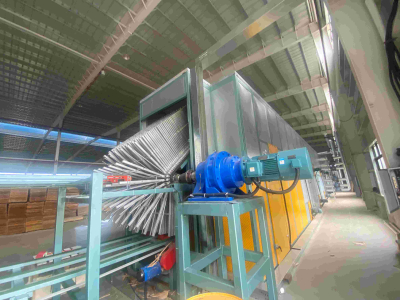
First, prioritize adapting to environmental policies, upgrading production processes, and solidifying compliance. This is the core premise of current production and the foundation for responding to changes in market demand. Manufacturers must immediately initiate formaldehyde emission reduction upgrades, phasing out traditional high-pollution adhesives and drying processes, and adopting formaldehyde-free adhesives (such as MDI glue), along with precise humidity-controlled drying equipment, to ensure that product formaldehyde emissions meet the new EU regulation requirement of 0.062 mg/m³. They must also retain complete testing data to comply with REACH regulations. Furthermore, they need to improve their timber traceability system in advance, connecting with timber suppliers possessing FSC and PEFC certifications, retaining proof of logging legality and land information, ensuring product compliance with EUDR regulations, and avoiding loss of market access due to compliance issues. Regardless of plywood manufacturer, upgrading intelligent production equipment and optimizing processes to adapt to environmental and compliance requirements in advance will solidify their market position.
Secondly, focusing on high-end specialty plywood, creating differentiated advantages, and seizing growth opportunities are crucial. In response to the trend of market demand differentiation, we will reduce the production of low-value-added ordinary construction plywood and focus on three high-demand categories: First, structural plywood, optimizing production processes to improve board strength and dimensional stability, adapting to the needs of modular construction; this type of product has an added value more than 30% higher than ordinary products. Second, formaldehyde-free, waterproof, and fireproof specialty plywood, suitable for high-end scenarios such as furniture and automotive interiors, meeting environmental protection and quality requirements. Third, lightweight plywood, developing lightweight products suitable for automotive interiors, seizing the market opportunities brought by new regulations on formaldehyde limits for vehicle interiors. Simultaneously, we will complete the transition of products to low-formaldehyde standards ahead of schedule to gain a first-mover advantage in the market.
Third, we will accurately match regional demand, optimize production capacity layout, and avoid resource waste. To address the varying demands across European countries, production capacity should be allocated rationally: For markets with stringent environmental regulations, such as Germany and Austria, the focus should be on producing formaldehyde-free, traceable high-end products; for high-end furniture and construction markets like Italy and France, the emphasis should be on producing plywood with refined surfaces and superior texture; for the mid-to-low-end market in Eastern Europe, some mid-to-low-end production capacity can be retained, but it must ensure compliance with basic environmental and traceability requirements to avoid market elimination. Simultaneously, leveraging the benefits of EU anti-dumping policies, exports to non-EU countries should be appropriately expanded to fill gaps in the mid-to-low-end market and balance production capacity with demand.
Fourth, embracing intelligent and circular economy models will reduce costs, increase efficiency, and enhance competitiveness. Currently, European forestry companies face challenges such as labor shortages, high financing costs, and low equipment utilization rates, with some even reducing production capacity to cope with market pressure. Investing in upgrading intelligent production equipment and introducing AI solutions will improve material utilization and production automation, reducing labor costs; simultaneously, promoting a circular economy model, using recycled wood as raw material, will reduce raw material costs and carbon emissions, aligning with EU environmental principles and improving profitability. Furthermore, optimizing supply chain management can reduce logistics and raw material procurement costs, alleviating pressure from rising costs.
III. Industry Outlook: Compliance and Innovation in Parallel, Seizing Market Initiative
Recent industry news and market dynamics indicate that the adjustment in demand in the European plywood market is not a short-term fluctuation, but rather an inevitable trend in the industry's transformation towards green, high-end, and standardized practices. The combined implementation of EU anti-dumping policies, environmental regulations, and deforestation regulations is accelerating industry consolidation. Small and medium-sized manufacturers with outdated technology and insufficient compliance capabilities will be gradually eliminated, while manufacturers with compliance capabilities and product advantages will usher in development opportunities.
For European plywood manufacturers, the core logic for future production is "compliance first, demand paramount, and innovation as the soul": In the short term, they need to focus on policy adaptation, complete the upgrading of environmental protection and traceability systems, ensure that products meet formaldehyde limits and EUDR regulations, and avoid compliance risks; in the long term, they need to deepen high-end product R&D and intelligent upgrades, iterate and optimize product structure in conjunction with market demand, create their own differentiated advantages, and expand export markets to balance regional demand fluctuations.
With the continued growth of the European plywood market, high-end, compliant, and traceable plywood will dominate the market in the next 3-5 years. European manufacturers with technological innovation and compliance capabilities will take the initiative in market competition and achieve steady development.