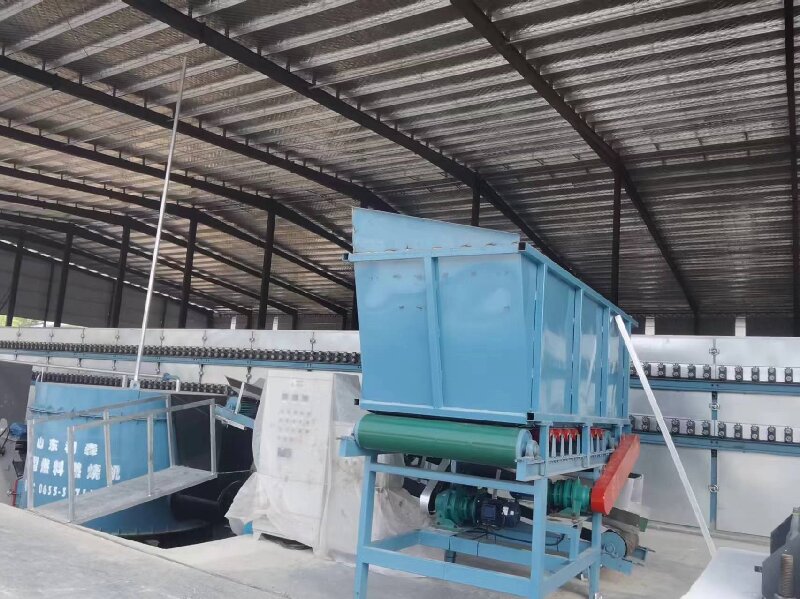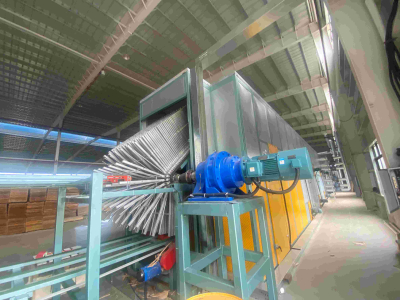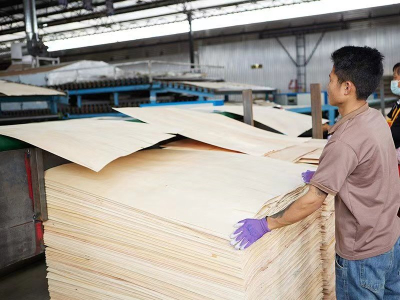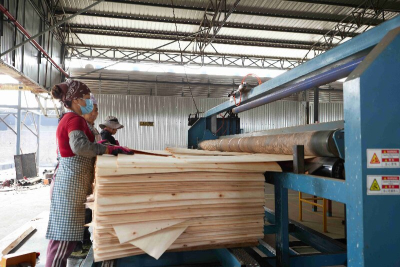

Timber Veneer Dryer Showdown: A Comparative Analysis of Top Brands and Expert Buying Guide
Introduction
The timber veneer drying industry has undergone a technological revolution over the past decade, with advanced dryers becoming critical for maintaining product quality, reducing waste, and maximizing profitability. As global demand for high-quality veneer products continues to rise across furniture, construction, and decorative applications, selecting the right veneer dryer has never been more consequential. This comprehensive analysis examines leading brands in the industrial veneer dryer market, compares their technologies and performance metrics, and provides actionable guidance for manufacturers navigating this essential capital investment.
Market Landscape: The Evolving Veneer Drying Sector
The global market for wood veneer dryers is projected to reach $3.2 billion by 2028, driven by increasing automation in wood processing and stricter quality standards. Modern dryers must balance multiple competing priorities: energy efficiency, drying uniformity, preservation of natural wood characteristics, and adaptability to various wood species and thicknesses.
"Today's veneer dryers aren't just about removing moisture—they're precision instruments that protect the aesthetic and structural integrity of increasingly valuable wood resources," explains Dr. Elena Rodriguez, director of the International Wood Processing Research Institute. "The wrong dryer can degrade color, cause checking or curling, and ultimately reduce yield by 15-30%."
Head-to-Head: Leading Veneer Dryer Brands Compared
1. VeneerTech ProSeries X9
Technology: Multi-zone RF/Vacuum hybrid drying with AI moisture monitoring
Key Features:
Patented Radio Frequency/Vacuum combination technology
Real-time moisture content tracking across 32 zones
Energy recovery system capturing 40% of waste heat
Species-specific drying programs for 200+ wood types
Performance Metrics:
Drying time reduction: 65% compared to conventional systems
Energy consumption: 2.8 kWh/kg water removed
Moisture uniformity: ±0.3% across veneer sheet
Maximum capacity: 15,000 square meters per 8-hour shift
Best For: High-volume operations processing premium species where color preservation is critical. The AI monitoring system particularly benefits operations with frequent species changes.
2. TimberDry UltraEfficient 8500
Technology: High-velocity convective drying with ultrasonic pre-treatment
Key Features:
Ultrasonic cell structure relaxation before drying
Variable velocity airflow (5-25 m/s), adjustable by zone
Integrated emissions control system
Modular design allowing capacity expansion
Performance Metrics:
Drying time reduction: 50% versus traditional convection
Energy consumption: 3.1 kWh/kg water removed
Moisture uniformity: ±0.5% across veneer sheet
Maximum capacity: 12,000 square meters per shift
Best For: Medium to large operations focused on consistent throughput of common commercial species. The modularity offers flexibility for growing businesses.
3. Ecological Wood Systems GreenDry
Technology: Solar-assisted heat pump dehumidification drying
Key Features:
Hybrid solar thermal/heat pump system
Closed-loop dehumidification with 85% moisture recovery
Low-temperature drying (35-55°C range)
Carbon-negative operation with renewable integration
Performance Metrics:
Drying time reduction: 40% compared to conventional kilns
Energy consumption: 1.9 kWh/kg water removed (including solar input)
Moisture uniformity: ±0.4% across veneer sheet
Maximum capacity: 8,500 square meters per shift
Best For: Environmentally-conscious operations with access to ample space for solar arrays, particularly in regions with high energy costs or carbon taxes.
4. PrecisionDyer Corp Continuum
Technology: Continuous belt drying with microwave assist
Key Features:
True continuous processing without batch limitations
Selective microwave application in the final drying stage
Robotic sorting and stacking integration
Industry 4.0 compatibility with full digital twin
Performance Metrics:
Drying time reduction: 70% versus batch systems
Energy consumption: 3.4 kWh/kg water removed
Moisture uniformity: ±0.6% across veneer sheet
Maximum capacity: 22,000 square meters per shift
Best For: Ultra-high-volume operations with standardized products where throughput is the primary concern. The continuous system minimizes handling damage.
5. Heritage Woodcraft TraditionalPro
Technology: Enhanced conventional steam drying with precision controls
Key Features:
Updated traditional technology with modern sensors
Steam injection for plasticity control
Lower capital investment than advanced systems
Simplified maintenance with widely available parts
Performance Metrics:
Drying time reduction: 30% versus the unimproved conventional
Energy consumption: 4.2 kWh/kg water removed
Moisture uniformity: ±0.8% across veneer sheet
Maximum capacity: 6,500 square meters per shift
Best For: Smaller operations or those drying primarily traditional species where the simplicity and lower initial investment outweigh efficiency considerations.
Technical Comparison Analysis
Energy Efficiency Face-off
The energy consumption metrics reveal significant differences between technologies. While hybrid systems like the Ecological Wood Systems GreenDry lead in efficiency (1.9 kWh/kg), they often require higher capital investment and specific environmental conditions. RF/Vacuum systems like VeneerTech's offer excellent efficiency (2.8 kWh/kg) without solar dependency, making them more universally applicable.
"Drying energy represents 60-80% of total veneer production energy use," notes energy consultant Markus Weber. "The right dryer technology can reduce operating costs by $150,000 annually for a medium-sized operation, with payback periods now averaging 3-5 years for advanced systems."
Quality Preservation Metrics
Moisture uniformity directly correlates with veneer quality post-drying. The tightest control (±0.3%) offered by VeneerTech's multi-zone RF system translates to reduced stress-related defects. However, low-temperature systems like the GreenDry often better preserve natural wood coloration, particularly important for species like cherry or walnut, where color degradation significantly impacts value.
Throughput Considerations
Continuous systems like PrecisionDyer's offer unmatched capacity but with slightly compromised uniformity. Batch systems generally provide better quality control for diverse product mixes but introduce handling inefficiencies between cycles.
The Comprehensive Buyer's Guide: Selecting Your Veneer Dryer
Step 1: Assess Your Raw Material Profile
Species variety: Operations drying multiple species benefit from systems with programmable species-specific protocols
Veneer thickness range: RF/Vacuum systems handle thickness variations more effectively than pure convective systems
Initial moisture content: Higher initial MC (above 60%) favors systems with pre-treatment capabilities like ultrasonic conditioning
Step 2: Analyze Production Requirements
Volume demands: Calculate both current needs and 5-year projections
Quality priorities: Determine if throughput or quality preservation is paramount
Flexibility needs: Consider how often you change species, thickness, or final MC targets
Step 3: Evaluate Facility Constraints
Space availability: Continuous systems require significant linear space; solar-assisted systems need rooftop or adjacent land
Energy infrastructure: RF systems require substantial electrical capacity; steam systems need boiler infrastructure
Climate considerations: Solar efficiency varies by region; ambient humidity affects dehumidification system performance
Step 4: Calculate Total Cost of Ownership
Capital investment: Range from $250,000 for basic systems to $2M+ for fully automated continuous lines
Installation costs: Often 15-25% of equipment cost, higher for complex systems
Energy consumption: Project using local utility rates and estimated annual operating hours
Maintenance requirements: Consider parts availability, specialized technician needs, and typical downtime
Expected lifespan: Quality industrial dryers should provide 15-25 years of service with proper maintenance
Step 5: Consider Sustainability Parameters
Carbon footprint: Increasingly important for customer requirements and regulatory compliance
Waste generation: Systems with better moisture uniformity reduce veneer waste
Heat recovery potential: Some systems capture waste heat for facility heating
Emerging Technologies and Future Trends
Artificial Intelligence Integration
The next generation of dryers incorporates machine learning algorithms that optimize drying schedules in real-time based on incoming veneer characteristics. "AI doesn't just follow preset programs—it learns from each batch and continuously improves drying protocols," explains tech analyst Sarah Chen. "Early adopters report 12-18% additional energy savings beyond what manufacturers claim."
Nanotechnology Applications
Experimental systems are testing nanocoatings on heat exchange surfaces to improve thermal transfer efficiency by up to 25%. Additionally, nanoparticle injection into wood structures before drying shows promise for reducing internal stresses.
Circular Economy Models
Manufacturers are increasingly offering dryers-as-a-service with performance-based pricing. This shifts the capital burden to manufacturers, who then have an incentive to maximize efficiency and reliability.
Case Study: Mid-Sized Manufacturer Transformation
Appalachian Veneer Products replaced three conventional steam dryers with a single VeneerTech ProSeries X9 in 2022. Results after 18 months:
Energy consumption reduced by 58%
The reject rate due to drying defects decreased from 6.2% to 1.8%
Throughput increased 22% despite a reduced dryer footprint
Color consistency improved, allowing entry into premium architectural markets
Payback period: 3.8 years
"The quality improvement was immediately apparent," reports operations manager David Park. "But equally important was the flexibility—we can now efficiently dry everything from delicate 0.6mm decorative veneers to 3mm structural sheets without changeover delays."
Conclusion
The timber veneer dryer market offers solutions spanning traditional approaches to cutting-edge hybrid technologies. No single system claims universal superiority; rather, optimal selection requires careful alignment of technology capabilities with specific operational needs, material profiles, and business objectives.
As drying technology continues advancing, the gap between leaders and conventional systems widens—not just in energy efficiency, but in quality preservation, operational flexibility, and data integration capabilities. Forward-thinking manufacturers are viewing advanced drying systems not as isolated equipment purchases, but as central components in digitally-integrated, sustainable, and increasingly automated production ecosystems.
The most successful operations will be those that conduct thorough needs analyses, consider the total cost of ownership rather than just purchase price, and select systems that provide both current operational benefits and adaptability for future challenges in an increasingly competitive global market.