
Shine Veneer Dryer Machinery Meets Stringent Environmental Requests with Integrated Dust Removal and Biomass Technology
In an era where environmental compliance is no longer a mere suggestion but an operational prerequisite, industries worldwide are pivoting toward sustainable manufacturing practices. The wood processing sector, in particular, has faced mounting pressure to align with rigorous air emission standards. Responding to this global shift, Shine Veneer Dryer Machinery, a pioneer in veneer drying technology, has emerged as a critical partner for plywood and veneer manufacturers navigating tightening environmental regulations. Recent reports from clients across Asia, Europe, and the Americas indicate that local authorities are imposing stricter limits on industrial emissions, prompting a surge in demand for drying systems equipped with advanced dust removal capabilities. Shine’s solution—a biomass burner integrated with a water-film dust removal system—directly addresses these challenges, offering a pathway to operational efficiency, waste reduction, and regulatory compliance.
The Growing Challenge: Environmental Requests in Wood Processing
Across the globe, environmental agencies are revising air quality standards, with a sharp focus on particulate matter (PM), nitrogen oxides (NOₓ), and volatile organic compounds (VOCs). For the wood industry, the drying process—essential for removing moisture from veneers before bonding—has become a focal point of scrutiny. Traditional veneer dryers often rely on fossil fuels or simple combustion systems, which can release significant amounts of dust, smoke, and residual emissions. In regions such as Southeast Asia, where plywood manufacturing is a cornerstone of the economy, governments are enforcing real-time emission monitoring. Similarly, in Europe and North America, environmental permits now require documented compliance with stringent limits on stack emissions.
One recurring theme from Shine’s global client base is the urgent need to retrofit or upgrade existing drying lines. A plywood manufacturer in Vietnam, for instance, recently reported that local inspectors had mandated the installation of additional dust collectors after detecting opacity levels exceeding permissible thresholds. In Brazil, a large veneer producer faced temporary shutdowns due to non-compliance with particulate emission standards. These scenarios underscore a broader trend: environmental requests are no longer negotiable, and the cost of non-compliance—ranging from fines to operational suspensions—demands proactive investment in cleaner technology.
Shine’s Core Innovation: The Biomass Burner and Water-Film Dust Removal System
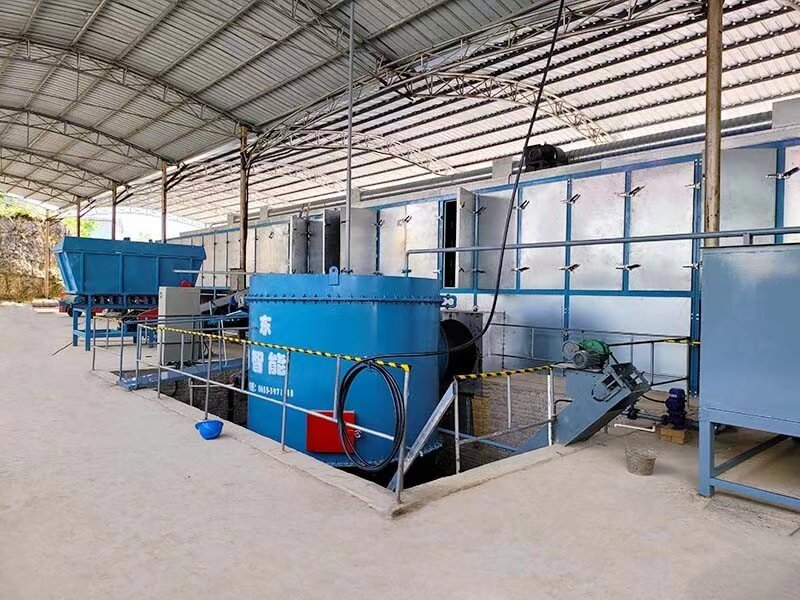
At the heart of Shine’s response is its self-developed biomass burner, a system engineered to utilise wood waste—such as veneer trimming, sawdust, and bark—as fuel. This approach not only eliminates the expense and carbon footprint associated with fossil fuels but also addresses a secondary environmental challenge: waste management. In a typical plywood mill, up to 15–20% of raw logs can end up as residual biomass. By converting this material into thermal energy for drying, Shine’s technology closes the loop, transforming a disposal liability into a cost-effective energy source.
The biomass burner operates at high combustion efficiency, ensuring complete burning of the fuel to minimise smoke and unburned carbon. However, even the most efficient combustion generates fly ash and fine particulates. Recognising that environmental requests increasingly target PM2.5 and PM10 emissions, Shine integrates a water-film dust removal system as a standard feature in its wood veneer dryer configurations. This wet scrubbing technology employs a cyclonic water curtain that captures particulates from the exhaust stream. As flue gases pass through the scrubber, water droplets collide with dust particles, causing them to aggregate and settle out of the airstream. The result is a significant reduction in stack emissions—often to levels well below the limits set by even the most stringent environmental agencies.
Meeting Diverse Environmental Requests Across Markets
The adaptability of Shine’s veneer drying technology has proven instrumental in helping clients satisfy region-specific environmental requests. In China, where the Ministry of Ecology and Environment has rolled out ultra-low emission standards for industrial sectors, Shine’s water-film dust removal system has enabled numerous veneer and plywood plants to achieve particulate emission concentrations below 30 mg/Nm³. In India, where state pollution control boards are tightening norms for biomass-fired equipment, the combination of efficient combustion and wet scrubbing has allowed manufacturers to secure operating permits without resorting to costly electrostatic precipitators.
A case in point is a recent installation at a plywood complex in Indonesia. Facing a provincial regulation that mandated real-time dust monitoring, the facility integrated two Shine wood veneer dryers, each equipped with a 10-million-kcal biomass burner and a multi-stage water-film dust removal system. Post-installation tests revealed that particulate emissions dropped by over 85% compared to the plant’s previous oil-fired dryers. Moreover, the system reduced the facility’s reliance on diesel by 1,200 litres per day, directly contributing to both cost savings and carbon footprint reduction. The plant manager noted, “Environmental requests used to be a headache. Now, with Shine’s technology, we are not only compliant but also more profitable because we’re using our own wood waste as fuel.”
Veneer Drying Technology: Balancing Efficiency, Quality, and Sustainability
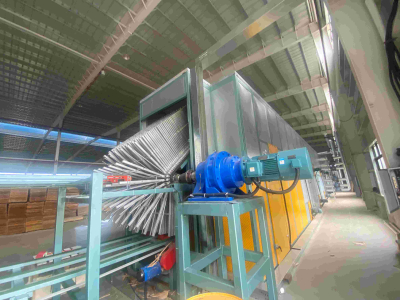
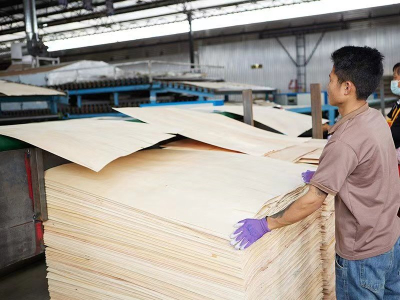
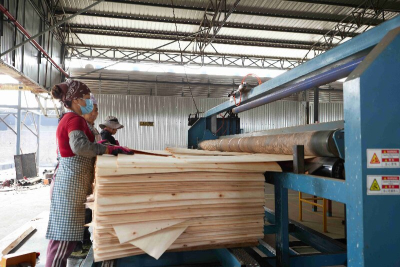
Beyond emission control, Shine’s approach to veneer drying technology emphasises the preservation of veneer quality. In conventional drying systems, inconsistent temperature distribution or excessive airflow can lead to over-drying, cracks, or warping—defects that reduce yield and increase waste. Shine’s wood veneer dryer employs a precision airflow design and segmented temperature control, ensuring that each veneer sheet is dried uniformly to the target moisture content. This precision is particularly critical when handling thin veneers (0.5–2.0 mm) used in high-end decorative plywood and laminated veneer lumber (LVL).
The integration of the biomass burner with the dryer’s thermal system also contributes to product quality. Because the burner produces a consistent, controllable heat output, operators can maintain stable drying conditions without the fluctuations often associated with batch-fired biomass systems. This stability directly translates to lower reject rates and higher-grade output—a crucial advantage in markets where veneer appearance and structural integrity dictate pricing.
Furthermore, Shine has incorporated heat recovery modules into its veneer drying technology. By capturing waste heat from the exhaust before it enters the water-film dust removal system, the dryer reduces overall energy consumption by up to 15%. This innovation aligns with the broader industry trend toward energy efficiency as a complement to emission reduction. Clients increasingly view environmental requests not as isolated compliance hurdles but as part of a holistic sustainability strategy that encompasses energy use, resource efficiency, and circular economy principles.
The Role of Water-Film Dust Removal in Future-Proofing Operations
As environmental requests continue to evolve, the water-film dust removal system offers a level of future-proofing that traditional dryers lack. Unlike dry mechanical dust collectors (e.g., cyclones or bag filters), which may struggle with sticky or moist particulates from biomass combustion, wet scrubbing systems maintain consistent performance regardless of fuel variability. Additionally, the water used in the scrubbing process can be recirculated after sedimentation, minimising water consumption—a feature that resonates with clients in water-stressed regions.
Shine has further refined its water-film dust removal system to include automatic ash discharge and sludge dewatering options, reducing manual maintenance and ensuring continuous compliance. For mills operating in multiple jurisdictions with different emission thresholds, the modular design allows for additional scrubbing stages to be added without replacing the entire dryer. This scalability has made Shine’s wood veneer dryer a preferred choice for large-scale producers anticipating future tightening of environmental regulations.
Client Perspectives: Navigating Compliance with Shine
Feedback from recent clients underscores the practical benefits of Shine’s integrated approach. A Russian plywood manufacturer, operating in a region where winter temperature inversions often trap pollutants near the ground, faced intense scrutiny from local environmental authorities. After installing a Shine veneer drying line with a water-film dust removal system, the company reported not only full compliance but also a 40% reduction in its overall energy costs. The plant’s environmental officer commented, “The system’s ability to handle our own wood waste while keeping emissions within strict limits has been a game-changer. We no longer worry about surprise inspections.”
In North America, a hardwood veneer producer initially considered a standalone baghouse for emission control but ultimately selected Shine’s integrated solution due to its smaller footprint and lower maintenance requirements. The producer noted that the water-film dust removal system eliminated the fire risk associated with bag filters handling hot, dry biomass dust—a critical safety consideration. Furthermore, the ability to demonstrate a closed-loop energy system strengthened the company’s sustainability marketing, appealing to eco-conscious customers in the furniture and flooring sectors.
Technological Leadership and Continuous Innovation
Shine’s commitment to advancing veneer drying technology extends beyond its current product line. The company’s R&D team actively monitors global environmental requests, anticipating shifts in regulatory frameworks. Recent developments include the integration of automated emission monitoring sensors that provide real-time data on particulate concentration, stack temperature, and oxygen levels. This data can be linked to a plant’s central control system, enabling operators to fine-tune combustion parameters and ensure continuous compliance.
Another area of innovation is the enhancement of the biomass burner’s multi-fuel capability. Recognising that the composition of wood waste varies by region—from high-moisture bark in tropical hardwood mills to dry sawdust in temperate softwood facilities—Shine has engineered its burner to automatically adjust air-to-fuel ratios. This adaptability ensures stable thermal output and clean combustion across diverse fuel types, further reducing the risk of non-compliant emissions.
The Economic Case for Sustainable Drying
While environmental compliance often carries the perception of added cost, Shine’s integrated wood veneer dryer demonstrates that sustainability and profitability can align. The elimination of purchased fossil fuels represents a direct and substantial operational saving. For a medium-sized plywood mill producing 300 cubic meters of veneer per day, switching from natural gas to biomass can result in annual fuel savings exceeding $200,000, depending on local energy prices. When combined with the avoidance of fines and the potential for carbon credits, the return on investment for upgrading to Shine’s technology typically falls within 18 to 24 months.
Moreover, as downstream buyers—including furniture brands, construction firms, and retailers—increasingly require certified sustainable sourcing, having a production process that minimises emissions and utilises waste biomass offers a competitive edge. Shine’s clients have reported enhanced market access, with some securing long-term supply contracts specifically because their manufacturing process met rigorous environmental criteria.
Conclusion: A Strategic Response to Global Environmental Requests
The wood processing industry stands at a crossroads. On one hand, global demand for plywood, LVL, and engineered wood products continues to grow, driven by construction, furniture manufacturing, and renewable building materials. On the other hand, environmental requests are becoming more pervasive and stringent, with regulators and communities demanding cleaner industrial operations. In this context, the choice of veneer drying technology is no longer merely a production decision—it is a strategic one that affects regulatory standing, operational cost structure, and corporate reputation.
Shine Veneer Dryer Machinery has positioned itself at the forefront of this transition by offering a solution that directly addresses the core environmental challenge of drying: emissions control. By combining a self-developed biomass burner with an integrated water-film dust removal system, Shine’s wood veneer dryer enables manufacturers to turn wood waste into clean energy while meeting the most demanding air quality standards. The system’s proven performance across diverse markets—from Southeast Asia to Eastern Europe to the Americas—demonstrates its effectiveness in real-world industrial settings.
As one client succinctly put it, “Environmental requests are not going to ease up. They will only get stricter. Investing in a dryer that already meets tomorrow’s standards is simply good business.” For manufacturers seeking to navigate the evolving regulatory landscape without compromising productivity or profitability, Shine’s veneer drying technology offers a clear path forward. With its emphasis on waste utilisation, emission reduction, and operational reliability, it represents not just a machine but a comprehensive strategy for sustainable growth in the modern wood industry.
In an age where environmental stewardship and industrial efficiency must coexist, Shine Veneer Dryer Machinery continues to demonstrate that the two are not mutually exclusive. Through continuous innovation and a deep understanding of both process engineering and environmental compliance, Shine is helping shape a future where wood processing thrives in harmony with the environment.