
Industry Urges Shift to Advanced Veneer Dryers
(Introduction)
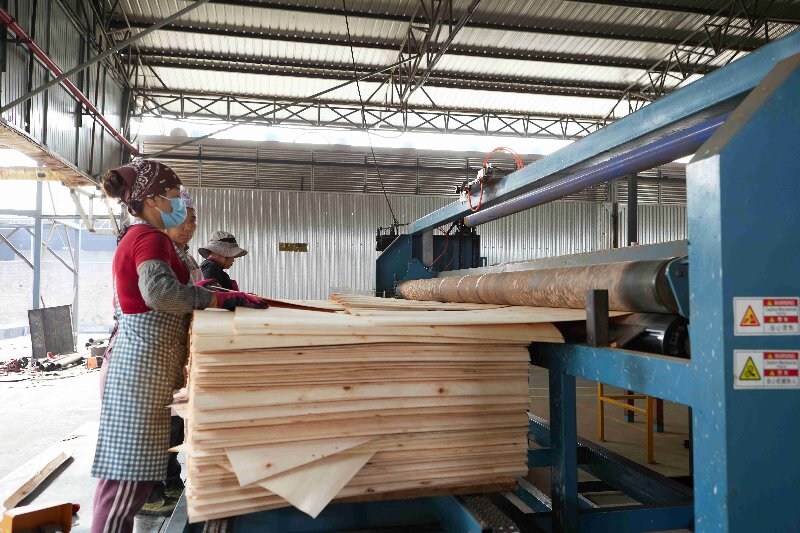
As a sharp and unseasonably early winter front descends across major wood-producing regions globally, the veneer industry faces a formidable challenge. The sudden, dramatic drop in temperatures has severely disrupted traditional natural air-drying processes, causing significant delays, quality inconsistencies, and production bottlenecks for numerous manufacturers that rely on this age-old method. This climatic shift is forcing a profound reevaluation of drying strategies, highlighting the indispensable role of industrial veneer drying technology. Industry experts and leading suppliers are now amplifying their message: investing in modern, controlled veneer dryer systems is no longer a luxury but an operational imperative for anyone involved in wood veneer production. The current crisis underscores that such technology is pivotal not only for maintaining consistent output and meeting deadlines but, more critically, for preserving the intrinsic quality, stability, and value of the delicate wood veneer sheets that form the backbone of furniture, cabinetry, and high-end architectural interior markets.
(The Crisis: Natural Air-Drying in a Deep Freeze)
For decades, many small to mid-sized wood veneer producers have depended on natural air-drying—a process where freshly sliced, moisture-laden veneers are clipped onto racks and exposed to ambient air in large, ventilated sheds. The method relies heavily on specific environmental conditions: moderate temperatures, low humidity, and consistent airflow. The principle is simple: allow moisture to evaporate slowly from the thin sheets of wood veneer until a target moisture content, typically between 6-12%, is achieved.
However, the arrival of an abrupt winter chill has brought this process to a near standstill. "The physics are straightforward," explains Dr. Elena Vance, a wood science specialist at the Timber Technology Institute. "Cold air holds significantly less moisture vapor. When temperatures plummet, the drying potential of the air plummets with it. Evaporation rates slow exponentially. What normally takes a few days can now stretch into weeks, and worse, the drying becomes highly uneven." This unevenness is the nemesis of quality veneer drying. Sheets dry faster at the edges than in the center, leading to stresses that cause warping, buckling, and checking (small surface cracks). Furthermore, prolonged exposure to cool, damp conditions creates a perfect breeding ground for fungal stains (bluish or blackish discoloration) and mold, which can ruin the aesthetic and structural integrity of premium wood veneer.
The impact is immediate and financial. "Our entire yard is at a standstill," reports Liam Chen, operations manager for a boutique wood veneer supplier in the northern region. "We have orders for figured maple and walnut veneer that are now two weeks behind schedule. The veneers are still tacky to the touch. We risk contract penalties, and more importantly, we risk shipping a subpar product that could damage our reputation. This weather event has shown us our greatest vulnerability."
(The Imperative: Controlled Veneer Drying for Quality and Consistency)
In stark contrast to the chaos in air-drying sheds, facilities equipped with industrial veneer dryer units continue to operate at peak efficiency, unfazed by the external weather. This resilience forms the core argument for technological adoption. Modern veneer drying is a science of precision, removing guesswork and nature's variability from the equation.
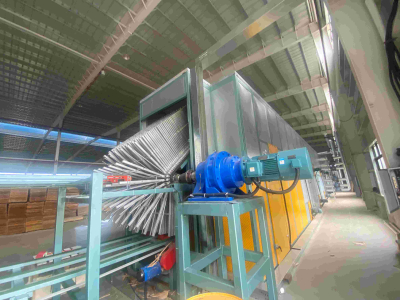
A state-of-the-art veneer dryer is essentially a highly engineered chamber where temperature, humidity, and airflow are meticulously controlled and programmed according to the specific species and thickness of the wood veneer. The process typically involves several stages: an initial heating phase to warm the wood without case-hardening (sealing the surface), a constant-rate drying period where free water is removed, and finally a conditioning phase to relieve internal stresses and equalize moisture content throughout the sheet.
"The key advantage is uniformity and repeatability," says Michael Thorne, CEO of DryTech Systems, a leading manufacturer of veneer dryer solutions. "Our systems use algorithms that adjust the drying schedule in real-time based on sensors monitoring the veneer itself. Whether it's a delicate 0.6mm rotary-cut oak veneer or a thick 3mm sliced burl, the dryer ensures every square inch reaches the same moisture content. This eliminates internal stresses that lead to deformation later in production."
The quality benefits are manifold. Proper veneer drying in a controlled environment:
Preserves Color: Prevents oxidative graying and minimizes enzymatic staining by rapidly moving the veneer through the "danger zone" of temperatures where staining occurs.
Enhances Strength: Maintains the natural bonding properties of the wood fibers, resulting in a stronger, more stable sheet that performs better during subsequent pressing and lamination.
Improves Yield: Dramatically reduces losses due to warp, crack, and stain—common in uneven natural drying.
Guarantees Supply Chain Reliability: Production schedules become predictable and immune to seasonal fluctuations.
(The Technological Spectrum: From Dehumidification to Jet-Dry)
The term veneer dryer encompasses a range of technologies, allowing producers to choose a system that fits their scale and species specialization. The two primary categories are:
Dehumidification Dryers: These energy-efficient systems work by circulating air over the moist wood veneer, then cooling it to condense and extract moisture, before reheating the now-drier air and returning it to the chamber. They are particularly effective in humid climates and for lower-temperature drying of sensitive species.
Conventional (Hot Air) and Jet Dryers: These use heated air—from steam, gas, or thermal oil—forced through the veneer stacks. Advanced "jet-dry" systems use high-velocity air nozzles that impinge directly on the veneer surfaces, breaking up the boundary layer of saturated air and accelerating heat transfer. This technology is renowned for its speed and efficiency for standard commercial species.
"The trend is toward hybrid and smart systems," notes Thorne. "A modern veneer dryer might combine dehumidification for the initial gentle phase with a high-temperature jet phase for final drying, all managed by an intuitive PLC (Programmable Logic Controller) interface. Data logging is crucial—every batch's drying curve is stored, ensuring perfect repeatability for future orders of the same wood veneer."
(Economic and Environmental Considerations)
The upfront capital expenditure for a veneer dryer system is often the primary hurdle for smaller mills. However, the current winter crisis is providing a stark cost-benefit analysis. The losses incurred from delayed orders, rejected batches, and degraded quality during a single bad season can constitute a significant portion of a dryer's cost. Furthermore, the increased throughput and year-round operation capability directly boost revenue potential.
From an environmental standpoint, modern dryers are also advancing. "Energy recovery systems are now standard," Dr. Vance points out. "Heat from the exhaust is often recaptured to preheat incoming air, drastically reducing the carbon footprint compared to older, inefficient models. Also, by precisely controlling the process, we minimize degradation, meaning more usable wood veneer is produced from every log—a fundamental principle of sustainable forestry."