
How Advanced Drying Technology is Safeguarding the World's Most Precious Woods
The selection and operation of this pivotal piece of equipment are no longer a mere industrial consideration but a high-stakes discipline blending cutting-edge science with an almost artisanal touch. As global demand for exotic wood veneer surges in luxury automotive interiors, high-end architectural millwork, and bespoke furniture, the industry is witnessing a technological arms race, centered on drying technology that can preserve both the structural integrity and the sublime aesthetic soul of the material.
The High Cost of Imperfection: Why Drying is Not Just Drying
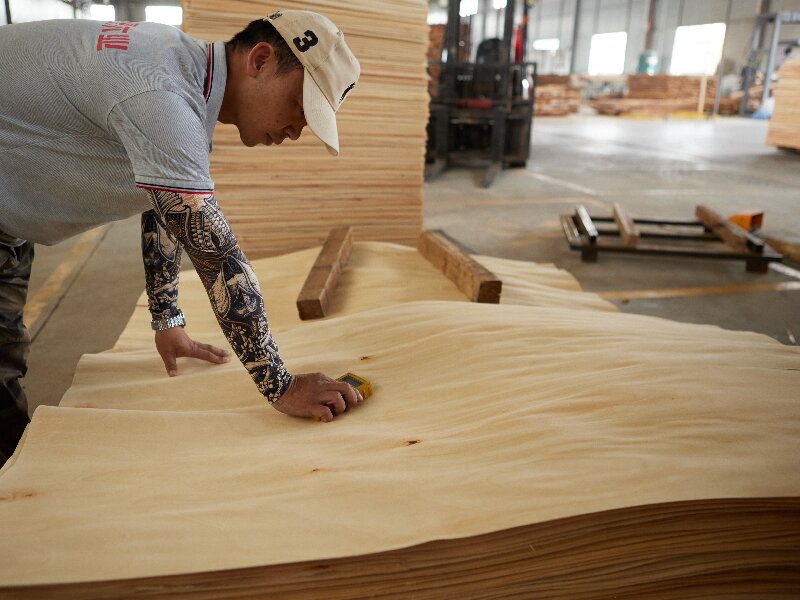
To the uninitiated, drying wood might seem a straightforward process of moisture removal. For commodity lumber, this is often a robust, if not delicate, process. However, for precious wood veneer, typically sliced or peeled to thicknesses often less than 1 mm, the process is exponentially more sensitive.
"Imagine you have a sheet of historical parchment or a masterpiece painting on canvas. You wouldn't subject it to a haphazard blast of heat and hope for the best," explains Dr. Aris Thorne, a materials scientist and consultant to several top-tier veneer dryer manufacturers. "High-value wood veneer is the same. It is a delicate, anisotropic, hygroscopic material. Its cells are like millions of tiny, intricate straws. Rapid, uneven drying causes these cells to collapse, shrink violently, and check. A single hairline crack in a sheet of Macassar ebony can devalue it by 80% or more. The loss isn't just financial; it's the loss of a unique, irreplaceable natural resource."
The consequences of improper drying are catastrophic:
Cracking and Checking: The most common and destructive failure, rendering the veneer unusable for seamless, book-matched applications.
Discoloration: Many prized woods, like cherry or walnut, derive their value from their unique color. Incorrect temperatures can bleach these hues or cause unsightly darkening.
Case-Hardening and Internal Stresses: If the surface dries and hardens before the interior moisture can escape, it sets up immense internal stresses. This veneer may appear perfect exiting the dryer, only to warp or split catastrophically weeks later when it is pressed into a panel.
Loss of Figure: The very reason for a wood's premium—its quilted, bird's-eye, or fiddleback figure—can be muted or distorted by aggressive drying.
The Evolution of Drying Technology: From Steam to Smart Sensors
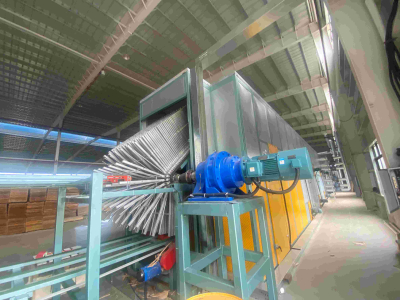
The journey of drying technology for veneers has been one of increasing precision and control. Early roller veneer dryer systems were essentially large, steam-heated boxes that relied on high temperatures and hope. The modern systems, however, are marvels of engineering.
The current gold standard for high-value species is the multi-stage, convective veneer dryer with integrated moisture profiling. These systems are less an "oven" and more a "conditioning chamber."
"A state-of-the-art veneer dryer for exotic wood veneer is a climate-controlled tunnel that understands the material's language," says Lena Petrova, Chief Engineer at PrecisaDry Systems, a leading German manufacturer. "We don't just apply heat; we manage the entire drying environment in a phased approach."
This phased approach typically involves:
The Equalization Zone: The freshly sliced, saturated wood veneer is introduced to a warm, high-humidity environment. This prevents the surface from sealing too quickly, allowing internal moisture to begin migrating outward evenly.
The Constant-Rate Drying Zone: Here, heat and air velocity are carefully calibrated to remove free water from the cell lumens without damaging the cell walls. Temperature and humidity are constantly modulated.
The Falling-Rate Drying Zone: As the wood approaches its fiber saturation point, the process slows down. This stage removes the bound water within the cell walls, a process that requires immense finesse to avoid collapse.
The Conditioning Zone: Perhaps the most critical stage for stability. The now-dry veneer is re-exposed to a controlled, slightly humid environment. This relieves any residual internal stresses (case-hardening) and brings the entire sheet to a uniform, target moisture content—typically between 6-8% for most interior applications.
The Digital Nervous System: AI and the Smart Veneer Dryer
The latest revolution in drying technology is the integration of the Industrial Internet of Things (IIoT) and Artificial Intelligence. Modern dryers are equipped with a network of sensors that monitor not just the chamber's air, but the wood veneer itself, in real-time.
"Infrared and microwave moisture sensors scan each sheet as it enters and exits each zone," Petrova elaborates. "This data is fed into a central AI, which cross-references it with the species profile, initial moisture content, and thickness. The system can then dynamically adjust temperature, fan speed, and humidity for that specific batch, or even for different sections of the dryer if a particularly wet section is detected. It's a closed-loop, self-optimizing system."
This "smart" veneer dryer can learn. Over time, the AI builds a vast database, understanding that a batch of curly maple from a specific region in Vermont may behave differently from one harvested in Canada, and can adjust its protocol accordingly. This level of granular control was unimaginable a decade ago and is now becoming a non-negotiable requirement for mills processing seven-figure inventories of raw timber.
Case Study: The Rosewood Dilemma
The value of this advanced drying technology is perfectly illustrated by the handling of Dalbergia species, such as Brazilian Rosewood. This wood is not only exceptionally expensive but also notoriously difficult to dry, prone to severe checking and color shift.
"With rosewood, you are essentially drying a bar of gold that is actively trying to destroy itself," says Javier Mendez, production manager at a specialty veneer mill in North Carolina that supplies to luxury watchmakers and superyacht interiorers. "Before we installed our new PrecisaDry X-series veneer dryer, our yield on rosewood was maybe 60%. We'd lose four out of every ten sheets. It was heartbreaking and financially unsustainable."
Mendez's mill implemented a system with a particularly long, gentle conditioning zone and hyperspectral imaging to detect microscopic stress fractures before they become visible.
"Our yield is now consistently above 95%," Mendez states. "The drying technology doesn't just prevent loss; it enhances the final product. The chatoyance—the depth and three-dimensional shimmer—of our rosewood is more pronounced because the cell structure remains perfectly intact. Our clients see and feel the difference. That’s what justifies the multi-million-dollar investment in the machinery."
Sustainability and The Future: Doing More with Less
The drive for superior drying technology is also inextricably linked to sustainability. As the availability of the world's most coveted old-growth timbers diminishes, the ethical and economic imperative to waste nothing becomes paramount.
"Advanced veneer dryer systems are a cornerstone of sustainable forestry," argues Dr. Thorne. "When you can achieve a 95% yield instead of a 60% yield, you are effectively reducing the need to harvest by nearly half for the same output. You are conserving the resource. Furthermore, the precision in these modern systems reduces energy consumption by 20-30% compared to older, less efficient models. It's a win for the balance sheet and for the planet."
The future of drying technology points towards even greater integration. Researchers are experimenting with radio-frequency (RF) and vacuum drying as complementary technologies to convective systems, potentially cutting drying times for thick, dense veneers without sacrificing quality. The concept of the "digital twin"—a perfect virtual replica of a physical veneer dryer that can be used for simulation and optimization—is also on the horizon.
Conclusion: The Unseen Guardian of Beauty
In the final analysis, the story of high-value wood is no longer just one of the forester's eye or the sawyer's skill. It is increasingly a story written in lines of code, executed by sensors, and realized within the silent, humming chamber of the modern veneer dryer. This machine has evolved from a simple tool into the unseen guardian of beauty and value, a testament to how human ingenuity is rising to meet the challenge of preserving nature's most fragile and magnificent treasures. For those who trade in the poetry of wood, the choice of drying technology is, and will remain, the most critical verse in the entire production process.