
Shine Machinery's 6-layer Veneer Dryer Facilitates Large-scale Production
Shine Machinery's 6-layer Veneer Dryer Facilitates Large-scale Production
The six-layer roller dryer, a high-end equipment focusing on veneer drying, has undergone in-depth optimization in core technologies and detailed design, fully meeting the actual needs of veneer production. With numerous practical technological advantages, it provides an efficient, stable, and precise solution for the veneer drying process.
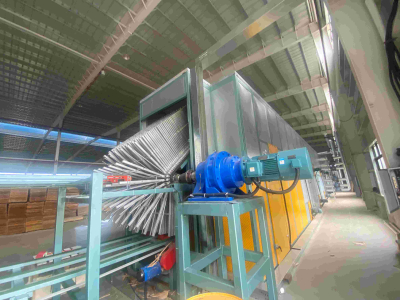
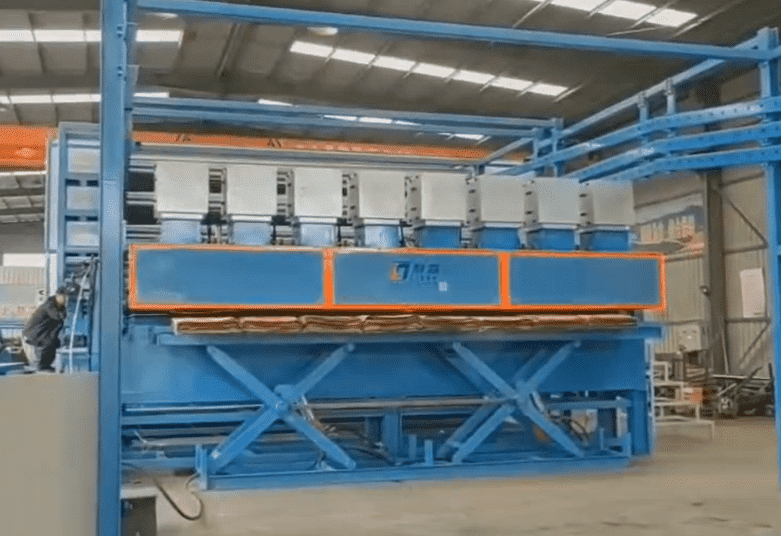
Shine Machinery six-layer roller dryer prioritizes product performance, achieving comprehensive breakthroughs in core performance and technical design. Its numerous detailed advantages highlight its adaptability and practicality, comprehensively solving various problems in the veneer drying process. In terms of capacity and conveying, its innovative six-layer three-dimensional roller layout breaks through the limitations of traditional equipment design, effectively doubling the drying area within the same floor space. The daily output of a single unit is more than 50% higher than that of traditional three- or four-layer roller dryers, perfectly adapting to the large-scale, continuous production needs of large-scale engineered wood products enterprises.
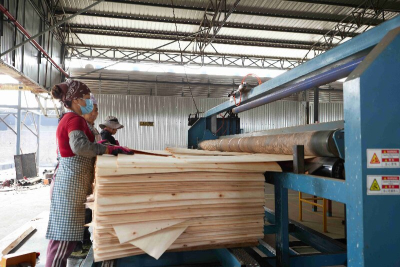
The dryer can be equipped with an automatic veneer feeding system, significantly reducing the probability of veneer misalignment caused by manual feeding, ensuring stable operation of veneers within the dryer, avoiding potential blockage risks from the source, and significantly reducing labor intensity, further improving production efficiency. Combined with a high-speed roller conveyor system and unobstructed flipping technology, it provides double protection for stable veneer operation without scratches, achieving continuous and uninterrupted drying throughout the process and shortening the production cycle.
Regarding energy saving and consumption reduction, it deeply integrates Defenbacher's patented zoned hot air circulation technology and a multi-stage waste heat recovery system, efficiently recovering and reusing heat from the drying exhaust gas, greatly improving the equipment's thermal efficiency and reducing overall energy consumption by more than 35% compared to traditional equipment. All fans use 15kW axial flow fans, ensuring sufficient airflow to meet the drying needs of veneers of different thicknesses while reasonably reducing the total installed power, further controlling energy costs. The axial flow fan motors are custom-made by the manufacturer, with internal copper wire winding and high-temperature resistant coating, resulting in a more robust and durable structure, effectively reducing fan failure frequency and lowering maintenance costs.
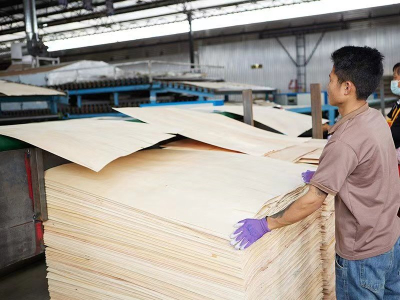
In terms of drying precision and stability, the dryer is equipped with an upgraded automatic temperature control system. The frequency converter of the dryer's traction motor and the temperature controller are precisely linked, automatically adjusting the equipment's transmission speed and temperature according to the veneer thickness and moisture content requirements. This accurately controls the final moisture content of the veneers, completely avoiding over-drying or failure to meet process requirements during large-scale veneer drying, ensuring consistent drying quality. Simultaneously, an innovative six-layer independent airflow design is employed, with each layer equipped with independent airflow and temperature adjustment modules. Combined with built-in high-precision temperature and humidity sensors, it achieves precise temperature control within ±5℃. High-temperature temperature and humidity sensors are installed in all parts of the dryer, outputting 0-10V analog signals. The collected temperature and humidity signals are automatically processed to achieve automatic adjustment of drying temperature and relative humidity. The upper limits of temperature and humidity can be freely set, and real-time acquisition and historical recording of temperature and humidity signals are maintained, resulting in a finished product qualification rate exceeding 99%.
In terms of equipment operation and maintenance, the drive motor adopts a high-quality domestically produced electromagnetic speed-regulating motor and speed controller, ensuring stable operation and precise speed regulation to meet the needs of different production conditions. The electrical control system uses core electrical components from internationally renowned brands such as Schneider Electric, ensuring reliable performance and a low failure rate. The control cabinet features a reasonable layout, aesthetically pleasing appearance, and convenient operation, reducing the learning curve for operators. The core structure of the equipment uses imported German wear-resistant steel and precision sealing components, optimizing the cylinder insulation and sealing design, reducing heat loss by 60%, and extending the overall service life to over 10 years. The dryer integrates Industrial Internet of Things (IIoT) technology, supporting remote monitoring, fault diagnosis, automatic alarms, data storage and analysis, and seamless integration with the factory's MES system, enabling real-time control of equipment operating status and further improving the convenience of production management.
The launch of this six-layer roller dryer fills a market gap in the relevant field. Its numerous technological advantages, closely aligned with actual production needs, provide domestic plywood, blockboard, and other downstream engineered wood products companies with a more cost-effective, adaptable, efficient, low-carbon, and intelligent equipment solution. It effectively addresses the pain points of traditional drying equipment, such as insufficient capacity, high energy consumption, uneven quality, and cumbersome operation. The equipment's detailed design fully considers the actual needs of veneer production, comprehensively improving the efficiency and stability of the drying process from feeding, drying, and temperature control to operation and maintenance. This helps companies reduce production costs, improve product quality, and drive the veneer production industry towards high efficiency, precision, and intelligence. In the future, this equipment will continue to focus on the core needs of veneer production, continuously optimizing and upgrading technical details to provide more competitive product solutions for the veneer drying field.