
If Collapse Appears Your Core Dryer Capacity Numbers Lie
Collapse and honeycomb make core veneer dryer selection about usable dry veneer, moisture uniformity, flatness, and drying cost—not output alone.

Collapse, honeycomb, buckling, end waviness, and uneven moisture are the moment many plywood mills realize a hard truth: a “bigger” core veneer dryer does not automatically produce more Dry Veneer you can actually glue.
In procurement conversations, daily output is often treated as the headline figure. But once drying defects appear, the KPI that matters is usable dry veneer—flat sheets with consistent moisture and a surface condition suitable for gluing. In other words, a veneer dryer machine is only as valuable as the veneer it delivers to the next station without rework, sorting losses, or line interruptions.
Why collapse and honeycomb change how buyers evaluate a core dryer
In any Veneer Drying Process, the goal is not just removing moisture—it is removing moisture without creating defects that reduce value downstream. A veneer sheet can reach a target moisture number and still be a problem if it is not flat, if it shows waviness at the ends, or if internal damage leads to rejects during grading.
This is why capacity figures can be misleading once collapse and honeycomb show up. A higher-throughput core dryer may process more green veneer per day, but if more sheets come out with buckle or end waviness, the usable output falls. The purchasing question shifts from “How many cubic meters can it dry?” to:
How consistently does the core veneer dryer reach a stable final moisture range?
Does the dryer keep veneer flat without buckle or end waviness?
Does the dryer help avoid the defects that force re-drying, sorting, or scrapping?
Industry buyers therefore tend to evaluate a wood veneer drying machine as a combination of drying quality + controllability + operating cost, not throughput alone.
What “usable Dry Veneer” looks like on a roller track core veneer dryer
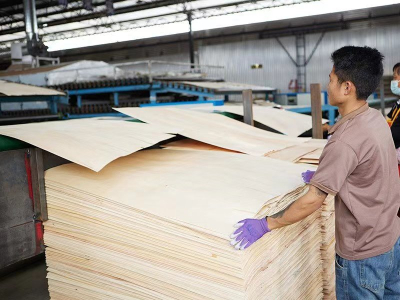
Product descriptions for roller track systems commonly emphasize three outcomes buyers care about: uniform moisture content, flatness, and surface condition for gluing.
For example, Shine Machinery describes its roller core dryer concept as producing veneer that is “flat without buckle or end waviness,” with “uniform moisture content,” and with a surface “in good condition for gluing.” The same product description also highlights that “shrinkage and casehardening are kept to a minimum and collapse and honeycomb are avoided,” positioning drying quality as central to the machine’s value.
In practical procurement terms, this is the core performance bundle most mills want from a veneer dryer used before layup:
Moisture uniformity to reduce surprises in glue spread and pressing
Flat dried sheets to improve handling, stacking, and feeding
Stable, repeatable operation so the dryer does not become the bottleneck

When assessing any core veneer dryer, it is also worth confirming the level of automation the supplier associates with consistent results. Shine’s roller concept highlights an automatic control system and frequency conversion to adjust transmission speed and temperature automatically for an “ideal drying effect.”
A procurement team does not need marketing language to make this useful—what matters is verifying that the veneer dryer machine provides the controls operators need to tune moisture and flatness across different veneer conditions.
Reading technical parameters without turning the purchase into a capacity contest
One way buyers avoid “capacity-only” decisions is to anchor evaluations on model-level parameters that connect directly to quality.
A published example is the GTH30-20 configuration listed under a core veneer drying machine specification. It is described with a 4-deck layout and an operating target of reducing fresh veneer moisture to about 8–10%, supported by adjustable drying temperature and automatic temperature control.
Key specifications presented for that configuration include:
| Parameter | Specification (GTH30-20) |
|---|---|
| Working width | 3.0 m |
| Deck | 4 |
| Heating area length | 16 m |
| Cooling area length | 4 m |
| Veneer thickness & size | 0.6–8 mm |
| Veneer water moisture | Fresh veneer to about 8–10% |
| Drying temperature | Waste wood, 140–200°C adjustable; control accuracy ±5°C |
| Veneer transport speed | 5–22 m/min |
| Drying capacity | 2.5 m³/h |
| Actual electricity consumption | About 100 kWh per hour |
A key procurement takeaway is that these numbers only become meaningful when tied to quality checks. Even when a core veneer dryer lists a final moisture target, buyers typically confirm how consistently the line hits that target across sheet width, thickness variation, and daily operating conditions.
For further product context, see: core veneer drying machine.
Deck configuration is a space and workflow decision as much as a volume decision
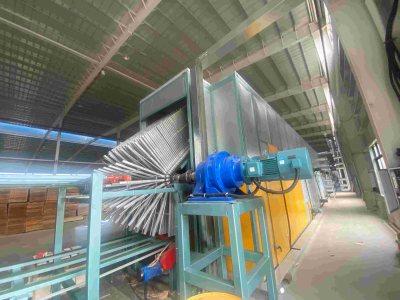
Suppliers commonly offer roller veneer dryer designs in 1 deck, 2 decks, or 4 decks, and selection tends to reflect both required output and plant layout. Shine’s product overview states that roller plywood veneer dryers “can be designed as 1 deck, 2 decks, or 4 decks according to different customers’ requirements,” and that when capacity requirements are high, buyers often choose 2-deck or 4-deck designs.
Among those options, the 2-deck concept is positioned as a practical balance—its stated advantage is saving area while improving working capacity.
A concrete parameter set is provided for a 2-deck example, model GTH30-48, described as intended for drying core veneer and face veneer. The published parameters include a final moisture target of about 10% and a drying capacity of 70–80 cbm per day.
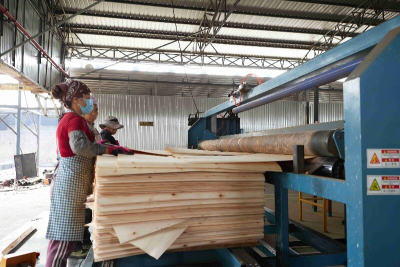
For buyers comparing models, the most useful practice is to pair deck choice with a quality inspection plan: take dried sheets, verify flatness (no buckle, no end waviness), and confirm moisture uniformity against the mill’s gluing requirements.
More model details are available here: veneer core dryer machine.
Drying cost is best discussed as cost per cubic meter of usable veneer
When collapse and honeycomb are already in the conversation, energy and cost control become inseparable from quality—because rework is also a cost.
On the energy side, Shine promotes a biomass burner as an “exclusive patented product” designed to burn waste wood directly, including crushed wood chips and tree barks, with the stated purpose of reducing fuel costs and solving waste accumulation issues in veneer and plywood factories. The same product content also mentions an “environmental protection type hot air stove” designed to save fuel and increase heating speed through “twice use of hot air.”
From a buyer’s perspective, these features are not just “green add-ons.” They are part of a procurement calculation: if fuel is a major operating expense, a biomass veneer dryer option may be evaluated alongside local fuel availability and plant waste streams.
A 2-deck dryer page also provides a reference range for composite fuel and electricity cost—approximately $6–$12 per cubic meter—which is useful as a starting benchmark when comparing solutions under similar operating conditions.
For the biomass configuration described above, see: biomass veneer dryer.
Procurement checklist for a core veneer dryer once defects appear
When a mill is troubleshooting collapse, honeycomb, buckle, or moisture deviation, a purchase decision benefits from a simple, repeatable checklist. The goal is to confirm the veneer dryer machine is being evaluated on usable output, not brochure output.
Final moisture target: Confirm the target moisture stated for the model and match it to your gluing needs.
Uniformity focus: Ask how the system supports consistent results (e.g., automatic control, speed and temperature adjustment).
Flatness requirement: Inspect whether dried sheets are described as flat without buckle or end waviness.
Gluing readiness: Confirm the supplier positions the dried veneer surface as suitable for gluing.
Deck and footprint fit: Select 1/2/4 decks based on capacity needs and floor space constraints.
Energy pathway: Decide whether steam/thermic fluid or waste-wood biomass heating better fits your site.
Cost discussion format: Compare cost per cubic meter of usable Dry Veneer, not just theoretical capacity.
If the procurement goal is stable production of high-grade plywood and multi-layer board, this checklist keeps the discussion anchored where it matters: drying quality that protects downstream yield.
Where buyers typically continue the comparison
Once the evaluation criteria are clear, buyers usually shortlist models and review the supplier’s range of configurations, including multi-deck options and heating alternatives.
A practical next step is browsing a manufacturer’s model range and matching deck count and heating method to plant constraints and target quality. Shine lists its product categories here: veneer dryer product range.
FAQs
Why does collapse or honeycomb make capacity less important?
Because drying defects reduce the amount of usable Dry Veneer a line produces. A core veneer dryer is typically evaluated on flatness, moisture uniformity, and gluing readiness—not only throughput.
What drying results are highlighted for a roller core veneer drying machine?
The roller core dryer description highlights uniform moisture content, veneer that is flat without buckle or end waviness, and a surface condition “in good condition for gluing,” while aiming to keep shrinkage and casehardening to a minimum and to avoid collapse and honeycomb.
What final moisture targets are shown in the published model specifications?
One example (GTH30-20) lists fresh veneer to about 8–10%. A 2-deck example (GTH30-48) lists fresh veneer to about 10%.
How should buyers choose between 1 deck, 2 decks, and 4 decks?
Selections are typically made based on capacity requirements and installation space. The 2-deck concept is presented as a way to save area and improve working capacity.
What fuel options are described for biomass heating?
A biomass burner is described as able to burn waste wood directly, including crushed wood chips and tree barks, to reduce fuel cost and address waste accumulation in veneer and plywood factories.
Is there any published benchmark for drying cost per cubic meter?
A 2-deck dryer page provides a reference range for composite fuel and electricity cost of approximately $6–$12 per cubic meter.