
Wrinkles Before Sorting Start With Veneer Dryer Airflow Checks
Wrinkles and ripples that show up on core veneer right before the sorting line are often a sign that the veneer drying process is not removing moisture evenly across the sheet. In day-to-day operations, the fastest way to isolate the cause is to begin inside the veneer dryer with hot air distribution—because stable temperature settings alone don’t guarantee uniform drying conditions across every deck and every position in the working width.

Why hot air distribution is the first thing to check
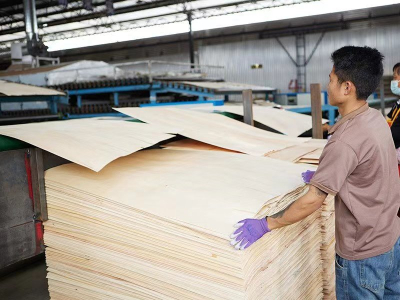
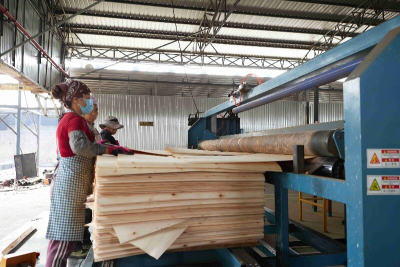
In a roller-type veneer dryer, the drying result depends on how consistently heated air reaches the veneer surface while sheets move through the drying section. When air delivery is uneven, different areas of a sheet can experience different drying intensity—even if the control panel shows the correct temperature. That difference can appear later as wrinkles, ripples, and inconsistent dry veneer appearance at the dryer outlet or during handling before sorting.
Shine Machinery’s hot air drying concept highlights hot air blown onto the veneer surface via heat exchangers and emphasizes uniform heat distribution using a step-by-step heat transfer design. In practical terms, this means buyers and operators should separate two checks:
Temperature stability (what the system is set to)
Airflow consistency (what each area of veneer actually receives)
When wrinkles appear before sorting, airflow consistency is typically the faster diagnostic starting point because it directly affects drying uniformity across the working width and across decks.
What a veneer dryer is doing during the veneer drying process

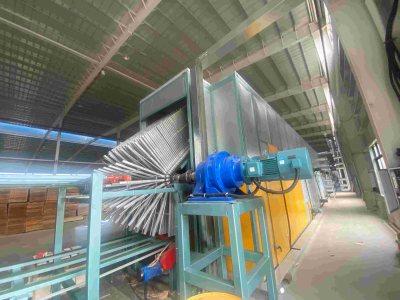
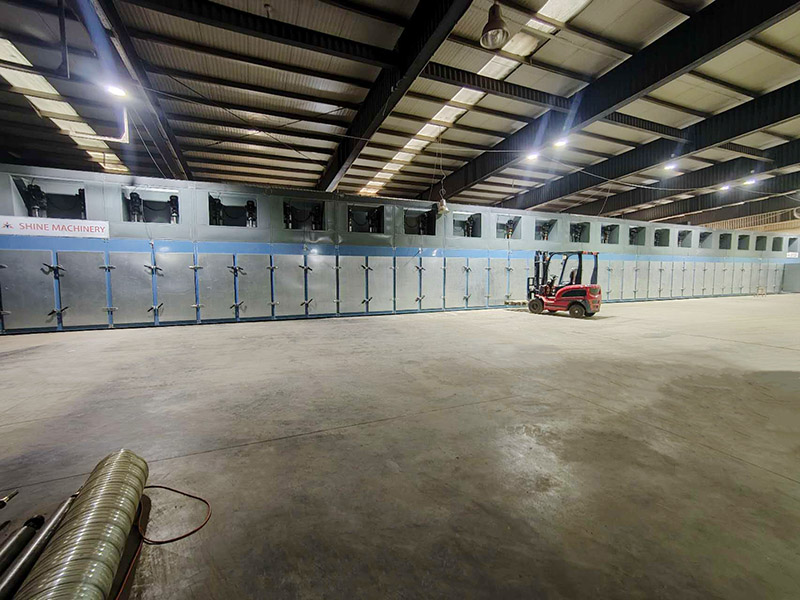
A typical wood veneer machine for drying is organized around a continuous path: veneer enters through an inlet, passes through a drying/heating zone, then a cooling zone, and exits at the outlet. Shine Machinery describes this structure directly for its roller veneer dryer equipment: inlet, drying area, cooling area, outlet.
In production, the operator’s goal is not only to “dry” the veneer, but to produce dry veneer that is:
consistent in moisture
visually uniform enough for downstream steps
supple enough to reduce damage during stacking (a key point highlighted for the Veneer Hot Press Dryer Machine)
Because drying conditions interact with veneer thickness and transport speed, a stable veneer drying process is usually built on repeatable airflow plus controlled temperature and conveyor speed.
Troubleshooting checklist for wrinkles and ripples before sorting
The following checklist stays focused on what is observable and adjustable around the hot air system and transport system—without requiring process redesign.
1) Start at the hot air system
If core veneer leaves the core dryer with surface deformation, begin with the components that directly determine hot air distribution:
Hot air blowers: confirm they are running as expected and that airflow appears consistent across the drying section.
Air intake fans: confirm intake operation is stable and supplying the system.
Airflow paths: visually inspect accessible ducting and distribution areas for obvious imbalance indicators.
This matches how Shine Machinery specifies key air-moving components on its configurations (for example, the GTH30-52 lists 48 hot air blowers and two air intake fans).
2) Verify operating temperature and transport speed
After airflow checks, verify whether the selected conditions match the material being processed.
For Shine Machinery’s GTH30-52 veneer hot press dryer configuration, published operating ranges include:
drying temperature: 140–200°C (adjustable)
temperature control accuracy: ±5°C
veneer transport speed: 5–22 m/min
A practical rule during troubleshooting is to change one variable at a time (temperature or speed), then review the change in veneer flatness and consistency. This helps avoid chasing multiple causes simultaneously.
3) Compare sheets by position, not just averages
Wrinkles that repeat in the same area of the working width or on a specific deck point back to local differences in drying conditions. Instead of checking only “average” outcomes, compare:
veneer from different positions across the width
veneer from different decks
thin versus thicker sheets within the same run
This is a simple, shop-floor way to connect visible defects to hot air distribution patterns.
Equipment parameters buyers often compare for a core dryer
When specifying a veneer dryer for plywood operations, procurement teams typically compare working width, decks, heating length, cooling length, and the supported veneer thickness range. Shine Machinery publishes these decision points clearly across several models.
Example: Veneer Hot Press Dryer Machine GTH30-52
The GTH30-52 configuration is described as suitable for plywood production and drying sliced or peeled veneer, with published specifications including:
| Parameter | GTH30-52 |
|---|---|
| Working width | 3.0 m |
| Deck | 4 |
| Heating area length | 48 m |
| Cooling area length | 4 m |
| Veneer thickness & size | 0.8–8 mm |
| Drying temperature | 140–200°C adjustable |
| Temperature control accuracy | ±5°C |
| Veneer transport speed | 5–22 m/min |
| Veneer water moisture target | Fresh veneer to about 8–10% |
| Drying capacity | 7–8 m³/h |
| Actual electricity consumption | About 200 kWh per hour |
Comparing three published configurations
To align capacity with production goals, Shine Machinery also publishes multiple configurations with the same 3.0 m working width and the same 0.8–8 mm thickness range:
GTH30-32 (2 deck): heating area length 28 m, cooling area length 4 m, fresh veneer to about 10%, drying capacity 40–45 m³/24h.
GTH30-36 (4 deck): heating area length 32 m, cooling area length 4 m, fresh veneer to about 8–10%, drying capacity 110 m³/day.
GTH30-52 (4 deck): heating area length 48 m, cooling area length 4 m, fresh veneer to about 8–10%, drying capacity 7–8 m³/h.
These figures give buyers a straightforward way to match a wood veneer machine configuration to expected throughput and space.
Selection and support considerations during procurement
Beyond specifications, buyers often evaluate how quickly a veneer dryer can be installed and integrated. Shine Machinery notes its veneer dryer machine has a modular design for efficient installation, with a typical installation period of approximately 40 days (site conditions and scale can change the timeline).
For model selection, a common starting point is the manufacturer’s product range page, then narrowing by deck count, heating length, and targeted output. For readers comparing options, Shine Machinery lists multiple dryer categories and configurations at:
Product range
If wrinkles and ripples before sorting are an ongoing operational issue, model selection should be paired with a commissioning plan that includes airflow inspection routines and repeatable operating settings for the veneer drying process.
Where Shine Machinery models fit in a typical buyer shortlist
For procurement teams looking at a China veneer dryer manufacturer or China veneer dryer supplier, Shine Machinery positions its equipment around:
roller-based continuous drying structure (inlet, drying area, cooling area, outlet)
hot air drying delivered via heat exchangers
automatic temperature control and speed regulation (listed in multiple model specifications)
customizable working width and length options for capacity needs (as described in product overview materials)
Relevant product pages for direct specification review include:
Hot Air Veneer Dryer
Veneer Hot Press Dryer
Biomass Drying Machine
roller veneer dryer
For direct inquiries, the contact page is:
Contact
FAQs
Why do wrinkles and ripples show up right before sorting?
Wrinkles and ripples seen at the outlet or just before sorting are commonly treated as a sign of uneven drying. Operationally, the first inspection priority is hot air distribution inside the veneer dryer, then temperature and transport speed.
What operating temperature range is published for Shine Machinery dryer configurations?
For the GTH30-52 and GTH30-36 specifications, the published adjustable drying temperature range is 140–200°C, with ±5°C temperature control accuracy.
What veneer thickness range is supported in the listed configurations?
The GTH30-32, GTH30-36, and GTH30-52 specifications list a supported veneer thickness range of 0.8–8 mm.
What final moisture target is stated for dry veneer?
The GTH30-36 and GTH30-52 specifications state fresh veneer can be dried to about 8–10% moisture; the GTH30-32 specification states fresh veneer to about 10%.
How long does installation typically take?
Shine Machinery notes its veneer dryer machine has a modular design for efficient installation, with a typical installation period of approximately 40 days, depending on site conditions, equipment scale, and customer requirements.