
Why Veneer Dryer Acceptance Should Start With Dry Veneer Quality
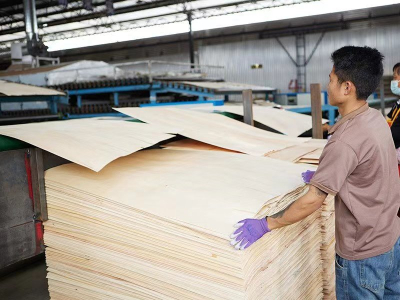
When fresh veneer enters a continuous drying line, hitting a set temperature is only half the job. The final result buyers care about is the Dry Veneer leaving the machine: moisture content close to the production target, uniform across the sheet, and physically stable for downstream processes such as gluing.
Across many plywood and multi-layer board lines, a practical target is bringing fresh veneer to about 8–10% moisture content. On Shine Machinery’s roller dryer configurations, that outcome depends on two settings working together: drying temperature and veneer transport speed. Testing them separately can confirm individual components are running, but it does not prove the line is producing acceptable veneer.
A simple purchasing and commissioning rule helps avoid costly surprises: accept a veneer dryer based on discharged veneer quality—not temperature readings or conveyor operation alone.

How a Veneer Dryer Links Moisture Control to Sheet Condition
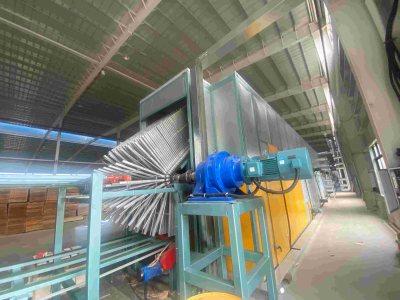
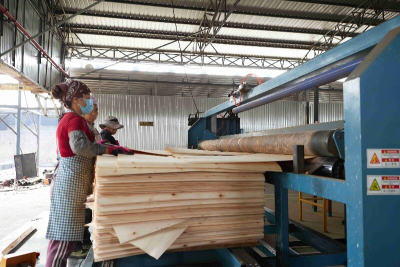
A continuous veneer dryer is typically organized around feeding, heating, cooling, and discharging. The veneer moves through the dryer while hot air drives moisture removal, and the cooling section prepares sheets for handling at the discharge end.
In Shine Machinery’s published configurations for roller drying equipment, the operating window is designed to give mills room to tune performance by veneer thickness and production requirements. Typical published ranges include:
Drying temperature: 140–200°C adjustable (with ±5°C temperature control accuracy specified on several configurations)
Veneer transport speed: 5–22 m/min
Applicable veneer thickness: commonly specified as 0.6–8 mm for several roller models
Moisture objective: drying fresh veneer to about 8–10% (often presented as “about 10%” on some configurations)
Those numbers describe capability and adjustability. What matters during commissioning is how temperature and speed combine to deliver uniform moisture content and a sheet condition that stays flat and stable.
Why Temperature and Speed Must Be Tested Together
Temperature and transport speed act on the same practical variable: residence time under heat. You can have stable temperature control and still send veneer through too quickly; or you can run a smooth conveyor and still fail to meet the moisture and surface requirements because heating conditions don’t match the incoming veneer.
Temperature-only checks miss the real risk
A stable setpoint within the controller’s accuracy range does not guarantee the line is producing acceptable Dry Veneer. If speed is set too high for the incoming veneer condition, sheets can exit with moisture above the target band—even though the display looks “correct.” If speed is set too low for the same temperature, the line can expose sheets longer than needed, raising the likelihood of quality issues that show up as physical instability.
Speed-only checks are equally incomplete
A conveyor that runs smoothly through 5–22 m/min proves mechanical function, not drying performance. Drying results also depend on heating conditions, veneer thickness, and how consistently hot air is delivered through the drying sections.
Combined commissioning aligns settings with results
The goal of combined testing is straightforward: establish a temperature and speed pair that delivers:
moisture content aligned with the line’s target (commonly about 8–10%)
consistent moisture across the sheet
veneer that is flat without buckle or end waviness
a surface condition that is in good condition for gluing
Those outcome-focused points match the performance expectations described across Shine Machinery’s veneer drying equipment pages for both roller and mesh belt configurations.
A Commissioning Checklist That Uses Veneer Quality as the Acceptance Standard
Buyers often ask what they should actually verify on-site. A practical answer is to connect every setting to a measurable, visible result on discharged sheets.

Core acceptance checklist
| What to check | What to confirm on-site | Why it matters at acceptance |
|---|---|---|
| Veneer thickness | The material matches the model’s specified thickness range (commonly 0.6–8 mm on several roller models) | Thickness heavily influences drying behavior and required residence time |
| Temperature adjustability | Operation within the published 140–200°C adjustable range (model-dependent) | Confirms the equipment can reach and hold needed drying conditions |
| Temperature accuracy (where specified) | Stability consistent with ±5°C control accuracy (on configurations where this is stated) | Stability supports repeatable moisture outcomes |
| Conveyor speed adjustability | Smooth adjustment through 5–22 m/min | Speed is the main lever for residence time |
| Incoming veneer condition | Record representative fresh veneer moisture conditions from production | Fresh veneer variability affects the settings that will work |
| Final moisture result | Confirm the discharged Dry Veneer matches the target (often about 8–10%) | Final moisture drives gluing and downstream stability |
| Moisture uniformity | Compare samples from different positions and sheets | Uniformity helps prevent process variability and rejects |
| Flatness | Inspect for buckle and end waviness | Flat sheets feed better and reduce handling issues |
| Surface condition | Confirm veneer is free of splits and suitable for gluing | Supports stable downstream bonding |
| Final decision | Accept only when moisture and sheet quality pass together | Prevents “spec-sheet acceptance” that fails in production |
Commissioning sequence that reduces rework
Start with material reality: verify veneer thickness and take a baseline view of fresh veneer conditions.
Set an initial temperature and speed within the model’s published range.
Run continuously until conditions stabilize, then sample discharged veneer.
If results miss the target, adjust temperature and speed together rather than treating them as isolated controls.
This approach keeps acceptance aligned with what ultimately matters: the condition of Dry Veneer leaving the machine.
Where Roller Dryers and Core Dryers Fit in a Veneer Drying Process
In Shine Machinery’s product materials, roller dryers are offered in multiple configurations with different heating section lengths and capacity statements by model. These differences are not cosmetic—they affect throughput potential and the practical window for matching speed to temperature.
A frequently referenced core drying configuration is the Core Veneer Drying Machine (model GTH30-20), presented with a 4-deck layout, 16 m heating area, and 4 m cooling area. Another published configuration is the GTH30-36, shown under the Veneer Drying Process page, with 32 m heating area and 4 m cooling area.
For buyers comparing layouts, the procurement question is usually practical: which configuration can achieve the target moisture content at the desired line speed—without creating flatness or surface problems.
Biomass Heating and Frequency Speed Regulation in Continuous Drying
Energy and operating flexibility are often evaluated alongside moisture performance.
On multiple Shine Machinery roller dryer configurations, the heating option is described as waste wood with an adjustable 140–200°C drying temperature range. Several pages also describe the burner concept as being able to burn crushed wood chips and tree barks directly as fuel.
Speed control is presented through frequency control traction motors in the published specifications. Examples include:
GTH30-20: traction motors listed as 5.5 kW, frequency control (4 pcs)
GTH30-48 (2 deck): traction motors listed as 7.5 kW, frequency control (2 pcs)
Operationally, that matters because frequency control supports fine speed tuning so operators can change veneer residence time while keeping the temperature range appropriate for the production target.
Readers comparing suppliers often look for a clear equipment family view; Shine Machinery summarizes roller configurations and related details on its Roller Wood Veneer Dryer page.
What Buyers Should Require Before Signing Off on a Veneer Dryer
From a procurement standpoint, the biggest acceptance risk is approving a machine because the controls work, then discovering the line cannot consistently hit the desired Dry Veneer outcome under real incoming veneer conditions.
A practical acceptance package typically includes:
verification that the dryer can run within the published temperature and speed ranges for the selected model
a documented trial run that demonstrates fresh veneer can be dried to the target moisture content (commonly about 8–10%) under continuous operation
a physical inspection standard that includes moisture uniformity, flatness (no buckle/end waviness), and surface suitability for gluing
For buyers evaluating a two-deck core drying configuration, the 2 Deck Veneer Core Dryer Machine page provides a representative specification set, including heating and cooling section lengths, speed range, and stated drying outcome.
FAQs
What moisture content is the dryer typically targeting for fresh veneer?
Several Shine Machinery roller dryer configurations describe drying fresh veneer to about 8–10% moisture content, sometimes presented as about 10%.
What temperature range is shown for Shine Machinery roller veneer dryers?
Published configurations commonly state 140–200°C adjustable drying temperature, depending on model.
What speed range is shown for veneer transport?
Multiple roller models list 5–22 m/min veneer transport speed.
Why should temperature and speed be commissioned together?
Because they jointly determine residence time and drying intensity. Acceptance is most reliable when it is tied to the actual Dry Veneer result—moisture level, uniformity, flatness, and glue-ready surface condition.
What sheet defects should be checked at discharge?
Product descriptions highlight inspection for veneer that is flat without buckle or end waviness, free of splits, and in good condition for gluing.
What heating fuel is described for some roller dryer configurations?
Several pages describe heating using waste wood, including descriptions of burning crushed wood chips and tree barks as fuel