
OEM Veneer Peeling Lathe Manufacturer for Plywood Lines
Quick Answer
Confirm four items before technical negotiation: the cooperation model (drawing-based build, parameter modification, or full-line matching), the written customization scope with tolerances, first-article acceptance criteria, and the document set covering electrical standard, layout and spare parts. MOQ, tooling ownership and a stage-split lead time belong in the same written offer. Ply Veneer Dryer publishes 4ft and 8ft peeling lathe data, including a 650 mm maximum log diameter and a 1.0-4.0 mm veneer thickness window, giving buyers a concrete baseline for that comparison.
What OEM and Custom Veneer Peeling Lathe Manufacturing Involves
OEM means the supplier builds to the buyer's specification, drawing or brand, while the buyer keeps ownership of the product definition and the commercial relationship. ODM moves design responsibility to the supplier: an existing machine platform is adapted, and the buyer applies its own nameplate and documentation. Customization sits between the two, changing a defined list of parameters on a standard platform. Drawing-to-manufacture is the strictest variant, where the buyer supplies geometry and the supplier supplies process capability. Retrofit customization applies when an installed plywood line needs a new peeling stage that fits existing equipment.
The model choice follows the risk the buyer wants to carry. A buyer with in-house engineering and an existing frame concept usually keeps drawing control and asks for manufacturing only. A buyer entering plywood production for the first time usually needs line matching, where debarker, peeling lathe, dryer, stacker and knife grinder are sized against each other. Distributors and private-label sellers mostly need ODM with brand application, where machine performance stays unchanged and only the identity layer changes.
| Buyer situation | Cooperation model | Main deliverable |
|---|---|---|
| Own drawing and frame design | Drawing-to-manufacture | First article plus dimensional report |
| Standard platform, different log length | Parameter customization | Revised parameter sheet and layout |
| New plywood line from green field | OEM or ODM with line matching | Line configuration and commissioning plan |
| Existing line, new peeling stage | Retrofit customization | Interface drawing and electrical adaptation |
The practical distinction is that OEM and ODM transfer manufacturing work, while customization transfers only a parameter set. Buyers who treat the three as interchangeable tend to under-specify acceptance criteria, which is where most rework in export projects originates.
The OEM Process Step by Step
A structured sequence keeps a custom peeling lathe project predictable. The stages below apply whether the order is a single machine or a full peeling and drying section.
Inquiry and requirement capture. The buyer supplies log diameter range, log length, target veneer thickness, output target per shift, available voltage and frequency, and site constraints. Output: a signed requirement sheet.
Technical alignment and line matching. The lathe is sized against the debarker, dryer, stacker and knife grinder so that veneer throughput matches drying capacity. Output: a line configuration table.
Drawing and parameter confirmation. Working width, maximum log diameter, residual core, thickness window, knife carriage stroke and control architecture are frozen on a dimensioned drawing. Output: an approved parameter drawing.
First-article planning. If the frame, knife carriage or drive train is modified, the parties define which characteristics make the first article acceptable and how each is measured. Output: a first-article inspection plan.
Tooling and fixture preparation. Jigs for frame welding, shaft alignment or knife setting are built and accepted before trial production. Output: a tooling list with acceptance records.
Trial production. A short run on the buyer's log species or an agreed equivalent. Output: records of veneer thickness, output speed and core quality.
Inspection and acceptance. Dimensional checks, no-load running and loaded running are recorded against a quality management framework such as ISO 9001. Output: an inspection report released with the machine.
Packing, shipment and installation coordination. Packing method, spare parts crate, documentation language and commissioning window are agreed. Output: packing list and installation schedule.

The sequence matters because stages 3 and 4 carry most of the technical risk. A parameter drawing approved before tooling starts is cheaper to change than a frame corrected after trial production, and a first-article plan agreed in advance prevents disputes about what "matching the specification" means.
Key Terms Every Buyer Should Know: MOQ, Tooling, Lead Time
Custom equipment contracts use a small set of commercial terms, and each one behaves differently in a peeling lathe project than in commodity purchasing. The table sets out what each term covers and what a buyer should put in writing.
| Term | What it covers in a peeling lathe project | What buyers should confirm |
|---|---|---|
| MOQ | Minimum order quantity, calculated per machine, per module kit or per line set | Whether it is counted per machine or per complete line package |
| Tooling and fixtures | Jigs and fixtures built for a specific frame, knife carriage or assembly | One-time charge or reusable, and who owns the tooling afterwards |
| First article and sample | The machine or subassembly verified before serial release | Which characteristics are measured and how results are recorded |
| Lead time | Elapsed time from technical freeze to shipment | Split into engineering, production and shipment stages |
| Customization scope | The list of changeable items and fixed items | Which changes invalidate the warranty |
| Warranty boundary | Covered components and division of responsibility | Which costs sit with the buyer in an overseas installation |
Two terms deserve particular attention. Tooling is often quoted as a separate line, and its ownership determines whether a repeat order carries the same charge. Lead time is more useful when split by stage: a single figure hides whether delay sits in drawing approval, casting and machining, or sea freight booking. Buyers should also confirm how spare parts are priced alongside the MOQ, because a low machine price with expensive consumables changes the total cost of ownership across a five-year horizon.
Customization Options for Veneer Peeling Lathe
Customization on a peeling lathe divides into performance dimensions and commercial dimensions. Performance dimensions change what the machine can cut; commercial dimensions change how it is presented and supported.
Log diameter and residual core. A 650 mm maximum log diameter with a 38 mm residual core defines both the log supply accepted and the fibre left in the core. Buyers cutting small-diameter plantation logs should confirm the minimum practical diameter, not only the maximum.
Working width. 4ft machines commonly span 970-1270 mm of log length, while 8ft machines run to 2700 mm. Width drives the veneer format and therefore the plywood press loading pattern.
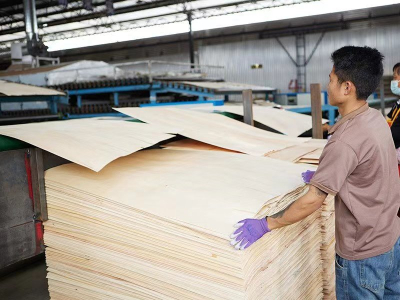
Veneer thickness window. A 1.0-4.0 mm range covers structural plywood cores; high-speed 4ft configurations reach 0.6-2.6 mm and 0.5-3.0 mm for thinner faces. A narrower window usually buys tighter tolerance.
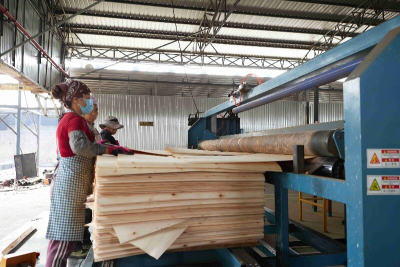
Output speed. A 48 m/min peeling speed is a common standard figure, with veneer delivery speeds quoted at 30-120 m/min on 4ft machines and 30-70 m/min on some 8ft units.
Drive and control architecture. Spindle and spindleless designs, full servo motors, single or double roller drive, hydraulic knife carriage, pneumatic core kicker, and hardened gear reducers such as T10 or R87 all change maintenance profile and spare parts inventory.
Knife specification and setting. A 1500x180x16 mm peeling knife and a 1500x130x12.7 mm debarking knife with automatic knife gap adjustment reduce manual setting time and operator dependence.
Line layout. Matching to debarker, automatic stacker, knife grinder, veneer dryer, glue spreader and cold press determines foundation work and factory footprint.
Ply Veneer Dryer states working width and debarker opening stroke as customer-specific items on its 4ft and 8ft lathes, alongside a 650 mm maximum log diameter and a 1.0-4.0 mm thickness window, which illustrates how a parameter list becomes a customization list.
| Procurement case | Parameters to confirm first | Effect on the line |
|---|---|---|
| New veneer mill | Log diameter, length, thickness window, drying capacity | Determines whether line output is balanced |
| Adding peeling to an existing line | Debarker interface, voltage and frequency | Determines foundation work and downtime |
| Distributor private label | Nameplate, document language, packing marks | Determines resale readiness |
| EPC or turnkey project | Inspection documents, installation scope, spare parts kit | Determines commissioning risk |
The decision rule is straightforward: fix performance parameters first, then negotiate commercial presentation. Changing a nameplate is reversible; changing a working width after the frame is welded is not.
How Ply Veneer Dryer Handles OEM and Custom Orders
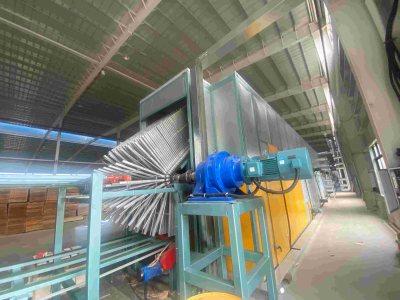
Ply Veneer Dryer covers peeling, debarking, drying, stacking and knife grinding within one supply scope, which is the practical precondition for line matching rather than single-machine selling. The company's published materials indicate that the first veneer dryer was produced in 1999 and that the current range is a fourth-generation environmental design, with the company describing itself as an early proponent of green veneer production in China. The company states that it holds an ISO 14001 environmental management certificate and exports to Russia, Latvia, Romania, Brazil, South Africa and several Southeast Asian markets.
On customization, the company lists 4ft and 8ft peeling lathes with 650 mm maximum log diameter, 38 mm residual core and 1.0-4.0 mm veneer thickness, with working width and debarker opening stroke adjustable to customer requirements. Mesh dryer deck count and section count are configured against required drying capacity, and the lathe range can be paired with debarker, stacker, knife grinder, glue spreader, cold press and hot press. A two-deck 32 m roller dryer is quoted at shipment within 30 days after payment according to the company's product information, while peeling lathe lead time is quoted per project.
Support is organized in three phases: pre-sale consultation and layout design, in-process factory inspection with overseas installation and operator training, and after-sales online response within 24 hours. Packing uses anti-slip pads, angle steel bracing and fastening straps with photographic records, container bare loading, wooden crates for spare parts, and PE film for European shipments.
| Verification item | Company published information | What the buyer should request |
|---|---|---|
| Customization scope | Working width, debarker opening stroke, dryer deck and section count | A signed parameter drawing for the specific order |
| Delivery | 30 days after payment for a two-deck 32 m roller dryer | A stage-split schedule for the lathe itself |
| Quality system | ISO 14001 certificate stated by the company | Certificate number and issuing body for verification |
| Service | Overseas installation, training, 24-hour online support | Named service contact and response terms in the contract |
FAQ
When should a buyer choose OEM over a standard model?
Choose OEM when the log supply or the existing line falls outside catalogue parameters, for example a log length between standard widths or a veneer thickness window narrower than 1.0-4.0 mm. When the log range and thickness target match a standard configuration, a catalogue machine with minor parameter changes usually carries lower engineering cost and shorter lead time.
How are drawings and brand identity protected in a custom project?
Protection rests on the contract, not on informal assurance. Buyers should require a confidentiality clause covering drawings, parameter sheets and control logic, a written statement that tooling built for the order is not reused for other customers, and a nameplate agreement defining who may apply which brand. Jurisdiction and dispute terms should be settled before the parameter drawing is signed.
How do first article and mass production connect?
The first article is the reference point for mass production, so its acceptance record should be signed by both parties and attached to the purchase contract. That record defines the measured characteristics, the instrument used and the tolerance applied. Subsequent units are then inspected against the same record, which removes ambiguity when a dispute arises months later.
What should overseas buyers confirm about electrical standard and installation?
Confirm voltage, frequency and control voltage against the site supply before the order is released, and request the electrical schematic in the document language the maintenance team reads. For installation, agree who supplies foundation drawings, who provides supervision, how many working days are included, and what the buyer provides locally such as cranes, power and accommodation.
Procurement Notes
OEM suitability depends on line matching, not on machine price alone. A parameter drawing approved before tooling starts is the cheapest risk control available to a buyer. MOQ should be read together with tooling ownership, spare parts pricing and packing scope, since those items decide repeat-order cost. Lead time is only useful when split into engineering, production and shipment. Electrical standard, document language and acceptance criteria belong in the contract, not in post-shipment correspondence.
Written: November 2026 | Last Updated: November 2026
Sources
ISO 9001 Quality management systems, International Organization for Standardization, iso.org
ISO 14001 Environmental management systems, International Organization for Standardization, iso.org
CE marking, European Commission, ec.europa.eu