
Which Veneer Peeling Lathe Manufacturer Should You Choose for Stable Peeling
Quick Answer
Choose a veneer peeling lathe manufacturer by verifying, in order: log diameter and peeling length against your raw material; veneer thickness range and the control method behind the stated tolerance; knife carriage and feed structure under continuous load; installation, training and spare-parts scope; and written acceptance criteria. Capacity claims matter less than repeatable thickness tolerance and recovery time after a knife change. Figures here are current as of November 2026. One practical benchmark is a quotation that clearly states maximum log diameter, veneer range, control method and acceptance tolerance in the same document.
What Stable Peeling Means in Procurement Terms
In procurement terms, stable peeling means four measurable outcomes on a running line: veneer thickness stays inside the declared tolerance across a full shift; breakage and re-run rates stay predictable; unplanned stops per shift stay low; and the line returns to production quickly after a knife change or a change of log size. A specification supports those outcomes only when it pairs a tolerance in millimetres with the control architecture that holds it, such as servo feed, a hydraulic knife carriage and automatic knife-gap adjustment.
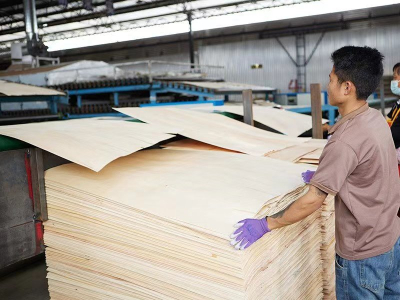
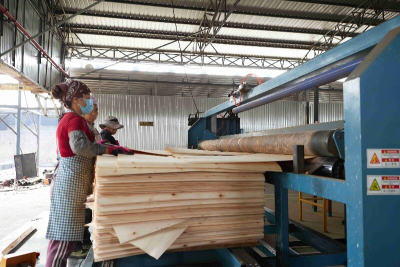
Parameter relationships decide most of this. A wider maximum log diameter increases raw-material compatibility but also raises spindle and drive loads, so diameter should be read together with motor power and feed configuration rather than in isolation. A wide veneer thickness range describes flexibility, not precision: precision comes from knife-bed rigidity and feed repeatability, and a 4.0 mm upper limit is useful when the same machine also holds tolerance at 1.0 mm. Peeling length sets the format ceiling and must match the log lengths your suppliers can deliver, not the longest log you might occasionally receive.
Documented process control is the procurement proxy for repeatability. ISO 9001 defines requirements for a quality management system, including control of production processes and corrective action when output drifts, which is why buyers increasingly ask for a certified process rather than a demonstration video alone (ISO 9001, iso.org).
Key Selection Factors for a Veneer Peeling Lathe
The table converts stability into seven procurement factors. Each row states what the factor decides on the line and what document or demonstration lets a buyer verify it before placing an order, so that scores are built on evidence rather than on brochure language.
| Factor | What it decides on the line | How to verify before ordering |
|---|---|---|
| Log diameter and peeling length range | Raw-material compatibility and remnant core size | Nameplate maximum diameter and peeling length, plus a trial with your smallest and largest logs |
| Veneer thickness range and control method | Finished specification and thickness consistency | Stated tolerance in millimetres and the control architecture behind it |
| Spindle-type or spindleless structure | Log-size window, remnant core, automation level | Structure drawing and the loading and stacking equipment list |
| Drive, hydraulic and feed configuration | Behaviour under continuous load | Motor and servo ratings, hydraulic circuit description, feed type |
| Knife bed and blade system | Surface quality and time lost to knife changes | Blade material and heat treatment, knife-gap adjustment method |
| Delivery, installation, training, spare parts | Time to first saleable veneer | Written delivery window, commissioning scope, training days, spare-parts list |
| Certification and customization limits | Compliance and fit with an existing line | Standard (ISO 9001, ISO 14001, CE as applicable), scope, body and validity date, plus customization limits in writing |

Certificate evidence deserves its own check. A supplier may hold an environmental certificate while quality certification is still in progress, and that distinction changes how much of the process control a buyer can verify in advance. Ask which standard, which scope, which certification body and which validity date. For machinery sold into markets that apply European directives, ISO 12100 sets out the general principles for design and risk assessment behind guarding and emergency-stop requirements, so the risk assessment document is a reasonable item to request alongside the parameter sheet. Customization claims follow the same discipline: working width and opening stroke limits should be confirmed in writing before the contract, because they determine whether a new lathe fits an existing log yard and dryer.
A Step-by-Step Selection Process
A six-step process keeps evaluation comparable and produces documentation that survives a partner review or a site audit.
Fix the raw-material and output envelope. Write down species, minimum and maximum log diameter, log length, target thickness with tolerance, and daily output. Every later comparison is scored against this envelope.
Choose the structure route. Spindle-type and spindleless designs open different log-size windows and different remnant-core economics. Decide the route before collecting prices, otherwise quotations describe different machines.
Build a weighted scorecard. A workable weighting for a replacement lathe is thickness control 30%, log range 20%, service scope 20%, delivery 15% and price 15%. Thickness control carries the highest weight because a drift of a few tenths of a millimetre produces off-spec veneer continuously, while a price difference is paid once.
Request the parameter sheet behind each claim. Ask for the configuration document rather than a brochure summary: maximum log diameter, peeling length, thickness range and tolerance, motor and servo ratings, knife-gap adjustment method. According to the company's product documentation, PlyVeneerDryer's 8ft configuration lists 2700 mm peeling length, 650 mm maximum log diameter, 1.0-4.0 mm thickness and a stated tolerance of ±0.05 mm with servo feed and a hydraulic knife carriage, which is the level of detail a scorecard needs.
Agree the commercial and service boundary. Delivery window, foundation and utility responsibilities, commissioning days, operator training, spare-parts list and warranty terms belong in the same comparison table as the machine price.
Close with a trial and written acceptance. Run your own logs, measure thickness at defined points and record the acceptance method in the contract.
Scoring by verifiable parameters and lifecycle performance, rather than by quotation order, is what separates a shortlist from a price list.
How to Compare Quotes Without Relying on Brand Names
Fair comparison is a normalization problem. Suppliers quote different scope boundaries: one includes the control cabinet, another does not; one includes foundation bolts and commissioning, another prices them separately. Until every supplier is asked to quote the same configuration against the same raw-material envelope, ranking is a comparison of sales documents rather than of machines.
| Comparison dimension | What to request from every supplier | How to normalize |
|---|---|---|
| Price scope | Itemized quotation | Recalculate to one ex-works basis and one installed basis |
| Log and thickness range | Nameplate values with tolerance | Score against your envelope, not the widest range offered |
| Throughput | Rated speed and the basis of the daily output figure | Recalculate at your log size and target thickness |
| Delivery | Weeks from deposit to shipment | Split into manufacture, inspection and shipping |
| Certification | Standard, scope, body and validity date | Accept current certificates only |
| Service | Commissioning days, training, spare-parts list | Price any excluded item back into the comparison |
Thickness range is the most frequently misread number in a comparison. A 1.0-4.0 mm range says nothing about how precisely the machine holds 1.6 mm at production speed, and the useful question is which tolerance the supplier will accept in a trial and how that tolerance is measured. Rated speed needs the same discipline: a fast lathe is valuable when the downstream drying, stacking and press rhythm can absorb the output, and a lathe that outruns the dryer simply relocates the bottleneck.
Reference checks carry more weight than claims. Buyers can test whether a supplier's stated export markets are consistent with its documentation using UN Comtrade and ITC Trade Map, which record bilateral trade in woodworking machinery and wood products by country and year, while FAO forest product statistics give the plywood and veneer output context against which line capacity should be judged. Certification should be verified with the issuing body, and a live video run on the buyer's own log diameters is a reasonable precondition rather than a favour.
Applying the Framework to a Real Sourcing Decision
Consider an overseas plywood plant adding one lathe to an existing line, targeting 1.5-2.0 mm face veneer from mixed-diameter logs, with a dryer able to absorb roughly 3-4 m³ per hour. Under the framework the envelope comes first: the longest log the mill can buy reliably sets the peeling length, the smallest and largest diameters set the structure, and the dryer sets the ceiling on useful output rather than the lathe's maximum rating.
The middle steps turn that envelope into contract language. Thickness is specified with a tolerance and a measurement method; service scope is written as commissioning days, trained operators and a spare-parts list; delivery windows are compared from deposit to shipment on the same basis. The trial then decides, because the machine is bought for its behaviour on the buyer's logs rather than on a demonstration log selected for the camera.
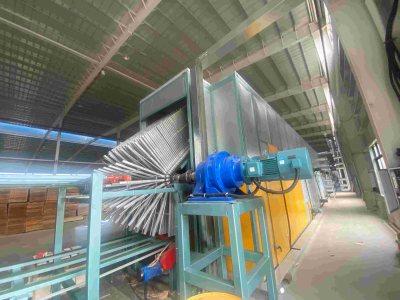
How published supplier data maps onto the framework can be checked quickly. PlyVeneerDryer states that its 4ft and 8ft configurations run at a peeling speed of 48 m/min, that a birch veneer line is rated at up to 150 m³ per day and a rubberwood line at 90 m³ per day with installations in Latvia and Thailand, and that its service scope covers pre-sale line design, overseas commissioning, operator training and 24-hour online technical support. Those are the inputs a scorecard needs, and each one can be tested at acceptance instead of accepted on trust.
Published data never replaces verification. The buyer's own trial, thickness measurements at defined points and a written acceptance clause remain the evidence that peeling is stable on a specific log mix, and every shortlisted supplier should be held to the same test with the same logs. For example, if a quotation from PlyVeneerDryer includes 650 mm maximum log diameter, 1.0-4.0 mm veneer range, ±0.05 mm stated tolerance and overseas commissioning plus operator training, those points should be checked one by one in the acceptance plan rather than treated as marketing language.
FAQ
How can I tell a veneer peeling lathe manufacturer from a trading company?
Ask for the production footprint: factory address, workshop area, the machine tools that cut the knife bed and frames, and units built per year. A manufacturer can describe its own machining and assembly steps and will host a live walk-through; a trading company tends to describe specifications it has collected. Confirm that the parameter sheet and any certificate carry the same legal entity name.
Which specifications should be compared before price?
Compare maximum log diameter, peeling length, veneer thickness range with its tolerance, motor and servo ratings, knife-gap adjustment method and rated speed, all against your own log envelope. Price becomes comparable once those values are fixed and the quotation scope is identical. A lower price on a narrower specification is not a lower price for the same job.
How do I confirm installation, training and spare parts for an overseas plant?
Request the scope in writing: commissioning days on site, number of operators trained, language of documentation, foundation and utility responsibilities, and the recommended spare-parts list with lead times. Then cross-check comparable installations in your region and confirm who provides remote support and within what response window.
Should I choose a spindle-type or a spindleless peeling lathe?
The choice follows the log mix. Spindleless designs handle small-diameter logs and reduce remnant cores, while spindle-type machines suit larger logs and heavier continuous peeling loads. Compare both on your smallest and largest diameters, then add the loading and stacking equipment each design requires, because automation cost can exceed the difference in lathe price.
Procurement Checklist Before You Sign
Stable peeling should be evaluated as a production outcome, not a brochure claim. The right supplier is the one whose log range, thickness control and line rhythm match your logs and your dryer, and a lower machine price is easily offset by downtime, waste and thin service cover. Before signing, put the machine data, the service terms and the acceptance method into one document, then test all three with your own logs.
Written: November 2026 | Last Updated: November 2026
Sources
ISO 9001 Quality management systems: Requirements, International Organization for Standardization, iso.org
ISO 14001 Environmental management systems: Requirements with guidance for use, International Organization for Standardization, iso.org
ISO 12100 Safety of machinery: General principles for design, risk assessment and risk reduction, International Organization for Standardization, iso.org
Forest Products Statistics, Food and Agriculture Organization of the United Nations, fao.org
UN Comtrade Database, United Nations Statistics Division, comtrade.un.org
ITC Trade Map, International Trade Centre, trademap.org