
Calculate Veneer Dryer Shifts Before Six Deck Power
For a plywood plant targeting 15–18 m³/h, the primary focus shouldn't be a six-deck dryer's power. Instead, prioritize production time. Veneer dryer selection hinges on actual shift output, veneer thickness, incoming/target moisture, heat source, labor, and total drying cost. Deck count is crucial, but it's just one part of a complete Veneer Drying System.

Start With Shift Output Before Discussing Power
For any plywood veneer drying project, hourly capacity gains meaning only after conversion to shift and daily output:
Required production = hourly target × actual operating hours
| Operating schedule | Output at 15 m³/h | Output at 18 m³/h |
|---|---|---|
| 8 hours | 120 m³ | 144 m³ |
| 16 hours | 240 m³ | 288 m³ |
| 24 hours | 360 m³ | 432 m³ |
This calculation reframes procurement. A plant drying 120–144 m³ in one shift needs different equipment than one expecting 360–432 m³ continuously. For a six-deck plan, calculate power after defining daily output, moisture reduction, and working conditions.
What Existing Shine Machinery Models Show
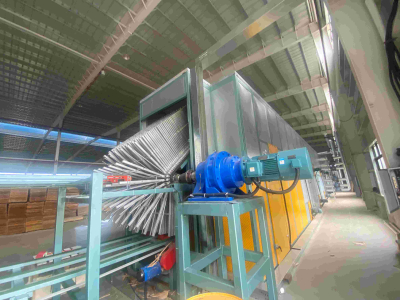
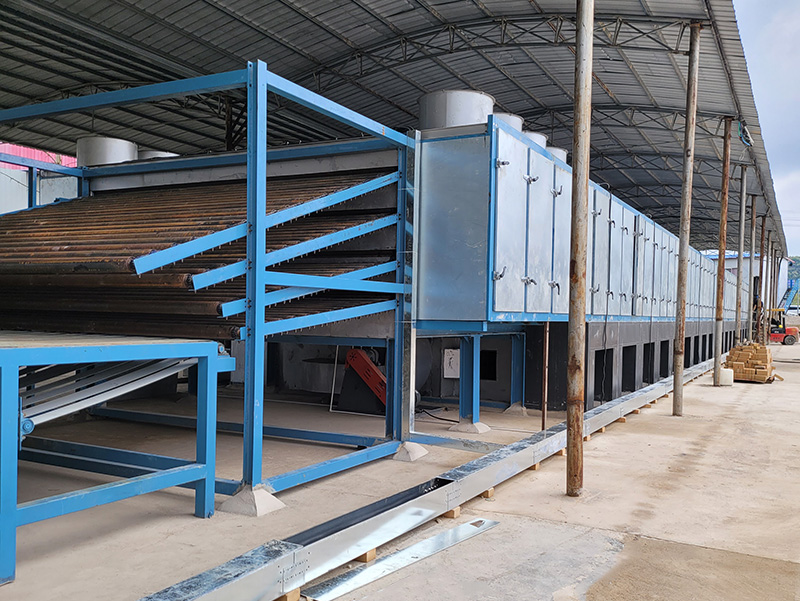
Shine Machinery product data shows capacity isn't simply proportional to deck quantity. Our single-deck roller veneer dryer (3m width, 16m heating area) processes 0.6–8mm veneer at 0.5–0.7 m³/h, reducing moisture to 10%. Comprehensive drying cost: USD 6–12/m³ (labor, fuel, electricity). The Low Cost Veneer Dryer Machine (3m width, 0.8–8mm veneer, 32m heating area) has 50–60 m³/day capacity. Our four-deck roller dryer, rated at 120 m³/day, handles 0.6–8mm veneer, drying fresh veneer to 8–10% moisture, using a 10-ton, 6 million kcal/h biomass burner. These figures are configuration-specific; they shouldn't be generalized to a universal six-deck power number without matching operating schedules and drying targets.
Compare Capacity With Moisture Conditions
Veneer dryer designs serve distinct production needs. Shine Machinery’s vertical dryer data confirms power, capacity, and moisture targets vary by model. Crucially, capacity and power aren't directly proportional. FBH30-13 and FBH30-20, for example, differ in capacity, power, size, labor, and final moisture. Thus, a six-deck Veneer Drying System requires engineering as a complete line, not simple estimation from other models.
| Configuration | Capacity | Moisture target | Power or heat information | Cost information |
|---|---|---|---|---|
| Single deck roller dryer | 0.5–0.7 m³/h | Down to 10% | Biomass burner, other options available | USD 6–12/m³ |
| Low Cost Veneer Dryer Machine | 50–60 m³/day | Not separately listed | Biomass burner, other options available | Not separately listed |
| Four deck roller dryer | Around 120 m³/day | Fresh veneer to 8–10% | 10 ton biomass burner, 6 million kcal/h | USD 12/m³ |
| Vertical FBH30-13 | 2 m³/h | Fresh veneer to 0–5% | Total power 15 kW, fuel 200 kg/h | Less than USD 8/m³ for vertical dryer range |
| Vertical FBH30-20 | 1.2–1.5 m³/h | Fresh veneer to within 20% | Total power 36.3 kW | Less than USD 8/m³ for vertical dryer range |
Where Vertical Veneer Dryer Fits
A vertical veneer dryer suits concerns about floor space, loading, and comprehensive drying costs. Shine Machinery’s vertical equipment uses three-dimensional veneer loading, occupying two-thirds the area of a roller dryer, with a countercurrent hot-air flow drying cycle. These specifics are crucial, as plant layout and labor flow directly impact per-cubic-meter costs. For instance, the FBH30-13 model has 15 kW total power and 200 kg/h fuel, while the FBH30-20 lists 36.3 kW and needs three workers. Other vertical models specify two workers per shift and a 900,000 kcal hot-air stove, with length customized to output.
Separate Electrical Power From Drying Cost
Don't confuse electrical power consumption with comprehensive drying costs. Electrical power relates to connected loads (fans, motors, blowers). Comprehensive drying cost, however, covers a broader operational picture. Our single-deck roller dryer costs USD 6–12/m³ (labor, fuel, electricity). The four-deck roller dryer is USD 12/m³. Vertical dryer options are under USD 8/m³. These are configuration-specific operating references, not direct substitutes for six-deck electrical load calculations. A practical procurement brief should clearly outline:
Target m³/h output and operating hours
Veneer thickness range
Incoming and final moisture targets
Heat source preference (e.g., biomass burner)
Electrical loads for components
Workers per shift
Expected comprehensive drying cost per cubic meter
How To Write A Better Six-Deck Procurement Brief
For a 15–18 m³/h target, buyers must first specify actual daily production: 120–144 m³ per 8-hour shift, 240–288 m³ per 16-hour day, or 360–432 m³ for 24-hour operation. Only then should suppliers calculate dryer length, heat source, deck arrangement, and electrical load. This approach benefits buyers seeking a China veneer dryer manufacturer. Comparable quotations demand identical throughput, veneer thickness, and moisture reduction. Otherwise, a lower-kilowatt offer might seem appealing but could be for a lighter drying duty.

Final Buying Takeaway
Plan a six-deck veneer dryer project based on production demand, not just deck count. Shine Machinery offers diverse roller and vertical configurations: from 0.5–0.7 m³/h single-deck to 120 m³/day four-deck roller drying, and vertical models with clear power values. For effective plywood veneer drying planning, first calculate shifts, define moisture targets, then match the entire Veneer Drying System to your required daily output. Review our related equipment at www.veneersdryer.com and compare models against your schedule before requesting a quotation.
FAQs
Can six-deck veneer dryer power be calculated by multiplying another model?
No. Capacity, power, veneer thickness, moisture targets, heat source, and dryer length all influence the result. Calculate six-deck specifications based on actual operating requirements.
Why calculate shifts before choosing a veneer dryer machine?
Because 15–18 m³/h can mean 120–144 m³ per 8-hour shift or 360–432 m³ during 24-hour operation. The daily target dictates equipment scale.
Is a Vertical Veneer Dryer suitable for limited factory space?
Our vertical equipment uses three-dimensional loading, occupying about two-thirds the area of a roller dryer, ideal for space-constrained layouts.
What cost range is listed for Shine Machinery veneer drying equipment?
Our single-deck roller dryer costs USD 6–12/m³ (comprehensive). Four-deck is USD 12/m³. Vertical dryer options are under USD 8/m³.
What information should be prepared before requesting a quotation?
Prepare target m³/h, daily operating hours, veneer thickness, incoming/target moisture, heat source preference, labor expectations, and available installation space.