
Vague Roller Diameter Can Hide Veneer Dryer Conveying Risk
A veneer dryer machine quotation can look persuasive when it lists output, length, heating method, and price. Yet one small mechanical detail can change the whole purchasing judgment: roller diameter. When a model such as GTH30-20 is discussed without clear roller diameter, roller spacing, roller quantity, and transmission arrangement, the long-term conveying risks might be underestimated. For buyers comparing a Low Cost Veneer Dryer, the real question isn't just “How much does it cost?” but “What exactly is moving the veneer through the dryer, at what speed, and under what drying conditions?”

Why Roller Diameter Should Never Be Overlooked
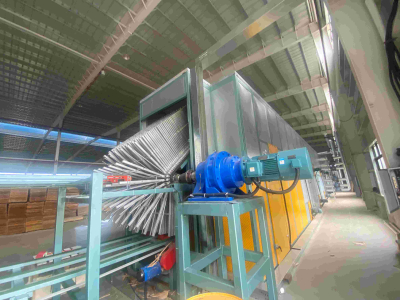
In plywood veneer drying, the conveying structure profoundly affects how veneer sheets are supported and moved through heating and cooling sections. Roller diameter is a key part of that structure, so it needs to be clearly stated in the technical specifications, not merely assumed from machine length, capacity, or price.
Shine Machinery’s Rollers for Veneer Dryer Parts page lists roller diameters of 89 mm and 102 mm, roller distances of 180 mm and 330 mm, and roller lengths of 3000 mm, 3750 mm, 4500 mm, and 6000 mm. These figures truly highlight why a serious veneer dryer machine comparison should include more than just a headline output figure.
For GTH30-20 or any other quoted model, an unclear roller line item should become a purchasing inquiry. It doesn't automatically mean the dryer is unsuitable, but it does signal that the buyer doesn't yet have enough conveying data for a fair technical comparison.

Considering Roller Diameter Alongside Speed and Spacing
Roller diameter only makes sense when considered alongside the full Veneer Drying System specification. Spacing, quantity, working width, veneer thickness, belt structure, heating sections, cooling sections, and transmission speed all influence how the equipment is evaluated.
A useful example is Shine Machinery’s 20 m 1 Deck Mesh Belt Dryer Machine, model Shine-20. Its published parameters include:
| Parameter | Shine-20 specification |
|---|---|
| Working width | 3000 mm |
| Layers | 1 deck |
| Heating section | 6 sections × 3000 mm = 18000 mm |
| Cooling section | 1 section × 2000 mm = 2000 mm |
| Transmission speed | 1–30 m/min |
| Drying thickness | 0.18–0.24 mm |
| Initial moisture content | 60–80% |
| Final moisture content | 12% |
| Mesh | 20 mm × 25 mm |
| Roller diameter | 89 mm |
| Roller space | 1000 mm |
| Roller quantity | 65 pcs |
| Heating medium | Steam or thermal oil |
This example clarifies one thing: an 89 mm roller diameter is not a standalone conclusion. It is an integral part of a defined mesh-belt conveying and drying configuration.
Mesh Belt vs. Roller Dryers: Distinct Specifications
Buyers sometimes compare dryer quotations as if every conveying structure operates on the same logic. This often leads to incorrect assumptions. A mesh-belt dryer, a roller dryer, and a Vertical Veneer Dryer should each be evaluated based on their own specific parameter sheets.
The WDH-31-30 Veneer Mesh Belt Dryer lists a working width of 3100 mm, 3 decks, 14 heating sections × 2000 mm, 1 cooling section × 2000 mm, 1–30 m/min transmission speed, 0.2–6 mm drying thickness, 25 × 32 mm mesh, 89 mm roller diameter, 1000 mm roller space, and 120 pcs roller quantity. Its heating medium is listed as a waste wood burner.
Compared with Shine-20, the WDH-31-30 uses the same 89 mm roller diameter and 1000 mm roller space, but the deck number, roller quantity, working width, heating arrangement, mesh specification, and veneer thickness range are different. That’s exactly why buyers should avoid judging a veneer dryer machine by one number alone.
Conveying Stability: More Than Just Mechanics
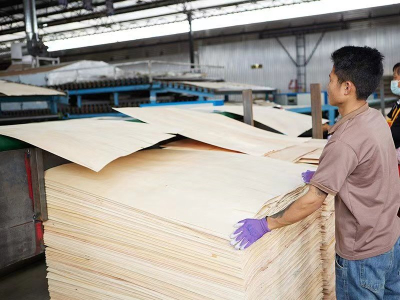
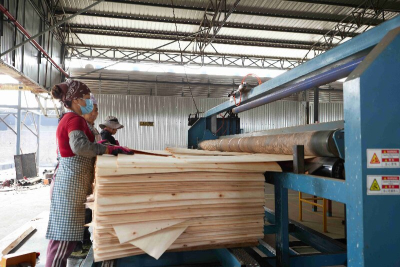
Drying veneer isn't just a mechanical conveying task. The drying outcome also hinges on heat exchange, hot-air distribution, temperature, veneer thickness, incoming moisture, and transmission speed.
Shine Machinery describes its Heat Exchange System and Hot air Circulation System as using step-by-step heat transfer, with different heat-exchanger specifications by section. Hot air exchanges heat through the heat exchanger and is distributed evenly to the veneer. The described drying result includes uniform moisture content, flat veneer, no buckle or end waviness, freedom from splits, and a surface in good condition for gluing.
The same page describes an automatic electric control and frequency conversion system that can adjust transmission speed and temperature according to different veneer thickness and moisture content. For plywood veneer drying, this is crucial because speed and temperature aren't separate from conveying design; they work in tandem with the dryer structure.
Deciphering Low-Cost Veneer Dryer Quotations
A Low Cost Veneer Dryer may be a reasonable purchasing option when its specification is complete and suitable for the buyer’s production conditions. The real issue emerges when the price is transparent, but the mechanical and drying specifics are vague.
Before comparing GTH30-20 with another veneer dryer machine, procurement teams should request the following details in writing:
Roller diameter, roller spacing, roller quantity, and roller length;
Transmission speed range and transmission motor arrangement;
Supported veneer thickness and working width;
Mesh material, mesh dimension, and mesh size where a mesh belt is used;
Number and dimensions of heating and cooling sections;
Air pipe dimensions and air pipe quantity where applicable;
Heating medium or heat source;
Initial moisture content and target final moisture content;
Temperature control and frequency-conversion control details.
These aren't just technicalities. They define the actual Veneer Drying System being purchased. If the quotation doesn't include them, buyers might compare machines that look similar commercially but differ mechanically.
Integrating Heat Source with Overall Dryer Design
Heat source is another area where buyers should thoroughly review the full specification. Shine-20 lists steam or thermal oil. WDH-31-30 lists a waste wood burner. Other Shine Machinery product information describes a biomass burner that can burn crushed wood chips and tree bark directly as fuel, helping address waste accumulation in veneer and plywood factories while significantly reducing fuel costs.
This isn't to say every dryer must use the same heat source. It means the heat source, drying temperature, heat exchange, airflow, and conveying structure should be reviewed as one cohesive process. In plywood veneer drying, a lower initial purchase price might not be meaningful if the configuration doesn't genuinely match the veneer thickness, moisture target, production layout, or fuel conditions.
The Advantage of Transparent Specifications for Buyers
International buyers often search terms such as China veneer dryer manufacturer, China veneer dryer supplier, or China top veneer dryer factory when preparing a shortlist. While those searches can pinpoint potential suppliers, the ultimate comparison ought to be founded on dimensions, speed, heating structure, and moisture targets.
Shandong Shine Machinery Co., Ltd and Shine Machinery publish product parameters at www.veneersdryer.com, including examples where roller diameter, roller spacing, roller quantity, transmission speed, heating sections, cooling sections, mesh structure, and heating medium are listed together. This level of detail offers buyers a practical benchmark for asking more incisive questions.
The rule for buyers is simple: read the conveying specification before trusting the headline price. If roller diameter is vague, the long-term conveying risk of GTH30-20 or any other veneer dryer machine can be underestimated. A clearly defined Veneer Drying System gives buyers a stronger basis for comparing cost, configuration, and drying performance.
FAQs
Is 89 mm automatically the best roller diameter for a veneer dryer machine?
No. Shine Machinery product information lists 89 mm rollers in specific mesh-belt dryer configurations, while its roller parts page lists both 89 mm and 102 mm diameters. Roller diameter should always be evaluated with spacing, quantity, speed, veneer thickness, and the overall dryer structure.
Can GTH30-20 be judged by price and output only?
No. Price and nominal output alone do not adequately describe the complete conveying system. Buyers should request roller diameter, roller spacing, roller quantity, transmission speed, veneer thickness range, and heating arrangement before making a technical comparison.
What affects plywood veneer drying besides roller structure?
Important factors include veneer thickness, moisture content, transmission speed, drying temperature, heat exchange, hot-air distribution, heating sections, cooling sections, and the chosen heating medium or heat source.
Should every Low Cost Veneer Dryer use the same heat source?
No. Shine Machinery product examples illustrate different heat arrangements, including steam or thermal oil for Shine-20 and a waste wood burner for WDH-31-30. The heat source should be carefully matched with the full drying process requirements.
Why does roller spacing matter in a Veneer Drying System?
Roller spacing helps define how veneer is supported and conveyed through the dryer. It should be reviewed alongside roller diameter, roller quantity, belt structure, veneer thickness, and transmission speed.