
Do Not Automate Veneer Drying Before Balancing Labor
Factories looking to upgrade from manual handling to automatic infeed and stacking often focus solely on the new equipment. In plywood veneer drying, this can easily lead to a costly mismatch. A faster feeder, for example, won't necessarily increase daily output if the veneer dryer machine, discharge station, burner operation, or forklift movement can't maintain the same pace. A more effective approach is to calculate the entire Veneer Drying System as a unified production flow, considering the dryer’s actual capacity, target moisture, power consumption, available workshop space, and the remaining workers per shift.

Automation Must Follow the Dryer Rhythm
A veneer dryer machine should be assessed by more than just its headline capacity. In a real-world plywood veneer drying line, the operational rhythm encompasses wet veneer feeding, heating, cooling, discharge, stacking, burner operation, and material transfer. If any of these steps lags behind the dryer's output, the bottleneck simply shifts to another part of the line.

A useful planning rule to remember is:
Required infeed and outfeed rhythm ≥ dryer production rhythm
This principle is especially crucial when a factory is setting up a Veneer Drying System with fully automatic infeed and outfeed. While automation can reduce inconsistent manual handling, the investment's true value should be measured by dried cubic meters per shift, not just the number of workers removed from a single station.
Start With the Moisture Target and Model Data
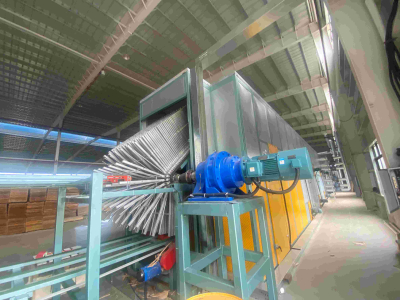
Shine Machinery provides various configurations that highlight why buyers must compare operating conditions carefully. A Vertical Veneer Drying Machine is typically organized into feeding, heating, cooling, and discharging areas. For effective line balancing, these four areas should be viewed as one interconnected Veneer Drying System.
| Configuration | Moisture condition | Capacity | Power or electricity | Labor note |
|---|---|---|---|---|
| FBH30-20 Vertical Plywood Veneer | Fresh veneer to within 20% | 1.2–1.5 m³/h | 36.3 kW total power | 3 workers; burner operator may also handle tasks such as forklift operation |
| FBH30-13 Wood Vertical Veneer Drying | Fresh veneer to 0–5% | 2 m³/h | 15 kW total power | — |
| 2-deck GTH30-36 roller dryer | Fresh veneer to about 10% | 50–60 m³/24h | About 65 kWh per hour actual consumption | — |
| 4-deck GTH30-36 roller dryer | Fresh veneer to about 8–10% | 110 m³/day | About 149 kWh per hour actual consumption | — |
This table also clarifies why a simple worker-count comparison isn't sufficient. One vertical configuration page, for instance, mentions that the equipment needs 2 workers per shift, whereas the FBH30-20 specification lists 3 workers. Staffing levels depend on model selection, site layout, duty allocation, and the overall production goal of the Veneer Drying System.
Balance Feeding and Stacking With Worker Duties
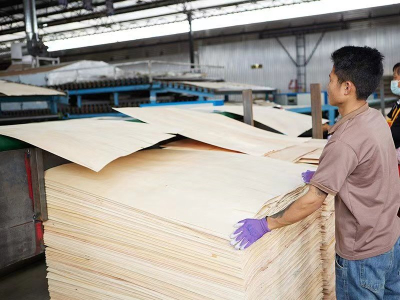
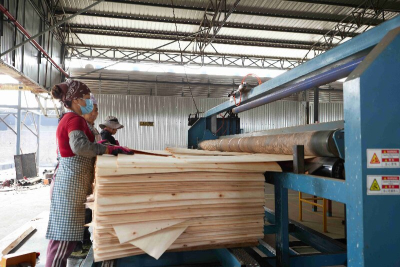
Before choosing automatic feeding or stacking, factories should map out a complete shift, from wet veneer arrival to dried veneer movement. In plywood veneer drying, the calculation needs to distinguish between dryer capacity and handling capacity.
A practical sequence for planning is:
Confirm the dried volume per hour or per shift at the specified final moisture content.
Determine the feeding rhythm necessary to keep the veneer dryer machine continuously supplied.
Ensure discharge and stacking capacity matches this same production rhythm.
List the workers still required for burner operation, forklift movement, monitoring, and material transfer.
Calculate the labor, fuel, and electricity costs per dried cubic meter.
The core labor formula is:
Labor cost per m³ = labor cost during the operating period ÷ dried volume during the same period
This calculation keeps the automation discussion grounded in practical terms. If a line adds automatic infeed but stacking remains too slow, the plywood veneer drying output may still be bottlenecked at discharge. If the burner operator also handles forklift tasks, as noted for the FBH30-20, that shared duty should be factored into the estimated labor cost per m³.
When a Vertical Veneer Dryer Fits the Workshop
A Vertical Plywood Veneer configuration can be particularly relevant when workshop space is a major constraint. Shine reports that a vertical core veneer dryer typically covers about two-thirds of the area required by a roller dryer. This vertical design also utilizes three-dimensional veneer loading, which is said to boost veneer loading capacity by 30–80% compared with other dryer types.
For buyers considering a vertical core veneer dryer as a small-footprint solution, the crucial question isn't merely whether the machine is compact. The true inquiry is whether the infeed, discharge, stacking, and remaining worker rhythm can effectively support the chosen output. Shine also notes that this equipment is assembled at the customer’s factory and can be installed according to specific site requirements, making detailed layout planning an integral part of the purchasing discussion.
When a Low Cost Veneer Dryer Supports Higher Daily Output
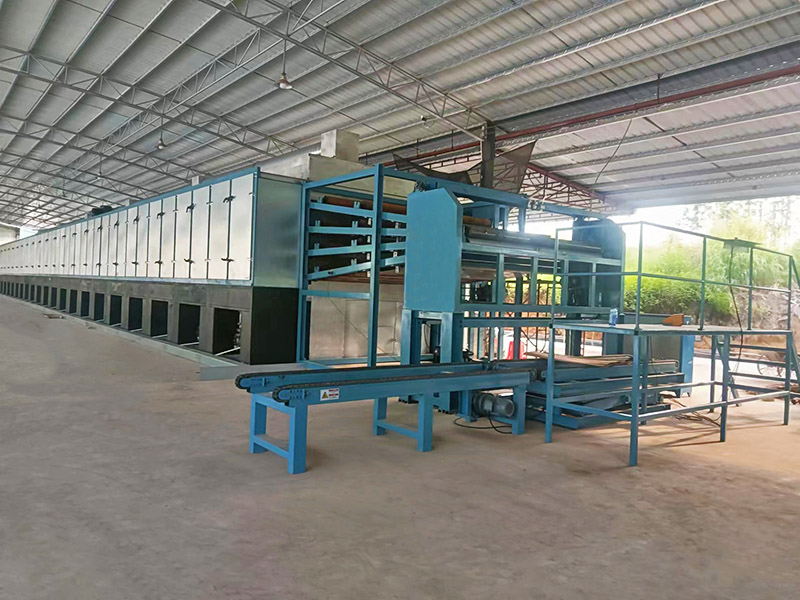
Roller systems cater to a different production range. The Low Cost Veneer Dryer Machine is presented as a 3m working-width roller type with a 32m heating area, 4m cooling area, capable of handling veneer thicknesses from 0.8–8mm, and offering a drying capacity of 50–60 m³/day. Its primary heat source is a biomass burner, though other options are available.
For higher-capacity Drying Veneer needs, the 4-deck GTH30-36 configuration boasts a 3.0m working width, 32m heating area, 4m cooling area, 0.8–8mm veneer thickness capability, and an impressive 110 m³/day drying capacity. Its drying temperature is adjustable from 140–200°C, with a temperature control accuracy of ±5°C. Actual electricity consumption for this model is about 149 kWh per hour.
These figures empower buyers to compare a Vertical Veneer Dryer and a Low Cost Veneer Dryer on consistent metrics: footprint, target moisture, hourly or daily capacity, electricity usage, and handling rhythm.
Calculate Drying Veneer Cost Before Buying Automation
Cost per cubic meter stands out as the clearest way to compare different veneer dryer machine configurations. It's important to remember that installed power and actual electricity consumption are not identical figures. For instance, the 2-deck GTH30-36 lists 92 kW total power but an actual electricity consumption of about 65 kWh per hour. The 4-deck GTH30-36, meanwhile, reports about 149 kWh per hour of actual consumption.
Two essential formulas for cost analysis are:
Electricity per m³ = electricity consumed during the period ÷ dried volume during the periodLabor per m³ = workers × paid hours × local hourly wage ÷ dried volume during the period
Fuel costs can be calculated similarly. For Drying Veneer projects, this methodology prevents misleading comparisons between different moisture targets. Drying fresh veneer to 0–5%, within 20%, about 10%, or approximately 8–10% each represents distinct operating conditions, so capacity figures should always be interpreted alongside their respective moisture targets.
Buyer Checklist for a Balanced Veneer Drying System
When discussing automation with a China veneer dryer machine manufacturer or supplier, buyers should prepare the following project data:
Required dried veneer volume per shift
Target final moisture condition
Veneer thickness and size range
Existing workshop space and layout limitations
Selected Vertical Veneer Dryer or roller dryer configuration
Feeding rhythm and stacking rhythm
Workers assigned to dryer-related duties
Electricity, fuel, and labor cost per dried m³
For factories seeking a top China veneer dryer machine factory, quantifiable production rhythm is far more valuable than a general promise of labor savings. The optimal automation decision is one that ensures feeding, drying, discharge, stacking, and worker duties all proceed at the same, balanced pace.
FAQs
How many workers does a Shine Vertical Veneer Dryer typically require?
The staffing needs depend on the chosen configuration. One vertical veneer dryer product page indicates 2 workers per shift, whereas the FBH30-20 Vertical Plywood Veneer specification lists 3 workers, noting that the burner operator might also handle tasks like forklift operation.
Why is it important to calculate automatic feeding and stacking in conjunction with worker rhythm?
Because the overall plywood veneer drying output relies on the entire Veneer Drying System. If feeding, discharge, stacking, burner operation, or material transfer cannot keep pace with the dryer's throughput, automating one point might not increase the total dried volume.
What are the listed capacities for Shine roller veneer dryers?
The 2-deck GTH30-36 roller dryer is rated for 50–60 m³/24h, while the 4-deck GTH30-36 configuration is listed at 110 m³/day.
Is a Vertical Veneer Dryer suitable for limited workshop space?
Shine states that a vertical core veneer dryer covers approximately two-thirds of the area of a roller dryer and uses three-dimensional loading to increase veneer loading capacity by 30–80% compared with other dryer types.
What's the most effective way to compare Drying Veneer costs?
Compare the labor, electricity, and fuel costs per dried cubic meter under the same operating period and target moisture content. This provides a more accurate basis for comparison than simply looking at worker count or headline capacity alone.