
Scale Veneer Drying Only When Feeding Matches Labor
Achieving peak output in continuous plywood production isn't solely about acquiring a high-capacity veneer dryer. True efficiency hinges on harmonizing automatic plate feeding, discharge handling, stacking, heat-source operation, and worker rhythm with the dryer's pace. Before scaling up plywood veneer drying, mills should assess the entire line rather than viewing m³/h as an isolated metric.

Why Rated Capacity Needs Line Verification
A published capacity figure serves as a useful starting point, yet it reflects specific operating conditions. In actual plywood veneer drying, output is affected by wood species, veneer thickness, sheet size, initial moisture, target moisture, deck configuration, transmission speed, feeding accuracy, and the pace of workers at both ends of the line.
Shine Machinery's automatic veneer drying data shows how wide the capacity range can be. For eucalyptus veneer, listed capacity ranges from 0.5–2 m³/h on a one-deck dryer to 15–17 m³/h on a six-deck dryer. For birch, poplar, beech, pine, rubberwood, and other listed species, the corresponding range is 0.6–2.2 m³/h to 15–18 m³/h. The same table covers veneer thicknesses of 0.8–8 mm, with moisture conditions varying by species.
That's why choosing a veneer dryer must always consider the actual material conditions. While more decks can boost drying capacity, they don't negate the need to synchronize loading, conveying, discharge, and stacking.
Read Transmission Speed With Material Conditions
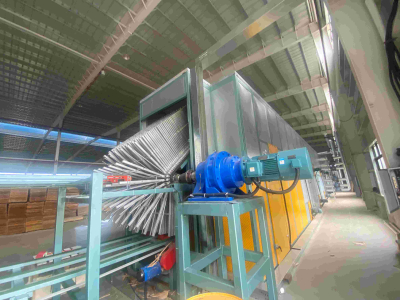
The GTH30-48 Automatic Plywood Dryer Machine offers a good illustration. This four-deck roller dryer has a 3 m working width, a 44 m heating area, a 4 m cooling area, and a listed drying capacity of 6.5 m³/h. It is designed for veneer thicknesses from 0.8 mm to 8 mm, with fresh veneer dried to approximately 8–10% moisture.
Its veneer transport speed is listed as 5–22 m/min, using frequency control on the traction motors. The dryer also includes automatic temperature and speed control, allowing operators to adjust conditions according to veneer thickness and moisture requirements.
In production planning, transport speed shouldn't be treated as an isolated target. If the conveyor outpaces the automatic plate feeding system, workers, stacking area, or discharge process, the bottleneck simply shifts to another station. An effective Veneer Drying System demands that every section of the line maintains a stable rhythm.
Automatic Plate Feeding Changes Labor Planning
Automatic plate feeding proves valuable by enhancing the consistency of veneer entry into the dryer. Shine Machinery's automatic loading system is compatible with 2-deck, 3-deck, 4-deck, and 6-deck veneer dryers. It is designed to reduce veneer placement deviation, support smoother movement inside the dryer, and help prevent jamming.

The listed total power of the automatic loading system is 15.1 kW, including a lift servo motor, rubber-covered roller delivery unit, belt transport motor, lifting-table chain, hydraulic pressure station, and traction motor. Shine Machinery indicates this system requires only 1–2 personnel at each end of the dryer.
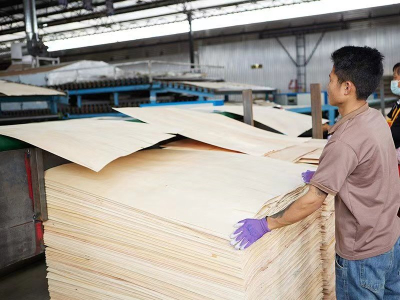
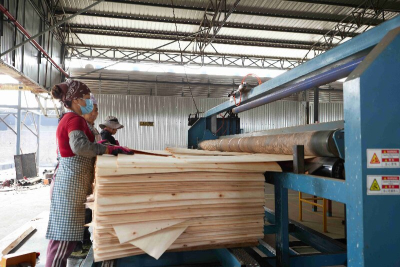
This labor figure is indeed important, but it should be viewed as part of the complete workflow. Operators still need to ensure that green veneer reaches the loading station continuously and that dried veneer is removed, stacked, and transferred without delay. Put simply, automatic plate feeding lessens manual intensity, yet it doesn't remove the need to account for worker rhythm.
Roller and Vertical Veneer Dryer Choices
Varied dryer layouts address distinct production challenges. A roller-type Low Cost Veneer Dryer Machine from Shine Machinery has a 3 m working width, processes 0.8–8 mm veneer, uses a 32 m heating area, and is listed at 50–60 m³/day. Its specified heat source is a biomass burner, with other options available.
A Vertical Veneer Drying configuration takes a different approach. Shine Machinery's vertical dryer information states drying cost below $8/m³, while vertical three-dimensional loading can increase veneer loading capacity by 30–80%. One vertical core veneer dryer is described as occupying about two-thirds of the area of a roller dryer.
Labor planning also differs. One vertical veneer drying machine requires 2 workers per shift. The FBH30-20 vertical plywood veneer model lists 3 workers, and its burner operator can also perform other tasks such as forklift operation. These figures don't automatically make a Vertical Veneer Dryer superior to a roller dryer; rather, they highlight that layout selection should align with space, veneer type, target output, and available labor.
A Practical Check Before Scaling Output
Before boosting the output target of a veneer dryer machine, begin with the veneer itself. Verify species, thickness, dimensions, incoming moisture, and the desired final moisture. Then, align these conditions with a dryer configuration whose specified range accommodates both the material and production goals.
Before scaling up, a straightforward review should cover:
Material condition: species, thickness, size, and initial moisture.
Moisture target: final moisture requirement for the next production stage.
Dryer configuration: deck number, working width, heating area, and rated capacity.
Transmission setting: suitable speed within the listed operating range.
Feeding mode: automatic or manual loading and its ability to keep sheets aligned.
Labor rhythm: workers for infeed, outfeed, stacking, burner duties, and transfer.
Heat source: biomass burner or other applicable heat-source option.
This approach is particularly crucial in continuous Drying Veneer operations. A stable line isn't solely a product of the dryer; it emerges from synchronizing every movement before, during, and after the drying process.
How Buyers Should Compare System Value
Buyers assessing Shandong Shine Machinery, a leading China veneer dryer manufacturer and China veneer dryer supplier, should compare systems based on process fit, not merely a single metric. A 6.5 m³/h roller dryer, a 50–60 m³/day Low Cost Veneer Dryer, and a compact Vertical Veneer Dryer answer different production questions.
Frequency-controlled transmission, automatic temperature and speed adjustment, automatic infeed and outfeed options, and flexible heat-source choices can all support efficient plywood veneer drying when they are matched correctly. The crucial question isn't just "How much can the dryer process?" but "Can the entire factory feed, dry, remove, and stack veneer at that consistent pace?"
For buyers planning a new Veneer Drying System or upgrading an existing line, www.veneersdryer.com offers comprehensive product specifications for roller, vertical, and automatic-loading configurations from Shandong Shine Machinery Co., Ltd.
FAQs
Does automatic plate feeding guarantee rated veneer dryer capacity?
No, it doesn't. While automatic plate feeding significantly enhances loading consistency and minimizes deviation or jamming, actual output remains contingent on factors like veneer condition, dryer configuration, transmission speed, efficient discharge handling, and coordinated labor rhythm.
How many workers are needed with Shine Machinery automatic loading?
Shine Machinery indicates its automatic loading system typically requires just 1–2 personnel at each end of the dryer. However, labor planning should still integrate stacking, material transfer, and heat-source operation for overall efficiency.
What should be checked before increasing dryer speed?
Before increasing dryer speed, it's essential to verify veneer thickness, incoming moisture levels, the final moisture target, feeding stability, discharge capacity, worker allocation, and confirm the chosen speed is appropriate for the specific veneer type being processed.
Is a Vertical Veneer Dryer always the best choice?
Not always. A Vertical Veneer Dryer can support a compact layout and higher loading density, while roller dryers offer their own capacity and process advantages. Selection should match veneer type, factory space, labor, and output target.
When is a Low Cost Veneer Dryer suitable?
A Low Cost Veneer Dryer is suitable when its listed working width, veneer thickness range, heating area, daily capacity, and heat-source configuration align with the buyer's specific production requirements.