
Stop Planning 110 m³ Drying by Output Alone
Often, a buyer initially focuses on a simple 110 m³/day target when discussing a veneer dryer machine, but daily output alone doesn't define a workable plywood factory plan. A practical project must translate this target into hourly throughput, operating hours, electricity consumption, biomass fuel, labor, veneer thickness, incoming moisture, and final moisture. For instance, Shine Machinery lists the GTH30-36 four-deck roller dryer at 5 m³/h, with 212.5 kW total power and about 170 kWh per hour of actual electricity consumption. If a buyer wants to evaluate a planning value such as 149 kWh/h, that number should be placed within the same shift model rather than treated as a stand-alone equipment specification.

Why a 110 m³ Target Needs a Shift Model
In veneer drying, several numbers must be kept distinct. Capacity describes volume per operating hour, total installed power refers to the rated electrical load of installed components, and actual electricity consumption details the power used during operation. A purchasing team also needs to define daily operating hours, fuel conditions, labor arrangements, and specific veneer requirements.
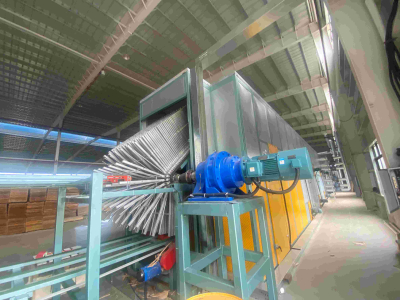
The difference is clear in the Shine Machinery GTH30-36 data. The machine boasts a 3 m working width, four decks, a 32 m heating zone, a 4 m cooling zone, a 0.6–8 mm veneer thickness range, fresh veneer dried to approximately 10% final humidity, wood waste heating material, 140–200°C adjustable drying temperature, and a 5 m³/h drying capacity. Its total power stands at 212.5 kW, while actual electricity consumption is about 170 kWh per hour. These figures are related, but they are not identical.
Convert Veneer Dryer Machine Capacity Into Hours
The initial calculation is quite simple:
Required operating hours = target daily output ÷ hourly drying capacity
For a veneer dryer machine 110 m³ per day project, the GTH30-36 calculation is:
110 m³ ÷ 5 m³/h = 22 theoretical operating hours
This result indicates why a 5 m³/h configuration can align closely with a 24-hour production target. However, it doesn't guarantee daily output under every condition. Actual performance hinges on veneer species, sheet size, thickness, incoming moisture, required final moisture, feeding stability, and overall plant operation.
| Shine Machinery dryer option | Published capacity | Theoretical time for 110 m³ |
|---|---|---|
| Two-deck 32 m roller dryer | 1.6 m³/h | 68.75 h |
| 40 m two-deck biomass dryer | 2.5 m³/h | 44 h |
| 48 m veneer drying machine | Around 70 m³/day | More than one daily-output cycle |
| GTH30-36 four-deck roller dryer | 5 m³/h | 22 h |
| Low Cost Veneer Dryer Machine | 50–60 m³/day | About 1.83–2.2 daily-output cycles |
This table underscores why buyers looking for a China veneer dryer manufacturer or China veneer dryer supplier shouldn't solely focus on a “110 m³/day” request. A more practical inquiry involves whether the chosen Veneer Drying System can truly achieve the necessary net output within the plant’s actual operational schedule.
Put 149 kWh/h and 170 kWh/h Into the Same Model
For the 5 m³/h GTH30-36 Veneer Dryer, the 22-hour shift model can effectively compare electricity assumptions.
Using the listed actual electricity consumption:
22 h × 170 kWh/h = about 3,740 kWh
Using a buyer’s planning assumption of 149 kWh/h:
22 h × 149 kWh/h = 3,278 kWh
While the 149 kWh/h figure is handy for internal budgeting, procurement teams ought to align it with the machine's final configuration before tallying up electricity costs. In a real plywood veneer drying project, electricity is only one component of the cost model. Shine Machinery lists the four-deck dryer’s comprehensive veneer drying cost at USD 12/m³, inclusive of labor cost, fuel cost, and electric power. Other Shine biomass dryer pages, including the 32 m two-deck roller dryer, 40 m two-deck biomass dryer, and 48 m veneer drying machine, state a composite drying cost of USD 6–12/m³.
Compare Roller and Vertical Veneer Dryer Options
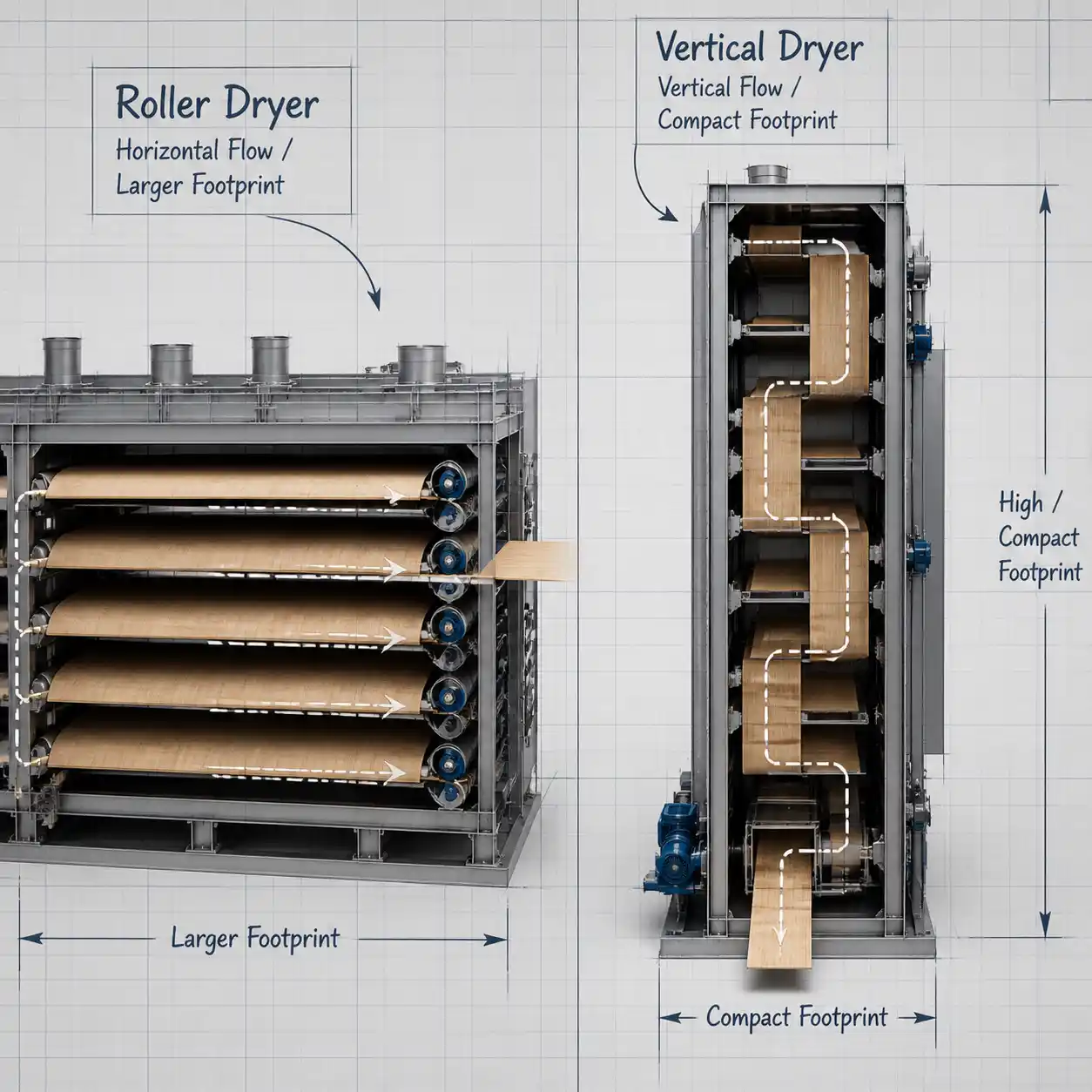
While roller dryers are frequently considered for continuous Drying Veneer in plywood production, they aren't the sole option. Shine Machinery also offers vertical dryer options for buyers who need to compare footprint, power, labor, moisture targets, and veneer type.
| Model | Output | Total power | Moisture specification | Labor |
|---|---|---|---|---|
| FBH30-13 | 2 m³/h | 15 kW | Fresh veneer dried to 0–5% | — |
| FBH30-20 | 1.2–1.5 m³/h | 36.3 kW | Fresh veneer to within 20% | 3 workers |
The FBH30-13 vertical dryer is specified with a 13 × 3 × 4 m machine size and 200 kg/h fuel consumption. The FBH30-20 model is listed at 20 × 7 × 4 m, with 36.3 kW total power and a requirement for 3 workers. Shine Machinery’s vertical dryer pages indicate a drying cost of less than USD 8/m³ for these product lines.
A vertical dryer is described as a tunnel-type core veneer dryer featuring feeding, heating, cooling, and discharging areas. It's primarily used for core plate, partial surface veneer, and bottom plate. Another vertical core veneer description highlights three-dimensional veneer loading and a footprint that's only two-thirds that of a roller dryer. Consequently, the Vertical Veneer Dryer merits consideration, especially when factors like floor area, core veneer handling, or processing thick veneer in a cut-first-then-dry method are crucial to the project.
When a Low Cost Veneer Dryer Fits the Production Plan
The Low Cost Veneer Dryer Machine is a roller veneer dryer with a 3 m working width, a 0.8–8 mm veneer thickness range, a 32 m heating area, a biomass burner heat source, and a 50–60 m³/day drying capacity. For a 110 m³/day goal, a single line of this type wouldn't meet the target within one daily cycle. Buyers might, therefore, consider multiple units, extended production times, or a system with higher capacity.
The 48 m veneer drying machine offers another reference point. Shine Machinery lists it with a 0.6–8 mm veneer thickness range, around 70 m³/day drying capacity, Q235B φ102 special shaft tube roller material, a biomass burner heat source, and an approximate USD 6–12/m³ composite cost. This offers a useful reference for buyers seeking a balance between lower daily-output systems and the 5 m³/h four-deck roller dryer.
Practical Checklist Before Selecting a Veneer Drying System
Before settling on a veneer dryer machine, buyers should formally outline their production model. A clear specification should cover incoming moisture content, target final moisture, veneer thickness, veneer dimensions, veneer type, required net m³/day, available operating hours, planned kWh/h, biomass fuel conditions, fuel-consumption assumptions, workers per shift, installation footprint, and acceptable veneer drying cost per cubic meter.
For those evaluating Shandong Shine Machinery Co., Ltd or Shine Machinery via www.veneersdryer.com, this specification-first strategy proves more dependable than simply requesting a single daily output figure. While search terms like China top veneer dryer factory, China veneer dryer manufacturer, and China veneer dryer supplier can aid in finding suppliers, the ultimate purchase decision must hinge on quantifiable parameters: capacity, shift duration, energy consumption, fuel type, labor requirements, moisture targets, and overall cost per cubic meter.
FAQs
Can one 5 m³/h veneer dryer machine theoretically produce 110 m³/day?
Yes. The calculation is 110 ÷ 5 = 22 theoretical operating hours. Actual output should be evaluated considering veneer thickness, moisture targets, feeding conditions, and shift operation.
Is 149 kWh/h the listed actual electricity consumption for the GTH30-36 dryer?
No. Shine Machinery lists the GTH30-36 with about 170 kWh per hour of actual electricity consumption and 212.5 kW total power. A 149 kWh/h value can be utilized as a buyer’s planning assumption.
What is the electricity use over 22 theoretical hours?
At 170 kWh/h, the total is approximately 3,740 kWh. At 149 kWh/h, the total is 3,278 kWh for the same 22-hour calculation.
How does a Vertical Veneer Dryer differ from a roller dryer?
Published vertical dryer data indicates differences in output, power, moisture targets, and labor requirements. Vertical dryers are typically used for core veneer, partial surface veneer, bottom plate, and materials with less stringent flatness requirements.
What cost range should buyers consider for plywood veneer drying?
Shine Machinery lists a USD 12/m³ comprehensive cost for the four-deck roller dryer and a USD 6–12/m³ composite cost on several biomass dryer pages. Vertical dryer pages state a drying cost of less than USD 8/m³.