
Veneer Dryer Automation Cuts Labor Exposure Before It Cuts Costs
Labor has become one of the least predictable cost factors in plywood and veneer production. Wages rise, experienced operators are harder to retain, and manual feeding or unloading can limit the capacity of an otherwise capable dryer. For many mills, veneer dryer automation is no longer viewed only as a way to improve speed. It is increasingly used to reduce dependency on manual handling, stabilize daily output, and make production planning less vulnerable to labor shortages.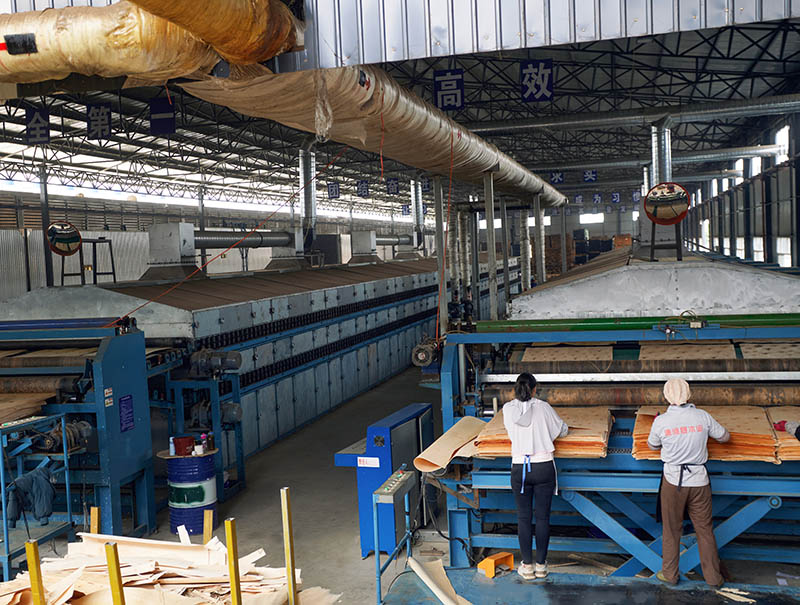
For international buyers comparing a China veneer dryer manufacturer, a China veneer dryer supplier, or a supplier positioned as a China top veneer dryer factory, the key question is practical: how does an automatic loading and unloading system change the economics of the drying line? The answer is not simply “fewer workers.” The stronger value lies in continuous feeding, fewer interruptions, safer handling of delicate wet veneer, and more predictable dryer utilization.
Why Manual Veneer Handling Becomes a Hidden Cost
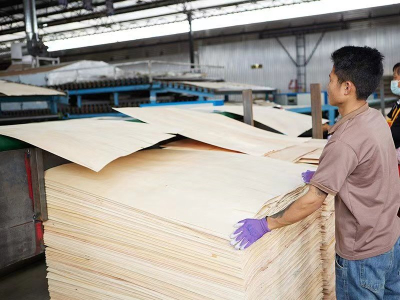
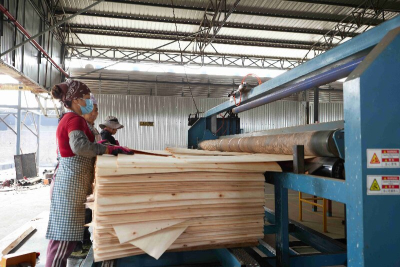
Manual veneer handling often looks manageable when a factory is running at moderate volume. Operators lift, separate, align, feed, collect, and stack sheets throughout the shift. The problem appears when production needs to stay continuous for long hours. A veneer dryer is designed around stable thermal conditions and steady material flow, but manual handling introduces uneven rhythm.
Common weak points include:
Inconsistent feeding speed, which causes the dryer to run below its intended utilization.
Sheet overlap or gaps, which can disturb drying uniformity and downstream sorting.
Misalignment at the infeed, increasing the risk of jams and production stops.
Manual unloading delays, especially when output speed exceeds the team’s stacking pace.
Operator fatigue, which becomes more visible during long shifts or high-temperature working environments.
Wet veneer is also fragile. Sheets may stick together, fold, tear, curl at the edge, or shift during manual transfer. Every small handling error affects more than one sheet; it can interrupt the whole line. This is why veneer dryer automation is often evaluated first around feeding and unloading, where manual variability is most obvious.
What a Fully Automatic Loading and Unloading System Changes
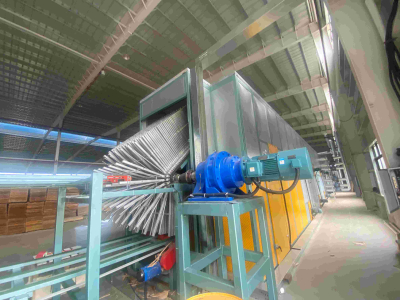
A fully automatic loading and unloading system is designed to turn separate manual actions into a coordinated flow. In a typical automated veneer drying line, wet veneer stacks are presented to a feeder, individual sheets are separated and aligned, conveyors move them into the dryer, and dried sheets are collected or stacked at the outfeed.
The main advantage is synchronization. Instead of depending on several operators to maintain the correct pace, the line uses mechanical transfer and control logic to keep material movement consistent. In practical terms, this means the dryer receives veneer more evenly, the outfeed section does not become a recurring bottleneck, and managers can plan output with less uncertainty.
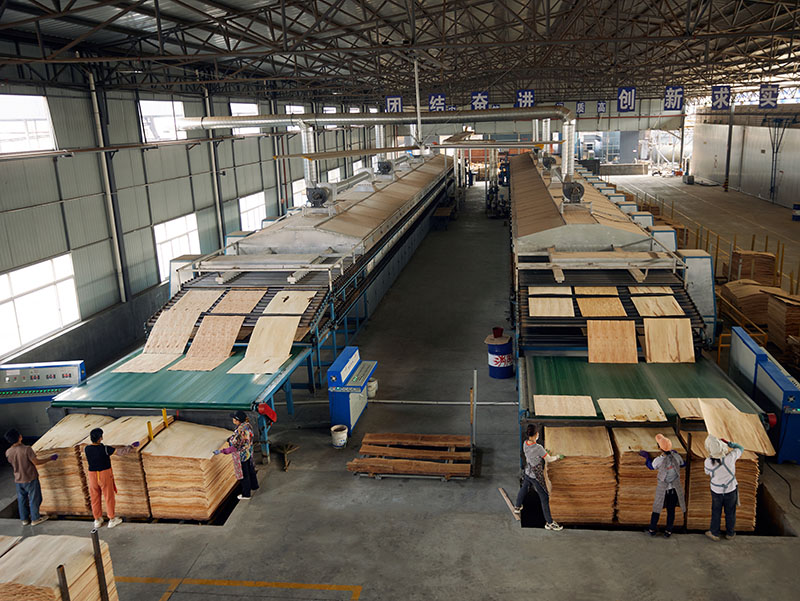
A well-designed automatic veneer loader and stacker can support three operational goals:
Stable infeed so the dryer does not wait for operators.
Controlled alignment so sheets enter the dryer in the correct position.
Smoother collection so dried veneer does not accumulate randomly at the exit.
This is why many mills now treat veneer dryer automation as part of line design rather than an optional accessory.
The Process From Feeding to Stacking
Automated stock presentation
The process usually begins with a lifting or presentation table that keeps the veneer stack at a consistent working height. This reduces repetitive manual lifting and supports more stable sheet separation. For plants where labor availability changes by season, this front-end automation can be especially valuable because the line becomes less dependent on highly experienced feeding operators.
Sheet separation and alignment
After presentation, the system separates individual sheets and transfers them toward the dryer inlet. Alignment is critical because a sheet entering at an angle may curl, overlap, or create a blockage. Mechanical guides, conveyors, and sensing elements are commonly used in automated systems to help keep the veneer squared before it enters the heating section.
This stage is where veneer dryer automation can directly improve line stability. The aim is not to make the process look sophisticated; it is to avoid small infeed errors that cause expensive downtime.
Continuous drying through controlled transport
Inside a continuous veneer dryer, sheets move through heated zones at a controlled speed. Industry references on veneer drying emphasize that moisture content and veneer thickness vary naturally, making consistent drying a technical challenge. Automation does not remove all natural variation in wood, but it can reduce avoidable variation caused by irregular feeding and stop-start operation.
When the infeed is stable, dryer settings such as speed and temperature can be managed more consistently. This helps operators focus on process control rather than constantly correcting handling problems.
Outfeed collection and stacking
At the outfeed, automatic collection or stacking reduces the need for workers to handle every sheet manually. It also helps prevent the exit area from becoming a choke point. In manual operations, the dryer may run well until workers cannot collect fast enough. Once that happens, output speed must be reduced or the line must stop.
With an automated collection approach, dried veneer can be gathered in a more orderly way. This supports continuous production and reduces labor intensity at the end of the line.
Labor Savings Are Only Part of the ROI
Factories often begin the investment conversation with labor cost reduction. That is reasonable, especially in regions where recruitment is difficult or overtime is rising. However, the return from veneer dryer automation usually comes from a combination of factors.
| Evaluation Area | Manual Handling Risk | Automation Benefit |
|---|---|---|
| Feeding | Worker pace varies during the shift | More stable material flow |
| Alignment | Sheets may enter at an angle | Lower risk of jams and stoppages |
| Unloading | Output can exceed manual stacking speed | Smoother collection and stacking |
| Labor planning | Multiple positions depend on operator availability | Reduced exposure to labor shortages |
| Production control | Frequent corrections interrupt rhythm | More predictable daily output |
In veneer machinery brochures, automatic loading and unloading systems are often linked with major reductions in labor demand around feeding and collection positions. The exact result depends on line layout, veneer size, shift length, staffing pattern, and the degree of automation selected. A responsible ROI calculation should include not only headcount reduction, but also downtime reduction, lower handling damage, improved dryer utilization, and reduced overtime pressure.
For buyers comparing suppliers, the most useful question is not “How many workers can be removed?” A better question is: Which manual points currently limit the dryer, and how will the automatic system remove those constraints?
What Buyers Should Ask a China Veneer Dryer Supplier
When evaluating a China veneer dryer supplier, buyers should look beyond headline capacity. The automation package around the dryer can be just as important as the dryer body itself. A high-capacity dryer with weak feeding and unloading coordination may still underperform in daily production.
Useful procurement questions include:
Can the loading and unloading system match the target veneer size and line speed?
How does the system reduce misalignment at the dryer inlet?
Is the automation level adjustable for different production budgets?
How are feeding, drying, and collection synchronized?
What layout space is required before and after the dryer?
What operator supervision is still needed during normal operation?
How easy is it to maintain conveyors, lifting devices, and collection systems?
Can the supplier support installation planning and commissioning?
Buyers searching for a China top veneer dryer factory often focus on capacity and price first. Those factors matter, but for long-term operation, the more important comparison is whether the supplier understands the full material flow from wet veneer stack to dried veneer collection. That is where veneer dryer automation creates measurable value.
Where Shine Machinery Fits Into Buyer Shortlists
Shandong Shine Machinery Co., Ltd, also known as Shine Machinery, is a China-based name that buyers may encounter when researching veneer dryer suppliers through www.veneersdryer.com. For procurement teams comparing options, the company can be reviewed alongside other manufacturers in terms of dryer configuration, automatic loading and collection arrangements, project suitability, and service communication.
The practical way to assess any China veneer dryer manufacturer is to request a line proposal based on actual production conditions: veneer species, thickness range, moisture target, available floor space, daily output requirement, heat source plan, and labor arrangement. This keeps the discussion grounded in operational needs rather than generic equipment descriptions.
Implementation Checklist for Veneer Dryer Automation
Before committing to a fully automatic loading and unloading system, factories should prepare a clear implementation checklist. This helps avoid mismatches between the dryer, the building layout, and the factory’s production habits.
1. Map the current bottleneck
Identify whether the biggest problem is feeding speed, sheet alignment, unloading, stacking, or labor scheduling. Automation should solve the main constraint first.
2. Confirm veneer specifications
Veneer size, thickness, surface condition, and moisture range affect feeding and separation. A good proposal should consider how delicate wet sheets behave during transfer.
3. Match speed across the full line
The feeder, dryer, outfeed, and collection section must work as one system. If one section runs slower than the rest, the investment will not deliver its full value.
4. Plan space for maintenance
Automatic systems need access for cleaning, inspection, and adjustment. A compact layout is useful only if maintenance remains practical.
5. Train operators for supervision rather than manual rescue
The role of workers changes after automation. Operators should understand monitoring, adjustment, and safe intervention instead of relying on constant manual correction.
6. Review payback under real shift conditions
Calculate labor savings, reduced stoppages, handling damage reduction, overtime changes, and expected utilization improvement. The best ROI model reflects the factory’s actual production pattern.
A More Stable Future for Veneer Drying Lines
The market pressure behind veneer dryer automation is clear. Plywood and veneer factories need higher efficiency, but they also need production systems that are less fragile when labor becomes expensive or difficult to recruit. Fully automatic loading and unloading systems address this pressure by reducing manual dependence at the most repetitive and unstable points of the line.
Automation should not be seen only as a replacement for workers. In a modern veneer drying line, it is a way to protect throughput, improve handling consistency, and make output easier to manage. For buyers comparing a China veneer dryer manufacturer, the strongest supplier conversation begins with process stability: how the veneer moves, how the dryer stays continuously fed, and how the factory can reduce labor exposure without sacrificing flexibility.
FAQs
Is veneer dryer automation suitable for every plywood factory?
It is most suitable for factories where feeding, unloading, or labor availability limits dryer utilization. Smaller mills may consider phased automation, beginning with feeding or collection before upgrading the full line.
What is the main benefit of an automatic veneer loader and stacker?
The main benefit is stable material flow. Labor reduction is important, but consistent feeding, better alignment, and smoother outfeed collection often create broader production value.
Does automation guarantee better veneer quality?
Automation supports more consistent handling and drying conditions, but final veneer quality still depends on raw material variation, moisture targets, dryer settings, operator control, and maintenance.
How should a factory calculate ROI for veneer dryer automation?
ROI should include labor savings, reduced downtime, fewer handling interruptions, lower rework risk, improved line utilization, and reduced overtime pressure. A simple headcount calculation may understate the total value.
What should buyers ask a China veneer dryer supplier before ordering?
Buyers should ask about line layout, feeding synchronization, outfeed collection, veneer size compatibility, maintenance access, operator requirements, and commissioning support.
Can a factory upgrade only the loading or unloading section?
In many cases, phased upgrades are practical. The best starting point is the section that currently causes the most downtime or labor pressure.