
Why Two Deck Veneer Dryers Reduce First Upgrade Risk
For a small plywood mill, the first mechanical drying upgrade is not simply a question of buying the largest veneer dryer in the catalog. The safer decision is usually to match drying capacity, operator experience, heat source, and maintenance workload. A well-selected two-deck veneer dryer can give a plant a controlled entry into mechanical drying while avoiding the operational pressure that often comes with oversized equipment.
Start With Capacity Before Chasing More Decks
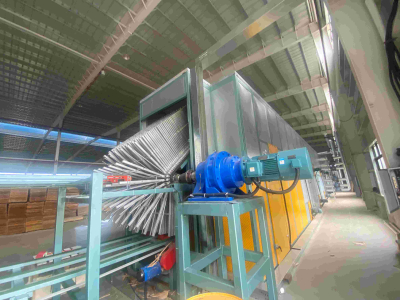
Small mills often upgrade from natural drying or simple drying methods because veneer moisture becomes difficult to control, labor demand rises, and production becomes sensitive to weather and floor space. In that situation, a Two Deck 32m Roller Veneer Dryer can be a practical first step because its configuration is easier to understand and supervise than a higher-deck line.
Shine Machinery lists the GTH30-32 two-deck roller veneer dryer with a 3 m working width, 28 m heating area, 4 m cooling area, 0.6–8 mm veneer thickness range, and drying capacity of 40–45 cbm per day. Its listed total power is 134.5 KW, with actual electricity consumption of about 95 kWh per hour. These figures help buyers compare the machine against the output of peeling, sorting, stacking, and downstream plywood production.
The first upgrade should stabilize the mill, not overwhelm it. Capacity that cannot be fed consistently becomes idle investment.
Why Maintainability Matters More Than Maximum Configuration
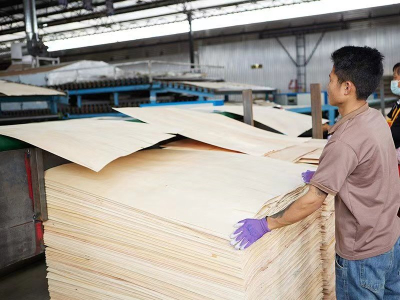
A higher-deck veneer dryer can make sense when a plant already has steady upstream peeling output, trained operators, and enough sorting capacity. For a first mechanical upgrade, however, maintainability is often more valuable than maximum deck count. Fewer decks mean the production team can learn temperature adjustment, transport speed, veneer loading, and moisture checks with less daily complexity.
This is especially important because veneer drying is an energy-sensitive process. Industry research has noted that drying can represent a major share of plywood production energy demand. Maintenance, sealing, airflow, and heat exchange condition all influence real operating performance. For buyers evaluating a China veneer dryer manufacturer or China veneer dryer supplier, the practical question is not only “How much can it dry?” but also “Can the team keep it running steadily every shift?”
Two Deck Versus Higher Capacity Options
The table below uses product information from Shine Machinery pages to show how capacity and power requirements increase across configurations. It is not a ranking; it is a capacity-matching reference for small and expanding plywood mills.
| Veneer dryer model | Decks | Working width | Listed capacity | Listed power information | Suitable buying phase |
|---|---|---|---|---|---|
| GTH30-32 roller veneer dryer | 2 | 3 m | 40–45 cbm/day | Total power 134.5 KW; about 95 kWh/hour | First mechanical drying upgrade |
| GTH30-28 roller veneer dryer | 4 | 3 m | 80–85 m³/day | Total power 161.5 KW; about 114 kWh/hour | Expansion after stable operation |
| GTH30-52 plywood dryer machine | 4 | 3 m | 6.7 m³/hour | Total power 285 KW; about 200 kWh/hour | Higher-output production line |
| GTH30-38 Shine veneer dryer machine | 4 | 3 m | 5 m³/hour | Total power 228.5 KW; about 160 kWh/hour | Larger continuous production |
The main point is simple: a larger veneer dryer is not automatically the best first purchase. If rotary cutting output cannot feed the line continuously, or if operators are still learning mechanical drying, a two-deck veneer dryer may deliver a smoother transition.
Heat Source Choices Should Match Local Conditions
Shine Machinery’s two-deck roller veneer dryer page describes a biomass burner that uses waste wood as the heating material, with drying temperature listed as 140–200°C adjustable. For small plywood mills that produce bark, scrap veneer, and other wood waste, this can be evaluated as part of operating-cost planning.
Some plants may also consider a Natural Gas Heated 2 Deck Veneer Dryer. The product page describes this machine as equipment for removing excessive moisture from veneer, reducing fresh core veneer moisture of about 60–80% to approximately 10%. It also describes advanced electronic control technology, flexible section and deck configuration, and 75–100 mm shell insulation to retain heat and reduce air leakage.
For procurement teams, the decision should consider local fuel price, waste wood availability, plant layout, operator skill, and maintenance resources. The right heat source is the one the mill can operate consistently.
Automation Can Be Added Step By Step
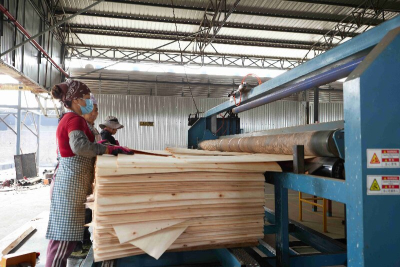
A first veneer dryer does not need to become a fully automated line on day one. Many small mills benefit from learning core drying control first, then adding automation where labor pressure is highest. Shine Machinery’s automatic loading system for veneer dryer is described as a system designed to replace manual board feeding, reduce labor intensity, reduce veneer placement deviation, and help veneers run smoothly inside the dryer.
This staged upgrade path is often safer: install a maintainable two-deck veneer dryer, stabilize drying parameters, train operators, then consider automatic feeding or collection systems when the production rhythm is clear. It also helps the mill avoid buying automation before its real bottleneck is understood.
Airflow Components Are Central To Troubleshooting
Uneven moisture, veneer jams, and unstable drying are common concerns when a mill first moves into mechanical drying. Airflow components deserve close attention because they influence how hot air reaches the veneer surface. Shine Machinery’s Jet Box Air Tubes are described as galvanized plate components with a saw-tooth thread design that helps prevent veneer jamming and supports sufficient hot air volume to the veneer.

For daily operation, teams should build simple routines: check whether veneer feeding is aligned, observe whether sheets move smoothly, inspect airflow-related parts, monitor outlet moisture, and keep temperature and speed settings consistent with veneer thickness and initial moisture.
How Small Mills Should Work With A Supplier
When searching for a China top veneer dryer factory, buyers should prepare practical production information before requesting a quote. Useful details include veneer thickness, target final moisture, estimated daily output, heat source preference, local electricity cost, workshop space, and labor arrangement. Shine Machinery also provides an earnings estimation page on www.veneersdryer.com, where buyers are asked to share site size, labor cost, and electricity price so engineers can help estimate cost recovery time and expected revenue.
For a first mechanical upgrade, the best supplier discussion should focus on fit rather than scale. A maintainable two-deck veneer dryer can create a strong foundation; higher-deck equipment can follow when the plant has stable input, trained operators, and proven demand.
FAQs
Is a two-deck veneer dryer enough for a small plywood mill?
It can be a suitable first mechanical drying upgrade when its listed capacity matches peeling output, sorting capacity, labor level, and downstream plywood production needs.
Why not buy a four-deck or six-deck dryer immediately?
Higher-deck equipment may increase capacity, but it also requires stronger feeding coordination, operating discipline, and maintenance planning. Small mills often reduce risk by learning mechanical drying on a simpler configuration first.
What final moisture level is commonly targeted in Shine Machinery product pages?
Several Shine Machinery product pages describe drying fresh veneer to about 8–10% or around 10%, depending on the model and process conditions.
Can automation be added after installing the veneer dryer?
Yes. Shine Machinery lists an automatic loading system that can be installed with 2 deck, 3 deck, 4 deck, and 6 deck veneer dryer models.
What information should buyers prepare before contacting a veneer dryer supplier?
Buyers should prepare veneer thickness, target capacity, initial and final moisture requirements, heat source preference, workshop size, labor cost, and local electricity price.