
Keep Veneer Delivery Stable With Controlled Hot Air Drying
For plywood manufacturers, a controlled hot air veneer dryer can turn veneer drying from a daily bottleneck into a predictable, repeatable process. By matching moisture control, line speed, and energy use with actual veneer output, mills can stabilize takt time from peeling to pressing. For plywood manufacturers, delayed delivery often begins long before pressing or packing. It starts when wet veneer enters a drying line that cannot keep pace with peeling, sorting, and gluing. Traditional steam or thermal oil drying systems still have a place in many mills, but buyers increasingly evaluate whether a controlled hot air veneer dryer can make production rhythm more predictable. Shine Machinery offers roller veneer dryer solutions using adjustable hot air drying temperatures, automatic speed control, and configurable line layouts to help mills bring fresh veneer down to practical moisture targets for plywood production.
Why Drying Becomes the Hidden Delivery Bottleneck
In a veneer production line, drying determines whether downstream processes receive stable material or wait for rework. If moisture remains uneven, sheets may require additional drying, sorting, or rejection before gluing. If the dryer runs too slowly, peeled veneer accumulates before the drying section and disrupts the entire takt time of the mill.
Industry studies on veneer drying consistently show that temperature, air movement, residence time, and moisture target all affect final quality and throughput. Research has also noted that air and steam drying behave differently across temperature ranges, with performance depending on wood species, veneer thickness, and process settings. For purchasing teams, the lesson is practical: the drying system should not be selected only by heat source. It should be evaluated by how well it controls moisture, line speed, energy use, and daily output.
How Shine Hot Air Roller Veneer Dryers Control the Process
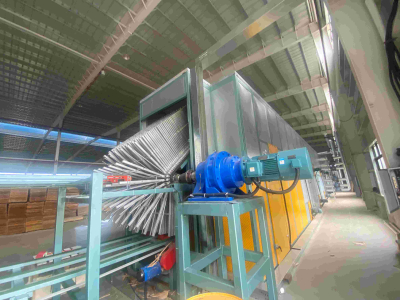
Shine Machinery’s Hot Air Veneer Dryer Machineis a roller veneer dryer designed to dry fresh veneer to about 8–10% moisture content. The system uses hot air generated from a heat source such as a biomass burner and blown onto the veneer surface through heat exchangers. Its drying temperature is adjustable within 140–200°C, with temperature control accuracy of ±5°C on documented models.
The core advantage is not simply higher heat. It is controllability. Shine roller veneer dryers use an automatic control and frequency conversion system that adjusts conveyor speed and temperature according to veneer thickness and moisture content. Transport speed ranges from 5–22 m/min on listed models, allowing operators to match drying conditions with actual production needs instead of forcing every batch through one fixed rhythm.

Hot Air at 140 to 180°C and More Predictable Line Rhythm
Many plywood mills focus on the 140–180°C range because it offers a practical balance between drying force and process stability. Within Shine’s documented 140–200°C adjustable range, this operating window can support controlled drying while reducing the risk of an unstable production rhythm caused by under-dried or over-dried veneer.
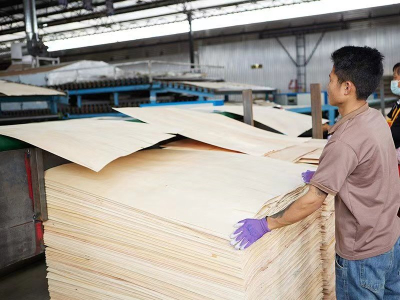
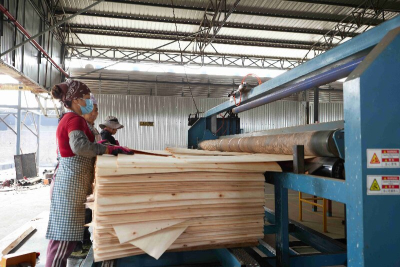
A roller veneer dryer also supports continuous feeding. Compared with stop-and-wait batch behavior, continuous movement helps upstream peeling, drying, cooling, and downstream stacking work as one coordinated system. Shine’s veneer drying systems can be equipped with feeders, and the company also offers automatic veneer feeder and collection system options for higher automation needs. For mills facing labor shortages or inconsistent manual feeding, that integration can help reduce interruptions and keep sheet flow more stable.
Steam and Thermal Oil Are Heat Sources but Takt Time Needs More
Steam and thermal oil systems are widely used in industrial drying, and both can be suitable depending on plant infrastructure. However, from a production management perspective, the heat source alone does not guarantee stable delivery. A dryer must also distribute heat evenly, control conveyor speed, remove moisture efficiently, and keep final moisture content within the target range.
Shine’s hot air veneer dryer design addresses these process needs through hot air circulation, heat exchangers, automatic temperature control, and speed regulation. The heat exchanger adopts a step-by-step heat transfer design with different specifications for each section, supporting more uniform hot air emission across the veneer. This matters because uneven drying can create wet spots, warping, cracking, or delayed gluing preparation.
What Buyers Should Check Before Replacing an Older Dryer
Before replacing a steam or thermal oil veneer dryer, procurement teams should compare real production requirements with dryer configuration. Shine Machinery provides customizable working width and length to meet different veneer drying capacity requirements, and its documented product range includes 2-deck, 4-deck, and 6-deck configurations, with working width options referenced from 3 to 6 meters across the product series.
A practical evaluation should include:
| Selection Point | What to Confirm |
|---|---|
| Veneer thickness | Shine listed models commonly cover 0.8–8 mm veneer ranges |
| Moisture target | Fresh veneer can be dried to about 8–10% on several listed models |
| Line speed | Documented veneer transport speed reaches 5–22 m/min |
| Heat source | Biomass burner is commonly referenced, with other options available |
| Automation level | Manual, semi-automatic, and fully automatic configurations are available |
| Plant layout | Working width and length can be customized for capacity needs |
These checkpoints help buyers judge whether a Veneer Drying System can match upstream peeling output and downstream pressing schedules.
Energy Control Matters Because Cost Delays Decisions
Energy cost is another reason mills reassess drying technology. Shine’s upgraded hot air veneer dryer models are described as reducing power consumption by 35% compared with previous versions. Listed equipment also uses axial flow fans, insulated drying chambers, and biomass burner options to support energy-efficient operation.
For example, the GTH30-36 hot air veneer dryer model has a working width of 3.0 m, 4 decks, a 32 m heating area, a 4 m cooling area, and a drying capacity of 110 m³/day. Its total power is listed as 212.5 kW, with actual electricity consumption of approximately 149 kWh per hour. These parameters help buyers estimate operating cost, capacity alignment, and payback discussions before confirming a configuration.
Why Shine Machinery Is Considered by Veneer Buyers
Shandong Shine Machinery Co., Ltd, also known as Shine Machinery, is often evaluated by international veneer and plywood buyers looking for a China veneer dryer manufacturer or China veneer dryer supplier with configurable roller dryer solutions. Its product pages present hot air veneer dryers, continuous veneer drying machines, wood roller veneer dryers, automatic feeding systems, biomass burner options, and multi-deck veneer dryer configurations.
For mills searching for a China top veneer dryer factory, the more useful question is not a slogan but a fit assessment: Can the dryer match the required veneer thickness, moisture target, working width, heat source, automation level, and plant layout? Shine Machinery’s documented models provide a clear starting point for that comparison.
Practical Next Step for Capacity Selection
A controlled hot air veneer dryer can help plywood producers reduce drying uncertainty when the machine is properly sized to the production line. For mills dealing with slow delivery cycles, unstable moisture, or manual feeding interruptions, Shine Machinery’s roller veneer dryer options provide a practical route toward steadier takt time and more consistent veneer preparation.
FAQs
What moisture level can Shine hot air veneer dryers reach?
Several Shine roller veneer dryer models are specified to dry fresh veneer to about 8–10% moisture content, depending on veneer conditions and selected configuration.
What temperature range is used for Shine hot air veneer drying?
Documented Shine hot air roller veneer dryer models use adjustable drying temperatures of 140–200°C, with automatic temperature control and speed regulation.
Can the dryer be customized for different plywood mills?
Yes. Shine Machinery offers customizable working width and length, and configurations may include manual, semi-automatic, or fully automatic options.
What veneer thickness range is commonly listed?
Many listed Shine veneer dryer models cover veneer thickness from 0.8–8 mm, while some model pages show additional thickness ranges for specific configurations.
Why does conveyor speed matter in veneer drying?
Conveyor speed affects residence time inside the dryer. Shine models list 5–22 m/min transport speed, allowing drying rhythm to be adjusted for veneer thickness and moisture content.
Is biomass heating available for Shine veneer dryers?
Yes. Shine hot air veneer dryers commonly reference biomass burner heating, including the use of waste wood as heating material on listed models.